The Street features Kaplan on changes to retirement planning

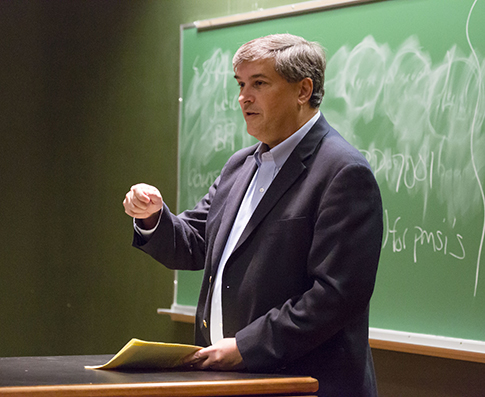
In a video interview, Professor Richard Kaplan spoke to The Street’s Retirement Daily about the six major changes enacted by the SECURE 2.0 Act of 2022. The changes, he explained, represent Congressional efforts to address deficiencies in employer-provided retirement savings plans and continue a pattern of pension plans accommodating an array of social initiatives that are not always related to providing income in retirement.

Watson publishes article on precedent in Northwestern University Law Review

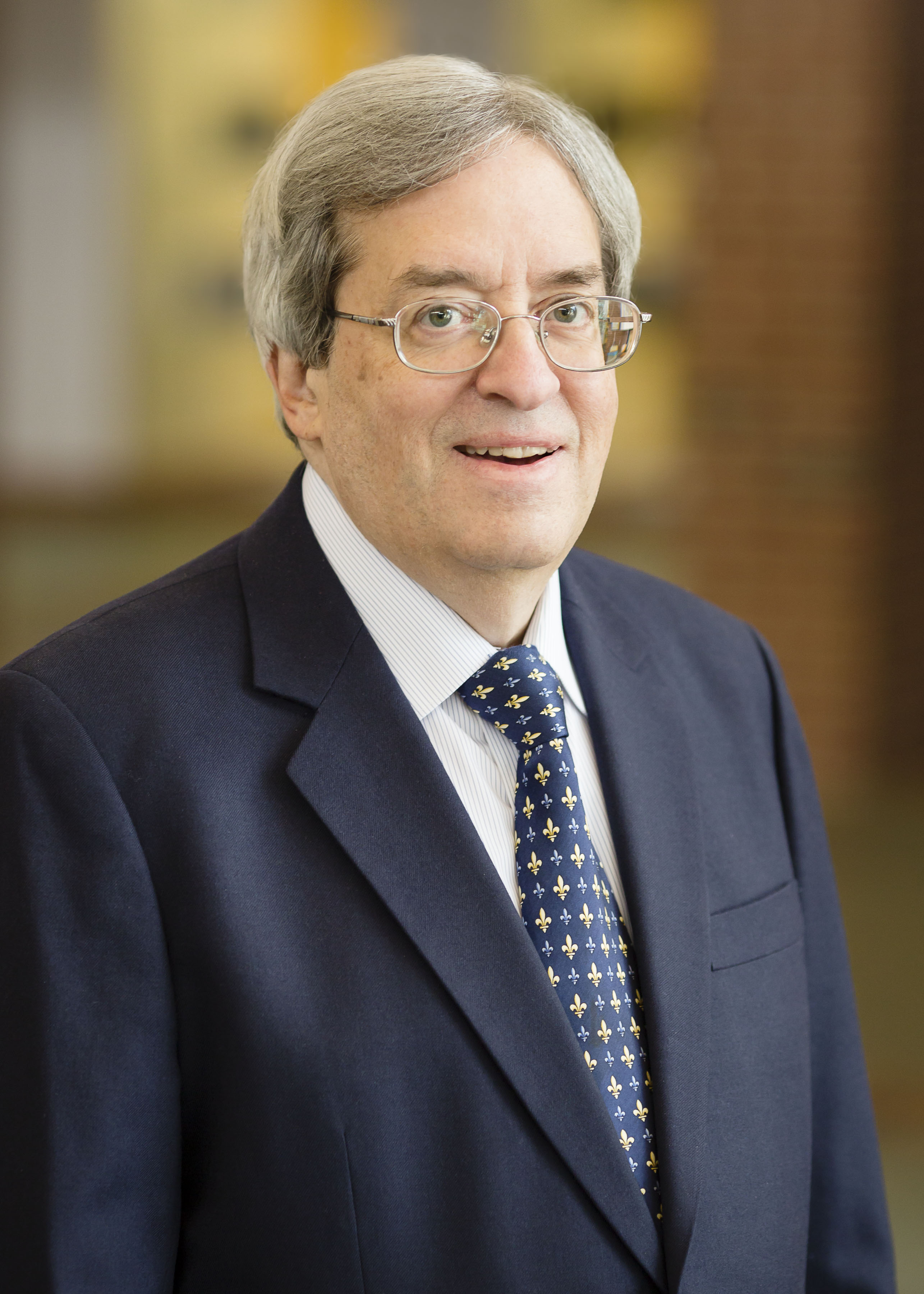
“Over the last few years, the Roberts Court has repeatedly obstructed precedent,” Professor Bill Watson states in his new article, “Obstructing Precedent,” published in the Northwestern University Law Review. Obstructing precedent, he explains, is when a court does not cooperate with its prior self in building a coherent body of law; however, while it is concerning, there is nothing inherently illegitimate about the Court obstructing precedent.

Illinois LawCast: Veterans Legal Clinic with Yulanda Curtis and Luke Hemmerla

Founder and director of the Veterans Legal Clinic, Yulanda Curtis, joins the podcast to discuss her passion for providing civil legal services to the veteran community. In the second half of this episode, 3L student Luke Hemmerla, a current member of the Missouri Army National Guard, joins to discuss his work as a clinician and how his military background has helped him in this role.

More information about the Veterans Legal Clinic can be found on their website. If you would like to contact the Clinic to see if their services might be right for you, the number to call is (217) 244-9494 or you may email law-clinics@illinois.edu.

If you have comments or suggestions for the podcast, please email podcast@law.illinois.edu.

Annual Comparative Law Work-in-Progress Workshop announces call for papers

Annual Comparative Law Work-in-Progress Workshop
May 1-3, 2025 
Announcement and Call for Papers

Co-Organized and Co-Hosted by:

Jacqueline Ross (University of Illinois College of Law)
Kim Lane Scheppele (Princeton University)
Jacques deLisle (University of Pennsylvania Law School), 
And co-sponsored by The American Society of Comparative Law 

Hosting institution this year:  University of Illinois College of Law

We invite all interested comparative law scholars to consider submitting a paper to the next annual Comparative Law Work-in-Progress Workshop, which will be hosted by University of Illinois College of Law and held in-person in Champaign-Urbana, from May 1-3, 2025. 

Interested authors should submit papers to Jacqueline Ross at jeross1@illinois.eduPlease put “Comparative Law Workshop” in the subject line of your email when submitting. 

Papers must be submitted by February 5, 2025. We will inform authors of our decision by March 5, 2025.  

The annual workshop is an important forum in which comparative law works in progress can be explored among colleagues in a serious and thorough manner that will be truly helpful to the respective authors. “Work in progress” means scholarship that has reached a stage at which it is substantial enough for serious discussion and critique but that has not yet appeared in print and can still be revised after the workshop, if it has already been accepted for publication.   Appropriate work for the workshop includes law review articles, book chapters, and other similar genres.

We ask for only one contribution per author and also ask authors to limit their papers to 15,000 words (including notes).   If the paper (or book chapter) is longer, please indicate which 15,000 word portion they would like to have read and discussed. 

Our objective is not only to provide an opportunity for the discussion of scholarly work but also to create the opportunity for comparative lawyers to get together for two days devoted to talking shop, both in the sessions and outside. We hope that this will create synergy that fosters more dialogue, cooperation, and an increased sense of coherence for the discipline. 

The participants in the workshop will consist of the paper authors, designated commentators, and scholars from the host institutions. The group will be kept small enough to sit around a large table and to allow serious discussion. The authors will not present their papers at the workshop. The papers will be distributed well in advance and every participant is expected to have read all of them before the workshop.   While it may be hard to ensure your own paper is below 15,000 words, you will appreciate the word limit when it comes to reading all of the other papers for the workshop.  

Each paper will be introduced and discussed first by two commentators before opening the discussion to the other workshop participants, who are all expected to be prepared with comments on the circulated (and read) papers. The author of each paper will be given an opportunity to respond and ask questions of his or her own.   Each author whose work is featured in the workshop is expected to comment on the work of the other six authors and to participate in the discussion of their work.  

There are no plans to publish a collection of the workshop papers. Paper authors may seek publication if, and wherever, they wish. The goal of the workshop is to improve the work before publication.

The workshop begins with a Thursday evening reception and dinner on May 1, runs all day Friday May 2 and ends shortly after lunch on Saturday May 3.   We expect all authors to attend the entire workshop to provide continuity in the discussions. 

The Workshop is supported by the University of Illinois College of Law and the American Society of Comparative Law.   We will cover the costs of hotels and meals in Champaign-Urbana and some portion of authors’ travel costs, up to $600 per person, though with some flexibility to reimburse for more if warranted by cost and distance. 

Murphy-organized workshop seeking abstracts

Professor Colleen Murphy is part of the organizing committee for the inaugural workshop on Paradigms and Transformations in Transitional Justice and Human Rights. Hosted at the University of Birmingham in May 2025, the conference seeks to bring together leading experts in transitional justice and human rights. The aim of this initial workshop is to explore dominant visions of accountability within transitional justice and human rights, as well as to develop ideas for future collaborations by exploring key aspects of the relationship between transitional justice and human rights—synergies, tensions, and other patterns and divergences. 

The organizers are seeking abstracts considering questions including:

  • How are the transitional justice and human rights fields related and how are they distinct?
  • What has shaped the anti-impunity paradigm in these fields?
  • What visions of accountability and prevention in each field have been displaced by, or could displace, penality?
  • How might human rights be mobilised to critically examine problematic (racial/colonial/carceral) paradigms within transitional justice, and vice versa?

Both academics and practitioners working in the fields of transitional justice and human rights are invited to submit abstracts (max. 300 words) on these topics by November 15, 2024, by email to Kate Webster: klw564@student.bham.ac.uk. Participants selected will be asked to share draft papers or paper outlines (minimum 2,000 words – maximum 8,000 words) prior to the workshop to facilitate discussion.

Wilson and students take part in “Undebates” on reproductive health

Sitting in front of an audience at the University of Illinois-Springfield, Sara Jane Peal, a 3L student, had no idea what to expect. Alongside Professor Robin Fretwell Wilson, Peal was on stage to discuss their research on reproductive health and reproductive rights in the different states as part of the Institute of Government and Public Affairs “Undebates” series, a discussion series on hot topics in the presidential election.

“It was nerve wracking. I had no idea who was going to show up,” Peal explained. On the strength of their hard work, though, the Illinois Law cohort handled the questions ably and helped inform many voters in the audience and beyond, as the panel was later distributed by Illinois Public Media as part of The 21st Show.

“The biggest surprise was this pocket of old men, and I expected them to ask me, like, some really hard-hitting, sort of more pro-life stances because, you know, they did look quite older. But they were pretty much just wondering about [questions like] what was the right to travel, how does this affect like health care and IVF? And that was surprising to me because I did expect a little bit more of an attack question,” Peal added. 

Prior to Peal’s turn on the stage, 2L student Ellen Florence Jones and LLM student Saraf Farhin Choudhury participated in a small group discussion of reproductive health. Professor Wilson described their discussion as “a vibrant exchange of thoughts and information between the law and medical students, where they supplemented each other’s knowledge, shared their opinions, and learned from each other.”

For Choudhury, the experience was “eye-opening.” She described her involvement in the project as deeply personal, with a long-term interest in women’s rights and reproductive health that was underlined by the Dobbs decision that allowed states to restrict access to abortion. Knowing of Professor Wilson’s work in this field, she sought the chance to work as a research assistant. Taking that chance paid off on the Springfield stage.

“The feedback we received for our research was incredibly inspiring. Everyone agreed that it’s an important and much-needed project. In many ways, the research came to life for me during this event, as it was my first time seeing Professor Wilson and Sara share our findings with an audience. It was truly motivational and inspiring to witness their presentation and the positive reception our work received,” Choudhury said.

Peal, who is interested in working in medical malpractice defense after graduation, came away from the Undebates event feeling encouraged by the collaboration with the doctors on the panels and eager to share more of their work.

“It’s just been such a fun, unique experience,” she said. “Actually spearheading the project and helping determine how it’s been shaped and what direction it goes in has been really fun and interesting. And I definitely think, especially for jobs and talking to my employer this summer, they were very impressed that I’ve had that research skill and that I’ve been able to look at a lot of different things and sort of condense it down into something that everybody can understand.”

An edited version of Peal and Wilson’s panel discussion is available to stream via Illinois Public Media.

Mazzone speaks with Law.com about remote proceedings

A high-profile sexual harassment trial has made some of the shortcomings of remote court prodeedings apparent and concerning. Not having a court reporter present has led to transcript problems, which can be an important issue according to Professor Jason Mazzone. “It will be the rare case in which an error in a transcript makes a difference in the outcome. But no lawyer wants to have to tell her client that a typo explains the adverse verdict,” Mazzone told Law.com.

Wall Street Journal quotes Lawless on policy issues to watch

Though the results of the November elections in the United States will represent a mandate for one group, there are several issues the Biden administration will likely seek to address in its last few months in the White House. The Wall Street Journal compiled a list of some of these policy priorities, including student-loan discharges. Professor Robert Lawless, an expert in bankruptcy issues, told the Journal changes made to student-loan discharges in bankruptcy are not supported by Republicans, who would likely rescind those changes immediately.

Sherkow publishes new paper on Myriad decision

A decade on from the U.S. Supreme Court’s decision in Association for Molecular Pathology v. Myriad Genetics, Inc., Professor Jacob Sherkow argues that what seemed like a political and cultural phenomenon has had a much narrower impact. Writing as the first author in a new paper published in Annual Review of Genomics and Human Genetics, Sherkow explains how the Myriad decision has had a modest impact on patents, largely hidden by other developments in science and law since the case was decided.

Murphy nominated BTAA-ALP Mellon Fellow

Professor Colleen Murphy has been nominated to become a part of the Big Ten Academic Alliance Mellon Fellows for the Humanities/Academic Leadership Program. The BTAA-ALP was created by the Provosts of the Big Ten Academic Alliance, the academic consortium of the Big Ten Universities, to develop the leadership potential of participating faculty, with particular emphasis on enriching the diversity of leadership in BTAA institutions. The Mellon Fellows program is funded through a grant to the BTAA from the Andrew Mellon Foundation. Congratulations to the Professor Murphy on behalf of the College of Law.

College of Law
504 East Pennsylvania Avenue
Champaign, IL 61820
(217) 333-0931