New paper from Watson: “The Plain-Meaning Fallacy”

Professor Bill Watson has published a new paper, “The Plain-Meaning Fallacy,” with the Boston College Law Review. The abstract follows:

The leading justifications for originalism all commit the same fallacy: the plain-meaning fallacy. There are compelling reasons to enforce the Constitution’s plain—as in indisputable—original meaning. But there is little to no reason to enforce the Constitution’s less than plain original meaning. The problem is that justifications for originalism help themselves to the former set of reasons to justify doing the latter. That is the plain-meaning fallacy: assuming without argument that the benefits of enforcing plain original meaning extend to enforcing less than plain original meaning too.

This Article lays bare the plain-meaning fallacy in originalist thought. It first develops an account of plain original meaning. It then shows how the plain-meaning fallacy infects leading justifications for originalism, insofar as they claim to justify using originalism to resolve a wide range of litigated issues. Lastly, the Article asks what a viable originalism that does not rest on the fallacy would look like. The result, “plain public-meaning originalism,” is not wholly toothless and remains true to originalism’s roots—but can rarely play the decisive role that many originalists want their method to play.

Watson honored with AALS Future Promise Award

Association of American Law Schools’ (AALS) Section on Jurisprudence has selected Professor Bill Watson as the 2026 recipient of its Future Promise Award. The award is given annually to recognize the research accomplishments of junior scholars working in the area of jurisprudence whose work reflects future promise in both philosophy and law. Watson was be honored at the AALS annual meeting in early January. The College of Law offers its sincere congratulations to Professor Watson for this honor.

Watson publishes new article in Boston University Law Review

What is really being debated when individuals debate legal interpretation? This is the central question in a new paper written by Professor Bill Watson published in the latest issue of the Boston University Law Review. The “meta-interpretive” question “is key to making progress,” according to Watson. “We should be wary of monolithic interpretive theories that purport to apply across the board,” he concludes.

J. Ross hosts Comparative Law Work in Progress Workshop

The annual Comparative Law Work in Progress Workshop took place at the University of Illinois College of Law from May 1-3, 2025. Hosted by Professors Jacqueline E. Ross (Illinois), Kim Lane Scheppele (Princeton), and Jacques DeLisle (UPenn), the workshop was co-sponsored by the American Society of Comparative Law, the Illinois Program in Criminal Law, and the European Union Center of the University of Illinois. The event featured the following papers and commentary:

Mark Ramseyer, “Vertical Integration in a World without Literacy or Social Capital: Coal Mining in early Twentieth Century Japan”
Commentary:  Amitai Aviram, Hannah Buxbaum

Keren Weinshall, “The Supreme Divide:  How SCOTUS Stands Out Among Global Apex Courts”
Commentary: Bill Watson, Leigha Crout

Han-Ru Zhou, “The Judicial Committee of the Privy Council: Foundational and Leading Constitutional Cases”
Commentary: Carol Symes , Andrew Leipold

Leigha Crout, “Legal Mobilization and the Rule of Law: Lessons in Democratic Resilience”
Commentary: Jacques DeLisle, Lesley Wexler

“Comparing Vietnamese and Cambodian Experiences in Constitutional Design and Implementation in the Early 1990s”
Commentary: Matt Winters, Joseph Hoffmann

Eleonora Bottini, “The Constitutional Council and the Lack of Judicial Constitutionalism in France”
Commentary: Kim Lane Scheppele, Jessica Greenberg

Jake Subryan Richards, “Abeokuta and Polity Formation Against Illegal Enslavement”
Commentary: Marc Hertzman, Pat Keenan

About the Authors:

Mark Ramseyer teaches at the Harvard Law School.  He mostly writes about Japan, usually from a law & economics perspective.

Kyle Shen is an Assistant Professor of Law and Political Science at Cleveland State University College of Law. He studies the ways that international law and organizations interact with domestic institutions.

Eleonora Bottini is Full Professor of Public Law at the University of Caen Normandy (France). She also holds affiliations with several U.S. universities: she is the Martin-Flynn Global Law Professor at the University of Connecticut School of Law, a Research Fellow at the Georgetown Center for the Constitution, and a Distinguished Senior Research Fellow at the Constitutional Studies Program at the University of Texas at Austin.

Leigha Crout is an Assistant Professor of Law at DePaul University College of Law and a fellow at the Stanford Center for the Rule of Law. She writes on comparative constitutional law, democratic theory, and the legal profession.

Jake Subryan Richards is assistant professor of international history at the London School of Economics and Political Science. He is the author of The Bonds of Freedom: Liberated Africans and the End of the Slave Trade, to be published by Yale University Press on 2 September 2025.

Keren Weinshall is Professor of Law and the Edward S. Silver Chair in Civil Procedure at the Hebrew University of Jerusalem. She was the Founding Director of the Israeli Courts Research Division and served as a national expert for the European Commission for the Efficiency of Justice (CEPEJ) at the Council of Europe.

Han-Ru Zhou is an Associate Professor of Public Law at the Université de Montréal and an Associate Research Fellow at the Institute of Commonwealth Studies in London. Han-Ru teaches and researches in constitutional law and comparative law.

About the Commentators:

Kim Lane Scheppele is the Laurence S. Rockefeller professor of sociology and international affairs and director of the Program in Law and Normative Thinking (PLANT) at the University Center for Human Values at Princeton University.  She works in the areas of comparative constitutional law, EU law and democratic backsliding.

Joseph Hoffmann is the Harry Pratter Professor Emeritus Joseph Hoffmann and an award-winning scholar and teacher at Indiana University Maurer School of Law. He has taught a visiting faculty member at law schools in Japan, Germany, France, Korea, China, Thailand, and Kazakhstan, and he currently serves as a regular Visiting Professor at Jagiellonian University in Kraków, Poland.

Matthew S. Winters is professor of political science and director of the Center for East Asian and Pacific Studies at the University of Illinois.  He researches foreign aid, corruption, and governance.

Lesley Wexler is the Associate Research Dean and John D. Colombo Professor of Law at the University of Illinois College of Law. She specializes in International Humanitarian Law and Anti-Discrimination law.

Marc A. Hertzman is Professor of History at Illinois. He specializes in race, slavery, and its legacies in Brazil, Latin America, and the African diaspora.

Andrew Leipold is the Edwin M. Adams Professor at the University of Illinois College of Law. He teaches and writes in the areas of American criminal law and criminal procedure.

Bill Watson is an Assistant Professor at the University of Illinois College of Law. He works at the intersection of public law and philosophy, with an emphasis on constitutional and statutory interpretation, precedential reasoning, and the nature of law. 

Amitai Aviram, Professor, University of Illinois College of Law.  Amitai studies the evolution of law and corporate governance, using analytical tools from the fields of economics and complexity studies. Specific themes explored include the mechanisms of norm enforcement in private legal systems and the role of law in manipulating perceptions.

Jacques deLisle is the Stephen A. Cozen Professor of Law, Professor of Political Science, and Director of the Center for the Study of Contemporary China, as well as co-editor-in-chief of the American Journal of Comparative Law.  He writes about contemporary Chinese law, China’s engagement with international law, and the law and politics of Taiwan’s international status.

Jessica Greenberg is Associate Professor of Anthropology at the University of Illinois. She is a political and legal anthropologist and studies democracy movements, human rights and rule of law institutions in Europe.

Carol Symes is a University Scholar, Professor of History, and Director of the Program in Medieval Studies. Her research centers on premodern documentary cultures, varieties of literacy, and degrees of access to writing and other communication media in a variety of contexts, from civic and legal to ritual and entertainment. 

Jacqueline Ross is Prentice H. Marshall Professor of Law at the University of Illinois College of Law and director of the Illinois Program in Comparative Criminal Procedure and Policing.  She writes comparatively about criminal law and criminal procedure.

Hannah Buxbaum is Professor of Law and John E. Schiller Chair at the Indiana University Maurer School of Law and serves as IU’s Vice President for International Affairs. She is President of the American Society of Comparative Law. Patrick Keenan writes and teaches in the areas of international law, human rights, and international criminal law. He has published articles on the purposes and evolution of international criminal law, the U.S. drone program, international law and conflict minerals, human trafficking and tourism, and many other issues, and is the co-author of The International Criminal Court in a Nutshell. In addition to teaching at the University of Illinois, he has served as a visiting professor at the University of Chicago Law School, Northwestern Law School, and lectured at the Chuo University School of Law in Tokyo.
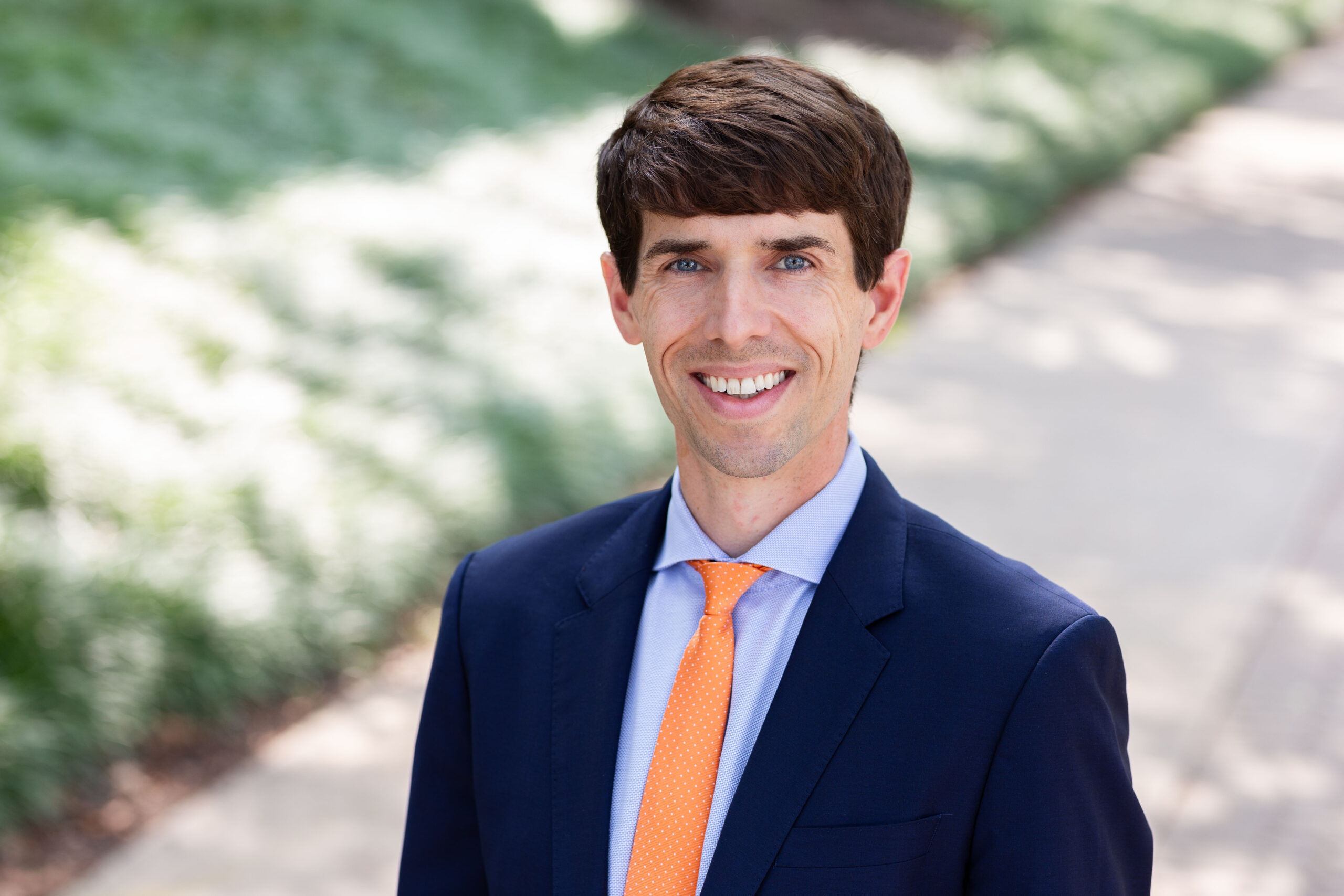
Watson reviews Law Is a Moral Practice

The argument that law is a moral practice is, appropriately, the topic of the book Law Is a Moral Practice, and Professor Bill Watson examines that premise in his new review article. Published in the Washington University Jurisprudence Review, the article, titled “In What Sense Is Law a Moral Practice?,” concludes the argument is unsuccessful but a topic worthy of consideration.

Illinois LawCast: Get to know Bill Watson and Sara Gerke

In this episode, our newest faculty members, Bill Watson and Sara Gerke, sit down to discuss their path to Illinois Law, their specialties, and how they are enjoying their time at the College of Law thus far.

If you have comments or suggestions for the podcast, please contact podcast@law.illinois.edu.

Watson publishes article on precedent in Northwestern University Law Review

“Over the last few years, the Roberts Court has repeatedly obstructed precedent,” Professor Bill Watson states in his new article, “Obstructing Precedent,” published in the Northwestern University Law Review. Obstructing precedent, he explains, is when a court does not cooperate with its prior self in building a coherent body of law; however, while it is concerning, there is nothing inherently illegitimate about the Court obstructing precedent.

Illinois Law welcomes five new faculty hires

The University of Illinois College of Law is thrilled to welcome five new faculty members to our roster this fall.  

Sara Gerke joins Illinois as an Associate Professor of Law and Richard W. & Marie L. Corman Scholar. Her research focuses on the ethical and legal challenges of artificial intelligence and big data for health care and health law in the United States and Europe. She also researches comparative law and ethics of other issues at the cutting edge of medical developments, such as the clinical translation of stem cell research, biological products, such as somatic cells, tissues, and gene therapy, reproductive medicine, such as mitochondrial replacement techniques, and digital health more generally. Professor Gerke has over 60 publications in health law and bioethics, and her work has appeared in leading law, medical, scientific, and bioethics journals. Professor Gerke earned a JD from University of Augsburg and an MA from King’s College London.  

Bill Watson joins Illinois as an Assistant Professor of Law. His work has focused on the intersection of public law and philosophy and has appeared or is forthcoming in law reviews like the Northwestern University Law Review and Boston University Law Review, as well as peer-reviewed journals like Law and Philosophy and Legal Theory. He is currently working on projects that address originalism in constitutional interpretation, the import of legal positivism for legal interpretation, and the U.S. Supreme Court’s recent treatment of precedent. Professor Watson received his JD from the University of Chicago Law School and his PhD in Philosophy from Cornell University. He was a Climenko Fellow and Lecturer on Law at Harvard Law School immediately prior to joining the University of Illinois faculty. 

Jingkang (Jake) Gao joins Illinois as a Visiting Assistant Professor of Law. In his work, he has explored how legal institutions can make urban mobility safer, cleaner, more accessible, and more equitable, and how insights from urban mobility can enrich the study of law. He has applied his background in law in his work with the Chicago Transit Authority on facilitating bus electrification and cultivating a healthier electric bus market in the United States. Professor Gao earned his JD from Columbia Law School and his PhD and an MS from the Massachusetts Institute of Technology.

Maxim Krupskiy joins Illinois as a Visiting Scholar, as part of the Illinois Scholars at Risk program. He has more than twelve years of experience practicing law in Russia defending refugees and civil activists and, as an independent expert, has prepared more than forty independent anti-corruption expert opinions. Krupskiy recently spent time as a Visiting Scholar at the Fletcher School of Law and Diplomacy at Tufts University and a Non-Resident Fellow at the George Washington University, Russia Program.   

Benjamin Horton joins Illinois as a Visiting Lecturer in Law and Stanton Fellow with our First Amendment Clinic. He was inspired to pursue a legal education during the 2016 presidential election and focused his education on free expression and election issues, participating in several clinics and interning for the Center for Democracy and Technology. After completing his JD at Harvard Law School, Horton spent a year with Free Speech For People, an election litigation nonprofit, and two years clerking in the District of Massachusetts. 

The College of Law is proud to have these individuals joining our faculty and looks forward to their accomplishments as part of the University of Illinois.

College of Law
504 East Pennsylvania Avenue
Champaign, IL 61820
(217) 333-0931