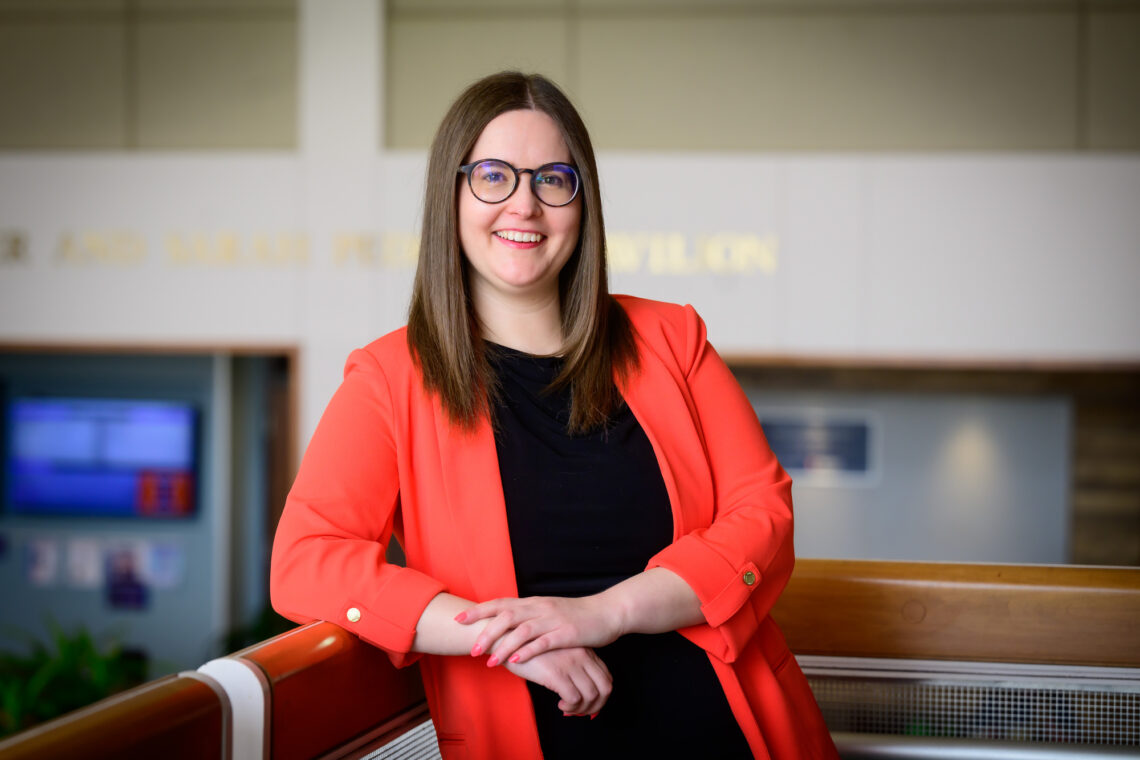
Lawsky publishes article on legal inconsistencies

When a law is inconsistent, further guidance should come from Congress, courts, and administrative agencies to create clarity. In her recent article, Professor Sarah Lawsky examines via a programming language framework an example of a tax statute that mandates inconsistent outcomes for the same set of facts and shows how that inconsistency has been addressed by the Treasury and the IRS. Her article was also the subject of a TaxProfBlog article, which you can read online.

Undark quotes Sherkow on FDA regulation of peptides

In order to bring a drug to market, manufacturers have long been required to demonstrate safety and effectiveness in clinical trials; however, Health and Human Services Secretary Robert F. Kennedy Jr. would like to change the Food and Drug Administration’s role to make it easier access experimental medicine. In an article on the FDA considering allowing pharmacies to compound and sell seven unapproved peptides, Undark quoted Professor Jacob Sherkow who called this “a brave new world” in which some substances may “go forward without any rigorous scientific evidence base.”

Lawsky publishes article on Direct File

Direct File, a program that allows some taxpayers to file federal income tax returns with the United States government online for free, is an extraordinary accomplishment, Professor Sarah Lawsky writes in a new article published in the Pittsburgh Tax Review. Examining the computer code underlying Direct File, Lawsky finds choices that make “the application of the law and various administrative choices more transparent even to those who are not comfortable reading computer code.”

Sherkow to speak about indirect patent infringement at 15th Waseda-Penn Global Patent Law Conference

On Monday, June 1, Professor Jacob Sherkow will deliver a lecture at the 15th Waseda-Penn Global Patent Law Conference in Japan. His talk will introduce the fundamentals of indirect patent infringement under U.S. law, with a focus on inducement doctrine under 35 U.S.C. § 271(b). Drawing on recent litigation and scholarship — including the “infringement by label” debate highlighted in the Supreme Court case Hikma v. Amarin — the talk will critically examine how current case law risks expanding inducement liability beyond its traditional requirement of active encouragement and causation. In doing so, the lecture will highlight broader questions about the proper limits of indirect infringement and the role of regulatory contexts in shaping liability—issues that also resonate in ongoing Japanese debates on the scope and structure of secondary patent liability.

Gerke publishes article in prominent gastroenterology journal about human deskilling in medical AI

In a new co-authored article for Nature Reviews Gastroenterology & Hepatology, Professor Sara Gerke explores the risks of “deskilling” for physicians as the use of AI proliferates in the practice of medicine. Gerke and her co-authors also explore whether such systems violate the European Union Artificial Intelligence Act, the world’s first comprehensive regulatory framework on artificial intelligence.

Gerke: Autonomous AI-based drug prescribing rife with potential problems

A first-of-its-kind pilot program in Utah developed by a health-technology startup company uses artificial intelligence to automatically renew certain prescriptions for patients with chronic conditions such as hypertension and diabetes. But according to a new paper co-written by a University of Illinois Urbana-Champaign expert in legal issues surrounding cutting-edge medical technology, autonomous AI-based drug prescribing raises important clinical and legal issues.

With AI rapidly being deployed in health care, a “move fast and break things” mentality has permeated the industry, raising complex questions about the role of the U.S. Food and Drug Administration in regulating these technologies, says Sara Gerke, the Richard W. & Marie L. Corman Scholar at the College of Law.

“The big issue here is the relationship between state and federal law, which we’re seeing in Utah, where the state has become a testing ground for so-called AI sandboxes that companies can use to experiment,” said Gerke, also a professor at the European Union Center at Illinois. “The idea behind it is to test these AI medical tools before they are completely developed. But even that is legally questionable. The existence of mitigation agreements and waivers under state law doesn’t automatically render the use of unproven medical technology lawful at the federal level.”

Is Utah’s first-in-the-nation pilot program allowing AI to renew prescriptions legal and ethical?

Utah has introduced a first-in-the-nation pilot program that allows AI to independently renew certain prescriptions for patients with chronic conditions. The 12-month initiative, which launched in January 2026, uses an AI system developed by the health tech company Doctronic, and operates under a special state “regulatory sandbox” designed to test emerging technologies. A New England Journal of Medicine (NEJM) article, authored by Sara Gerke, Ravi B. Parikh, and I. Glenn Cohen, raises serious questions about its efficacy and legality.

The program currently applies to nearly 200 commonly used medications, including treatments for conditions such as high blood pressure, diabetes, and depression. State officials say the goal is to improve medication adherence. After an initial review period of 250 cases by a physician, the AI system will begin making prescription renewal decisions without direct human oversight.

While the authors agree that “autonomous prescription renewal may offer benefits in narrowly defined clinical contexts,” they focus on several medical and legal issues raised by the program, including:

  • Risks when the system is used for medications requiring frequent dose adjustments or in patients whose clinical status could change rapidly.
  • Whether Doctronic problematically failed to seek FDA premarket authorization for the AI system as a medical device.
  • Whether AI-based prescribing is an instance of “misbranding” carrying potential civil or criminal penalties, because prescribing must be done by “a practitioner licensed by law to administer such drug.”

The article also discusses the complex relationship between state and federal law at play in such autonomous AI systems. “Such systems hold a lot of potential benefit for patients,” said I. Glenn Cohen, a Professor and Deputy Dean at Harvard Law School and one of the article’s authors, “but especially as the first-in-the-nation, it is important for patients that the developers consider all the legal and ethical issues raised.”

Sherkow authors amicus brief for SCOTUS

Professor Jacob Sherkow has extensive scholarship in the area of patents and has been cited as an expert many times on the issue of drug labels being used in patent cases. In the case of Hikma Pharmaceuticals USA Inc. v. Amarin Pharma Inc., currently before the United States Supreme Court, Sherkow has authored an amicus brief with Professor Paul R. Gugliuzza of the University of Texas at Austin School of Law. The brief is written in support of neither party, but urges the court to discontinue allowing this practice of “infringement by label.”

Bloomberg and STAT quote Sherkow on Moderna settlement

In a settlement deal over claims Moderna infringed upon patents owned by Roviant in its COVID-19 vaccine, Moderna has agreed to pay up to $2.25 billion. The settlement, however, has a unique structure in which Moderna will pay $950 million up front and then another $1.3 million if an appeal to have parts of its liability offloaded to the federal government fail. “This was a case that should have settled at the very beginning,” Sherkow told STAT. “There was never any real dispute that Moderna was infringing. It was just a matter of coming up with a number that was mutually acceptable.”

Read Bloomberg’s coverage and STAT’s coverage of the settlement.

College of Law
504 East Pennsylvania Avenue
Champaign, IL 61820
(217) 333-0931