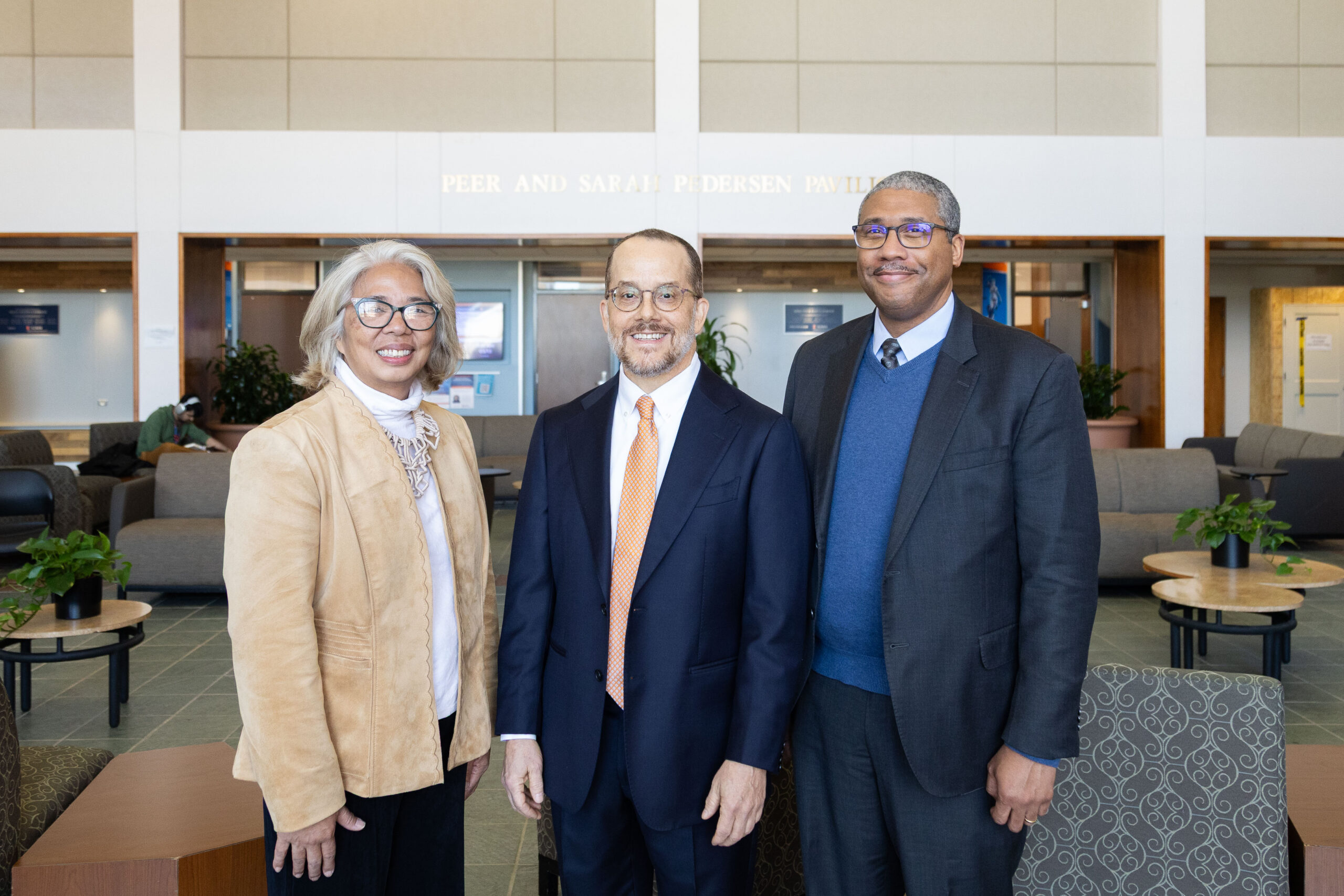
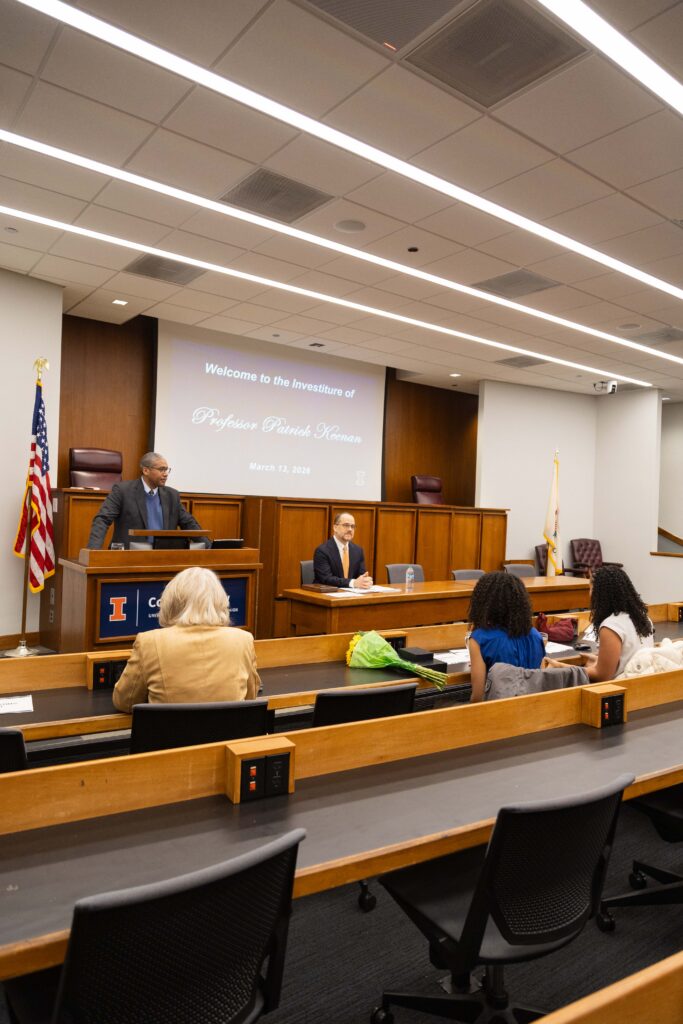
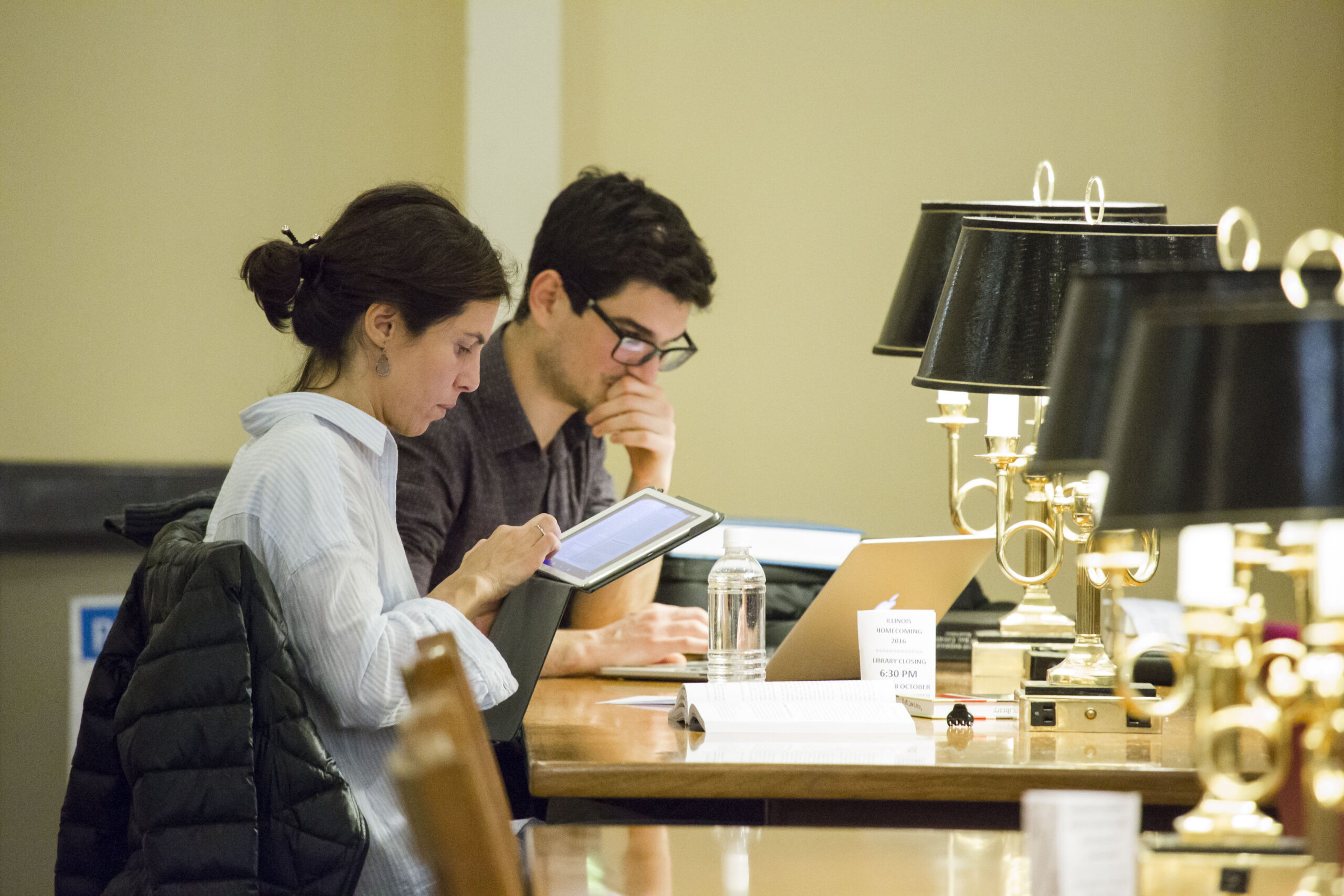
The annual Comparative Law Work in Progress Workshop took place at the University of Illinois College of Law from May 1-3, 2025. Hosted by Professors Jacqueline E. Ross (Illinois), Kim Lane Scheppele (Princeton), and Jacques DeLisle (UPenn), the workshop was co-sponsored by the American Society of Comparative Law, the Illinois Program in Criminal Law, and the European Union Center of the University of Illinois. The event featured the following papers and commentary:
Mark Ramseyer, “Vertical Integration in a World without Literacy or Social Capital: Coal Mining in early Twentieth Century Japan”
Commentary: Amitai Aviram, Hannah Buxbaum
Keren Weinshall, “The Supreme Divide: How SCOTUS Stands Out Among Global Apex Courts”
Commentary: Bill Watson, Leigha Crout
Han-Ru Zhou, “The Judicial Committee of the Privy Council: Foundational and Leading Constitutional Cases”
Commentary: Carol Symes , Andrew Leipold
Leigha Crout, “Legal Mobilization and the Rule of Law: Lessons in Democratic Resilience”
Commentary: Jacques DeLisle, Lesley Wexler
“Comparing Vietnamese and Cambodian Experiences in Constitutional Design and Implementation in the Early 1990s”
Commentary: Matt Winters, Joseph Hoffmann
Eleonora Bottini, “The Constitutional Council and the Lack of Judicial Constitutionalism in France”
Commentary: Kim Lane Scheppele, Jessica Greenberg
Jake Subryan Richards, “Abeokuta and Polity Formation Against Illegal Enslavement”
Commentary: Marc Hertzman, Pat Keenan
About the Authors:
Mark Ramseyer teaches at the Harvard Law School. He mostly writes about Japan, usually from a law & economics perspective.
Kyle Shen is an Assistant Professor of Law and Political Science at Cleveland State University College of Law. He studies the ways that international law and organizations interact with domestic institutions.
Eleonora Bottini is Full Professor of Public Law at the University of Caen Normandy (France). She also holds affiliations with several U.S. universities: she is the Martin-Flynn Global Law Professor at the University of Connecticut School of Law, a Research Fellow at the Georgetown Center for the Constitution, and a Distinguished Senior Research Fellow at the Constitutional Studies Program at the University of Texas at Austin.
Leigha Crout is an Assistant Professor of Law at DePaul University College of Law and a fellow at the Stanford Center for the Rule of Law. She writes on comparative constitutional law, democratic theory, and the legal profession.
Jake Subryan Richards is assistant professor of international history at the London School of Economics and Political Science. He is the author of The Bonds of Freedom: Liberated Africans and the End of the Slave Trade, to be published by Yale University Press on 2 September 2025.
Keren Weinshall is Professor of Law and the Edward S. Silver Chair in Civil Procedure at the Hebrew University of Jerusalem. She was the Founding Director of the Israeli Courts Research Division and served as a national expert for the European Commission for the Efficiency of Justice (CEPEJ) at the Council of Europe.
Han-Ru Zhou is an Associate Professor of Public Law at the Université de Montréal and an Associate Research Fellow at the Institute of Commonwealth Studies in London. Han-Ru teaches and researches in constitutional law and comparative law.
About the Commentators:
Kim Lane Scheppele is the Laurence S. Rockefeller professor of sociology and international affairs and director of the Program in Law and Normative Thinking (PLANT) at the University Center for Human Values at Princeton University. She works in the areas of comparative constitutional law, EU law and democratic backsliding.
Joseph Hoffmann is the Harry Pratter Professor Emeritus Joseph Hoffmann and an award-winning scholar and teacher at Indiana University Maurer School of Law. He has taught a visiting faculty member at law schools in Japan, Germany, France, Korea, China, Thailand, and Kazakhstan, and he currently serves as a regular Visiting Professor at Jagiellonian University in Kraków, Poland.
Matthew S. Winters is professor of political science and director of the Center for East Asian and Pacific Studies at the University of Illinois. He researches foreign aid, corruption, and governance.
Lesley Wexler is the Associate Research Dean and John D. Colombo Professor of Law at the University of Illinois College of Law. She specializes in International Humanitarian Law and Anti-Discrimination law.
Marc A. Hertzman is Professor of History at Illinois. He specializes in race, slavery, and its legacies in Brazil, Latin America, and the African diaspora.
Andrew Leipold is the Edwin M. Adams Professor at the University of Illinois College of Law. He teaches and writes in the areas of American criminal law and criminal procedure.
Bill Watson is an Assistant Professor at the University of Illinois College of Law. He works at the intersection of public law and philosophy, with an emphasis on constitutional and statutory interpretation, precedential reasoning, and the nature of law.
Amitai Aviram, Professor, University of Illinois College of Law. Amitai studies the evolution of law and corporate governance, using analytical tools from the fields of economics and complexity studies. Specific themes explored include the mechanisms of norm enforcement in private legal systems and the role of law in manipulating perceptions.
Jacques deLisle is the Stephen A. Cozen Professor of Law, Professor of Political Science, and Director of the Center for the Study of Contemporary China, as well as co-editor-in-chief of the American Journal of Comparative Law. He writes about contemporary Chinese law, China’s engagement with international law, and the law and politics of Taiwan’s international status.
Jessica Greenberg is Associate Professor of Anthropology at the University of Illinois. She is a political and legal anthropologist and studies democracy movements, human rights and rule of law institutions in Europe.
Carol Symes is a University Scholar, Professor of History, and Director of the Program in Medieval Studies. Her research centers on premodern documentary cultures, varieties of literacy, and degrees of access to writing and other communication media in a variety of contexts, from civic and legal to ritual and entertainment.
Jacqueline Ross is Prentice H. Marshall Professor of Law at the University of Illinois College of Law and director of the Illinois Program in Comparative Criminal Procedure and Policing. She writes comparatively about criminal law and criminal procedure.
Hannah Buxbaum is Professor of Law and John E. Schiller Chair at the Indiana University Maurer School of Law and serves as IU’s Vice President for International Affairs. She is President of the American Society of Comparative Law. Patrick Keenan writes and teaches in the areas of international law, human rights, and international criminal law. He has published articles on the purposes and evolution of international criminal law, the U.S. drone program, international law and conflict minerals, human trafficking and tourism, and many other issues, and is the co-author of The International Criminal Court in a Nutshell. In addition to teaching at the University of Illinois, he has served as a visiting professor at the University of Chicago Law School, Northwestern Law School, and lectured at the Chuo University School of Law in Tokyo.