Wilson discusses conversion therapy case on Political as Heck Utah podcast

Professor Robin Fretwell Wilson joined Utah state representative Mike Petersen on the Political as Heck Utah podcast for a conversation about the conversion therapy case that was recently decided at the U.S. Supreme Court. They spoke about the history behind Utah’s own conversion therapy law, how the decision in the Supreme Court case might impact it, and more.

How will SCOTUS ruling on Colorado conversion therapy law impact similar legislation in Utah? Wilson weighs in.

In late March, the Supreme Court issued a ruling in Chiles v. Salazar, overturning a Colorado law that bans conversion therapy for minors because it violates First Amendment protections on free speech. The ruling is expected to impact similar laws in many other states, but according to Robin Fretwell Wilson, Utah’s law may survive any legal challenges. She consulted with the state legislature on the language of its 2023 law banning conversion therapy and says that their approach differs, allowing neutral speech and banning harmful conversion practices.

“I think it’s remarkable that Utah has found a way through what has just been a slog with the rest of the country,” Wilson said. “We don’t have to be divided about these things that are so deeply personal to us, like our identity or how we choose to love. People, you know, can find a way to protect everybody in the same law.”

Read more at ksl.com, fox13now.com, and deseret.com.

Wilson op-ed: Protecting speech, not encroaching on it, is the better way to serve children

Following the Supreme Court decision in Chiles v. Salazar, which found that a Colorado law banning conversion therapy for minors violated the First Amendment rights of therapists, Professor Robin Fretwell Wilson co-authored an op-ed (with Utah state legislator Mike Petersen) for Deseret News.

The pair wrote that they don’t believe the ruling will impact Utah’s own law banning conversion therapy. An excerpt follows:

“Unlike Colorado’s law, Utah’s legislation is viewpoint-neutral. Rather than dictating conversation, Utah’s law protected virtually everything a therapist would want to explore with a minor client through “safe harbors.” Therapists can talk with kids about body image, family dynamics, social media use, religious beliefs or risky behaviors — and children can raise doubts, fears or questions — without being funneled into a single script of affirmation. Destructive aversive practices remain banned — but dialogue, exploration and honesty are protected.”

Wilson speaks to Inside Higher Ed about religious conscientious objection legislation in Utah

A new bill pending in the Utah State Legislature would allow students to opt out of coursework that conflicts with their religious beliefs. Critics of the bill are concerned about infringement on academic freedom, but Professor Robin Fretwell Wilson, who helped craft the legislation, believes the bill will function as a mechanism for faculty to more carefully consider the experience of their students when creating assignments. She argued that “a public battle—or a student quietly suffering moral discomfort
—is less likely if there’s a process in place to handle these types of student objections.”

Wilson quoted in Salt Lake Tribune for work on Utah bill

Professor Robin Fretwell Wilson recently helped craft draft legislation with Utah Representative Mike Peterson that would empower college students to opt out of assignments if the coursework violates their “sincerely held religious and conscience beliefs.” She testified before the Utah Senate Education Committee on February 25 at the invitation of Peterson on Utah House Bill 204 and was quoted in an article from the Salt Lake Tribune about the bill.

Wilson witnesses bill she provided written testimony for be signed into law at Wisconsin State Capitol

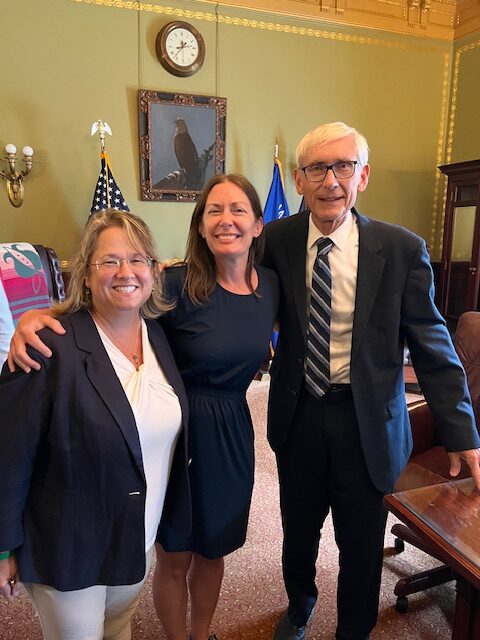
On Friday, August 8, 2025, Professor Robin Fretwell Wilson had the privilege of attending the signing of bill SB 14 at the Wisconsin State Capitol, making Wisconsin the 29th state to afford patients respect in medical teaching. Wilson filed written testimony in May that was used in both Wisconsin Senate and Assembly hearings surrounding the bill, wherein she advocated for written, informed consent for educational pelvic exams. Wilson is pictured with Wisconsin Governor Tony Evers and Wisconsin patient advocate Sarah Wright. Wilson says that her Illinois Law students have benefitted from Sarah’s commitment to this cause, as she has guest lectured in class and will be returning again this fall to discuss the passage of SB 14 with Wilson’s students.

Website from Wilson and students help clarify abortion law

Trying to navigate the morass of state-level abortion laws in the wake of the Supreme Court overturning Roe v. Wade is “a hot mess,” according to Professor Robin Fretwell Wilson. To help individuals understand the laws where they reside, Wilson and a team of students led by Sara Peal ’25 created a website feature a visual interface that shows how different laws apply over the course of a typical 40-week pregnancy. The website aims to be a more comprehensive tool than any other created to this point.

Wilson reflects on the Utah Compromise a decade later

Ten years ago, Utah passed two pieces of legislation Utah to protect religious freedom and protect LGBT individuals from discrimination in housing and employment. Though it is one of the most conservative states in the United States, the “Utah Compromise” to enact these bills has held up so far and helped increase respect for individuals in the Beehive State. Professor Robin Fretwell Wilson co-authored an editorial for Deseret News examining the impacts of these laws after a decade.

Wilson co-edits new volume on family law

Professor Robin Fretwell Wilson has co-edited a new book, International Survey of Family Law 2024, covering topics including marriage equality, gender equality, LGBT rights, and abortion regulations around the U.S., among other topics. This edition continues the celebration of the International Society of Family Law’s (ISFL) fiftieth anniversary. It is published by Intersentia.

College of Law
504 East Pennsylvania Avenue
Champaign, IL 61820
(217) 333-0931