Rebranding the Department of Defense is a miss, Curtis writes

In an opinion piece written for Stars and Stripes, Professor Yulanda Curtis shares her feeling that rebranding the Department of Defense as the “Department of War” is a damaging decision. She draws on her background as the daughter of service members as well as the founder of the Veterans Legal Clinic at the College of Law to share uncommon insight into the issue. “I see firsthand the mental and physical sacrifices service members make. As the daughter of veterans, I watched my parents serve this country for decades,” she writes. “There’s a high risk our troops will experience a lasting moral injury as they are ordered to act as political instruments.”

Aronson and Curtis selected for OpEd Project Public Voices Fellowship

Professors Lauren Aronson and Yulanda Curtis have been selected for the University of Illinois System OpEd Project/Public Voices Fellowship. The program is part of a national initiative to help faculty amplify their expertise in ways that can contribute to public conversations about pressing issues.

The 20 faculty members in the 2025-26 cohort will attend four sessions during the 2025-26 academic year and will be paired with a journalism mentor who provides one-on-one editing and coaching. Fellows will publish two or more op-ed pieces during the program.

Congratulations to all of the faculty who were selected for this year’s program:

Chicago

  • Veerasathpurush Allareddy, professor and department head of orthodontics, College of Dentistry
  • Daylan Dufelmeier, director, Office of Community Engagement and Neighborhood Health Partnerships
  • Giamila Fantuzzi, professor and associate head, department of kinesiology and nutrition, College of Applied Health Sciences
  • Jeni Hebert-Beirne, professor, Division of Community Health Sciences, School of Public Health

Springfield

  • Akash Belsare, assistant professor, department of English and modern languages

Urbana-Champaign

  • Luvell Anderson, professor, department of philosophy, College of Liberal Arts and Sciences
  • Lauren Aronson, clinical professor, director of Immigration Law Clinic, College of Law
  • Jose Atiles, assistant professor, department of sociology, College of Liberal Arts and Sciences
  • Maria Bonn, associate professor and director, master of science in library and information science, School of Information Sciences
  • Yulanda Curtis, clinical professor, College of Law
  • Verena Erlenbusch-Anderson, associate professor, department of philosophy, College of Liberal Arts and Sciences
  • Rachel Hoopsick, assistant professor, department of health and kinesiology, College of Applied Health Sciences
  • Kathryn Huff, associate professor, department of nuclear, plasma, and radiological engineering, and director of advanced reactors and fuel cycles group, The Grainger College of Engineering
  • Fatima Husain, professor, department of speech and hearing science, and associate dean, College of Applied Health Sciences
  • Martin Persson, assistant professor, department of accountancy, Gies College of Business
  • Mary Phillips, associate professor, department of African American studies, College of Liberal Arts and Sciences
  • Koustuv Saha, assistant professor, department of computer science, Siebel School of Computing and Data Science
  • Bobby Smith II, associate professor, department of African American studies, College of Liberal Arts and Sciences
  • Haileleol Tibebu, assistant professor, School of Information Sciences
  • Travis Wagner, assistant professor, School of Information Sciences

Veterans Legal Clinic students help win discharge upgrade

Maybe you’ve heard this one before: an employee fails a urine test despite never having used drugs, only to discover the culprit was a poppyseed muffin. As this story unfolded over a half-hour episode of Seinfeld, the comedy of errors was easy to laugh at, but when a similar case was brought to the Veterans Legal Clinic it was no laughing matter.

As a result of his failed urinalysis, the veteran received a general rather than an honorable discharge and came to the Clinic seeking a discharge upgrade. Discharges that are not honorable can have many effects on veterans, including preventing them from accessing some veteran resources and making future employment more difficult to obtain; in addition, having an honorable discharge can be a matter of pride for veterans, recognizing their service to country. Students in the Clinic eagerly took on the case, excited by the chance to help and to tackle an interesting challenge.

Several groups of students worked on this case for the Veterans Legal Clinic, including Wyatt Decker ‘24, Briley McVey ’24, Matthew Schwartz ’24, and Ian Waggoner ‘24. According to Clinic Director Yulanda Curtis, students logged more than 115 hours working on the case and it took more than a year to hear back from the government after filing a brief. In the end, however, the clinicians prevailed and earned their client a discharge upgrade.

“There aren’t many lawyers who assist veterans with discharge upgrades…. The most recent data I have shows only about a third of veterans successfully secure a character of discharge upgrade from our client’s branch of service, so when we win these cases it feels like we took on Goliath and won,” Curtis said. “Additionally, our client just wanted someone to believe him and I think we were the first people to take him seriously.”

Immediately after his urine test came back positive, the veteran submitted hair follicles to reputable labs for secondary testing and both labs reported negative results for all drugs. However, when the veteran presented those tests to his commanding officer, they were not considered. Clinic students, however, did not dismiss the veteran’s claims of innocence and worked diligently to support him.

“A lot of the routine cases you get can be pretty formulaic…not that every case is the same, but you’ve got the same sort of motions that you’re drafting or submitting to the court arguing the same sort of preliminary hearings. But this one was a lot, you had to delve into the science of it,” Waggoner said.

In addition to skillful fact investigation that uncovered character references and grocery receipts for the offending muffins, students collaborated with professionals across campus. Research librarians helped find materials supporting the validity of hair follicle tests over urinalysis, which proved an important aspect of the case. This research, combined with a memorandum from the Department of Defense, issued shortly after their client was discharged, warning servicemembers to avoid consuming poppy seeds, created a strong case that overcame the odds against obtaining a discharge upgrade.

Because of the delays in the case, however, the students who had put in so much hard work ended their semester in the clinic and graduated without a resolution in the case.

“Having to just walk away was definitely a little frustrating, especially because he was a very involved client in the best way possible. He was easy to reach, and he trusted us,” Schwartz said.

Though their professional careers have taken them in different directions and areas of the law that may not require them to think about urinalysis, Schwartz and Waggoner felt “ecstatic” to receive news of their client’s success in upgrading his discharge early in 2025. The positive outcome also reinforced their belief in the value of clinics.

“Law school helps teach a lot and train you, but it doesn’t always feel as practical,” Schwartz said.

“You talk about the black letter law, but you will never get a class that teaches you how to respond to a client,” Waggoner added. “It’s invaluable. I think everyone should be required to do a clinic or some sort of like, practical class.”

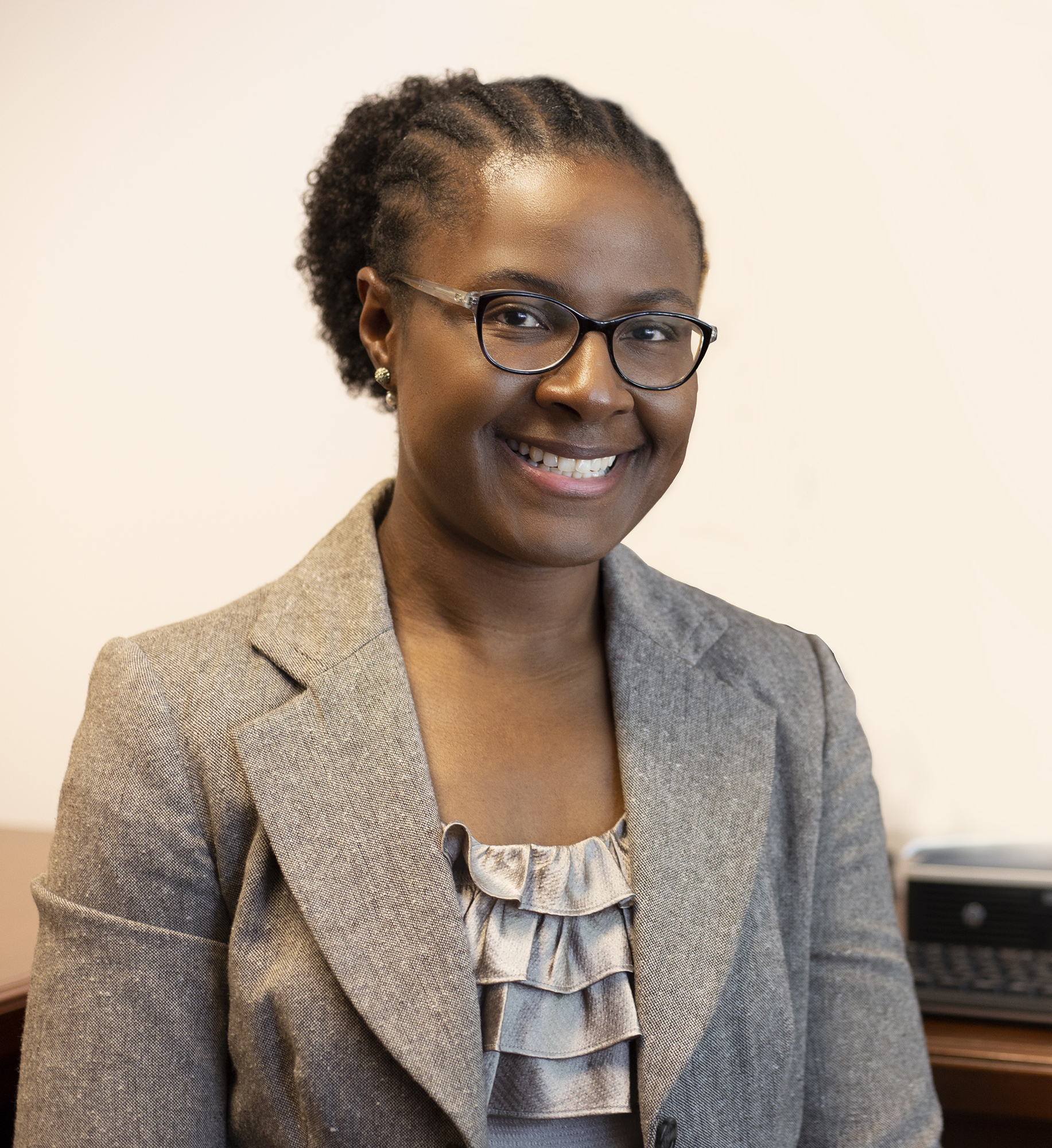
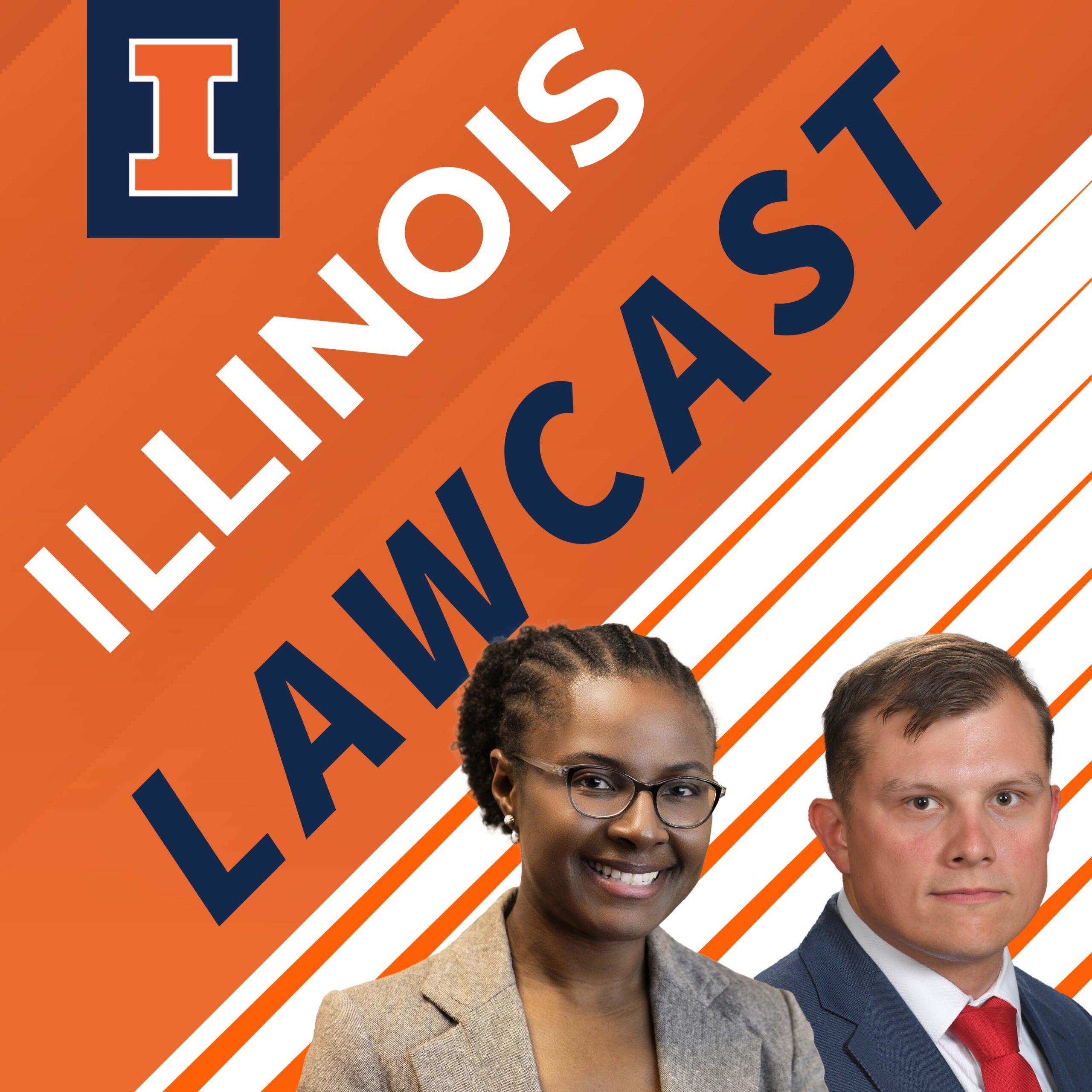
Illinois LawCast: Veterans Legal Clinic with Yulanda Curtis and Luke Hemmerla

Founder and director of the Veterans Legal Clinic, Yulanda Curtis, joins the podcast to discuss her passion for providing civil legal services to the veteran community. In the second half of this episode, 3L student Luke Hemmerla, a current member of the Missouri Army National Guard, joins to discuss his work as a clinician and how his military background has helped him in this role.

More information about the Veterans Legal Clinic can be found on their website. If you would like to contact the Clinic to see if their services might be right for you, the number to call is (217) 244-9494 or you may email law-clinics@illinois.edu.

If you have comments or suggestions for the podcast, please email podcast@law.illinois.edu.

Curtis and student clinician speak with WEFT about the Veterans Legal Clinc

Veterans Legal Clinic Director Yulanda Curtis and Briley McVey ’24 joined the WEFT program “Catch the Beat from Market Street” to discuss the different services provided by the clinic and share experiences working with veterans and their families. Their half-hour interview spans a number of topics and provides great insight into why the work of the Veterans Legal Clinic is so important.

College of Law
504 East Pennsylvania Avenue
Champaign, IL 61820
(217) 333-0931