Immigration Law Clinic selected by ISBA for the 2026 John E. Thies Excellence in Legal Education Award

The Illinois State Bar Association (ISBA) has named the University of Illinois College of Law Immigration Law Clinic as one of the recipients of the 2026 John E. Thies Excellence in Legal Education Award. The award recognizes law school programs that emphasize real world skills for law students. The clinic will be honored at the ISBA Member Appreciation and Recognition Reception on Thursday, May 14 at the Morton Arboretum.

Aronson writes op-ed about protecting immigrant students

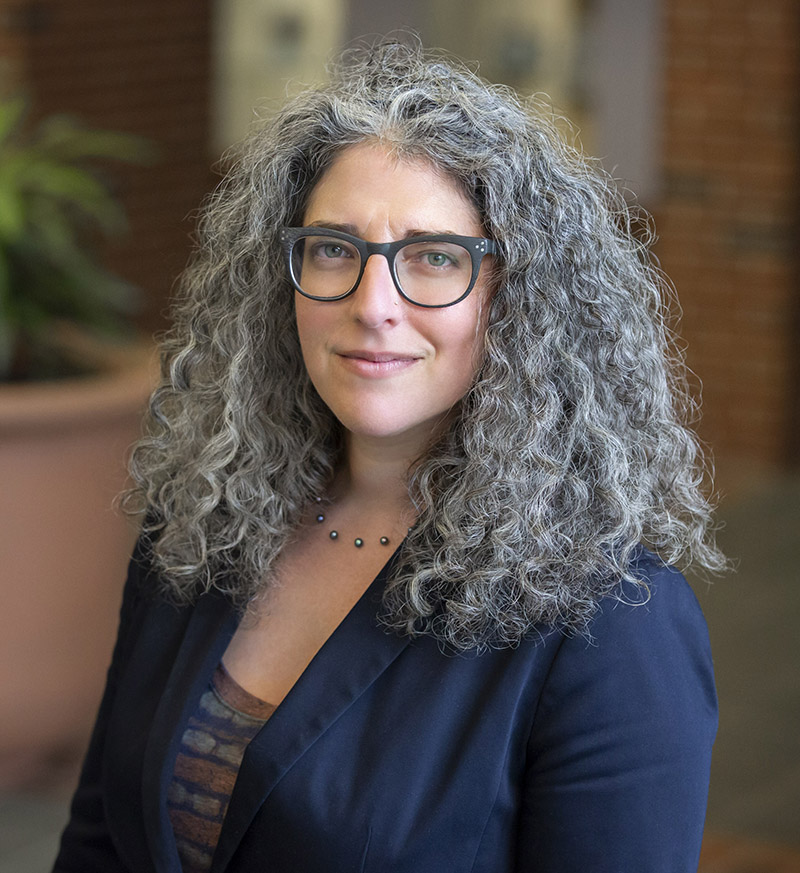
Special Immigrant Juvenile Status (SIJS) allows abused, abandoned, or neglected children a pathway for lawful permanent residence, and eventually US citizenship, once a state court judge determines they have suffered maltreatment and it was not in their best interest to return home. The Trump administration stopped considering SJIS applicants for deferred action, stating “a juvenile court determination relating to the best interest” of children is not a “sufficiently compelling” reason to protect them from deportation and allow them to legally sustain themselves while here. Writing at Common Dreams, Professor Lauren Aronson shares her view of this shift in policy.

“Many SIJS kids, like Sonia, lived their entire lives dreaming of this kind of freedom, which those of us born in the United States take for granted. They deserve, as all children do, the chance to be children,” Aronson writes.

Aronson and Curtis selected for OpEd Project Public Voices Fellowship

Professors Lauren Aronson and Yulanda Curtis have been selected for the University of Illinois System OpEd Project/Public Voices Fellowship. The program is part of a national initiative to help faculty amplify their expertise in ways that can contribute to public conversations about pressing issues.

The 20 faculty members in the 2025-26 cohort will attend four sessions during the 2025-26 academic year and will be paired with a journalism mentor who provides one-on-one editing and coaching. Fellows will publish two or more op-ed pieces during the program.

Congratulations to all of the faculty who were selected for this year’s program:

Chicago

  • Veerasathpurush Allareddy, professor and department head of orthodontics, College of Dentistry
  • Daylan Dufelmeier, director, Office of Community Engagement and Neighborhood Health Partnerships
  • Giamila Fantuzzi, professor and associate head, department of kinesiology and nutrition, College of Applied Health Sciences
  • Jeni Hebert-Beirne, professor, Division of Community Health Sciences, School of Public Health

Springfield

  • Akash Belsare, assistant professor, department of English and modern languages

Urbana-Champaign

  • Luvell Anderson, professor, department of philosophy, College of Liberal Arts and Sciences
  • Lauren Aronson, clinical professor, director of Immigration Law Clinic, College of Law
  • Jose Atiles, assistant professor, department of sociology, College of Liberal Arts and Sciences
  • Maria Bonn, associate professor and director, master of science in library and information science, School of Information Sciences
  • Yulanda Curtis, clinical professor, College of Law
  • Verena Erlenbusch-Anderson, associate professor, department of philosophy, College of Liberal Arts and Sciences
  • Rachel Hoopsick, assistant professor, department of health and kinesiology, College of Applied Health Sciences
  • Kathryn Huff, associate professor, department of nuclear, plasma, and radiological engineering, and director of advanced reactors and fuel cycles group, The Grainger College of Engineering
  • Fatima Husain, professor, department of speech and hearing science, and associate dean, College of Applied Health Sciences
  • Martin Persson, assistant professor, department of accountancy, Gies College of Business
  • Mary Phillips, associate professor, department of African American studies, College of Liberal Arts and Sciences
  • Koustuv Saha, assistant professor, department of computer science, Siebel School of Computing and Data Science
  • Bobby Smith II, associate professor, department of African American studies, College of Liberal Arts and Sciences
  • Haileleol Tibebu, assistant professor, School of Information Sciences
  • Travis Wagner, assistant professor, School of Information Sciences

Sixth Judicial Circuit honors Aronson

Congratulations to Professor Lauren Aronson on being selected by the Sixth Judicial Circuit Pro Bono Committee for the 2024 Community Legal Service Award. She was honored at an event on October 24 for her volunteer work in Champaign-Urbana, including work with the Immigration Law Clinic, the New American Welcome Center, and as the only Spanish-speaking guardian ad litem providing services to community members in Champaign County. On behalf of the entire College of Law, we express our sincere pride to call Professor Aronson one of our own.

Immigration Law Clinic students achieve asylum decision in clients’ favor

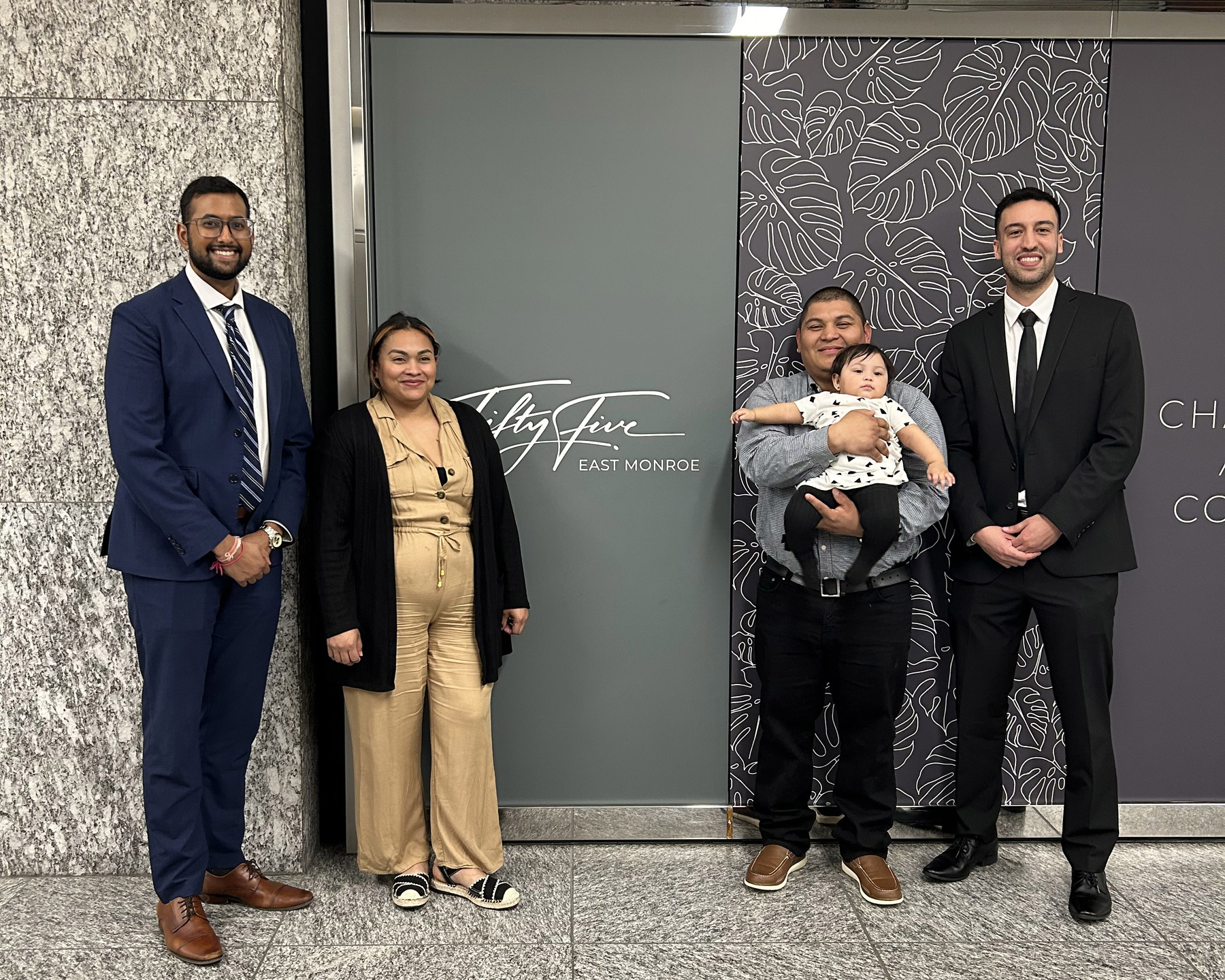
After hours of interviews, research, writing, and compiling a case to present in court, there are several emotions a young lawyer might feel. Nothing compares, however, to the flood of emotion that comes with hearing the judge announce a decision in favor of your client, which is exactly what Marco Becerra and Akshay Krishnamani felt on March 4 when the Immigration Court in Chicago granted asylum to the third-year students’ clients. 

“Oh, my God, it was so emotional, like everybody was crying,” Krishnamani said with a laugh when recalling that moment.

The lead-up to that big, emotional moment began in August of 2023, on the first day of Professor Lauren Aronson’s Immigration Law Clinic class, when Becerra and Krishnamani were assigned to work on a case fighting against the removal of three citizens of Nicaragua. The clients are a family who fled the violence of Nicaraguan President Daniel Ortega’s dictatorial regime, with one member of the family suffering from persecution so severe government officials shot him while participating in a peaceful protest. 

When the students took on the case, Professor Aronson had completed an initial application, but the rest of the work was their responsibility. After their clients’ perilous journey to the United States, through several countries over almost four years, it was of foremost importance for the students to gain the clients’ trust. 

“Initially, our job was just building rapport, explaining to them what the purpose of the clinic is, how we’re going to help them, giving them background on the case, that sort of thing,” Becerra said.

From there, the clinicians had the task of building the case and establishing credibility of the clients. No small task, to be sure, made a little more difficult by the additional work required from their other classes.

“We had to write a brief, draft separate affidavits, get a bunch of documentation and a bunch of research together…our filing ended up being over 700 pages,” Krishnamani explained.

The duo did a remarkable job, and their “over-preparedness,” in Becerra’s words, helped them successfully win asylum for their clients and keep the family together in the United States (since arriving, they had added another child to their family—an American citizen), and away from the persecution they faced in their native country. Both students were appreciative of all Professor Aronson had done to help them, crediting her with a willingness to answer any question but to otherwise let them learn through experience.

“I can’t believe that you can graduate from law school without working on a case. To me, that’s kind of crazy,” Becerra said, stressing how useful he found the clinic opportunity to be in his education. 

As children of immigrants, both Becerra and Krishnamani cited their background as one motivation for taking part in the Immigration Law Clinic. For Becerra, who would like to continue working in immigration law after graduation, this was also a chance to experience the work in advance; for Krishnamani, on the other hand, it was a chance to experience litigation and find an area in which he may like to direct his pro bono work in the future. 

“I would just encourage anyone to go out for clinic. It’s really informative but also really fun to work with several different clients,” Krishnamani said. “It kind of reinvigorated me on how important this work is.”
Immigration Law Clinic students Marco Becerra ’24 and Akshay Krishnamani ’24 stand with their clients, a family from Nicaragua, after securing a decision in their favor

Delete

Edit embedded media in the Files Tab and re-insert as needed.

Aronson talks Illinois immigration laws with Illinois News Bureau

A new law in Illinois has attracted broad attention because it seems to expand eligibility for jobs in law enforcement to non-U.S. citizens, such as Deferred Action for Childhood Arrivals program participants. Professor Lauren Aronson, director of the Immigration Law Clinic, gave an interview to the Illinois News Bureau to help clarify aspects of the law and separate truth from fiction. “Even though this new Illinois law says that DACA recipients can become police officers, they can’t because the law also specifies that they must be able to legally possess a firearm,” she explained.

College of Law
504 East Pennsylvania Avenue
Champaign, IL 61820
(217) 333-0931