Murphy talks to Illinois International about her role in helping the university fulfill its mission of global engagement

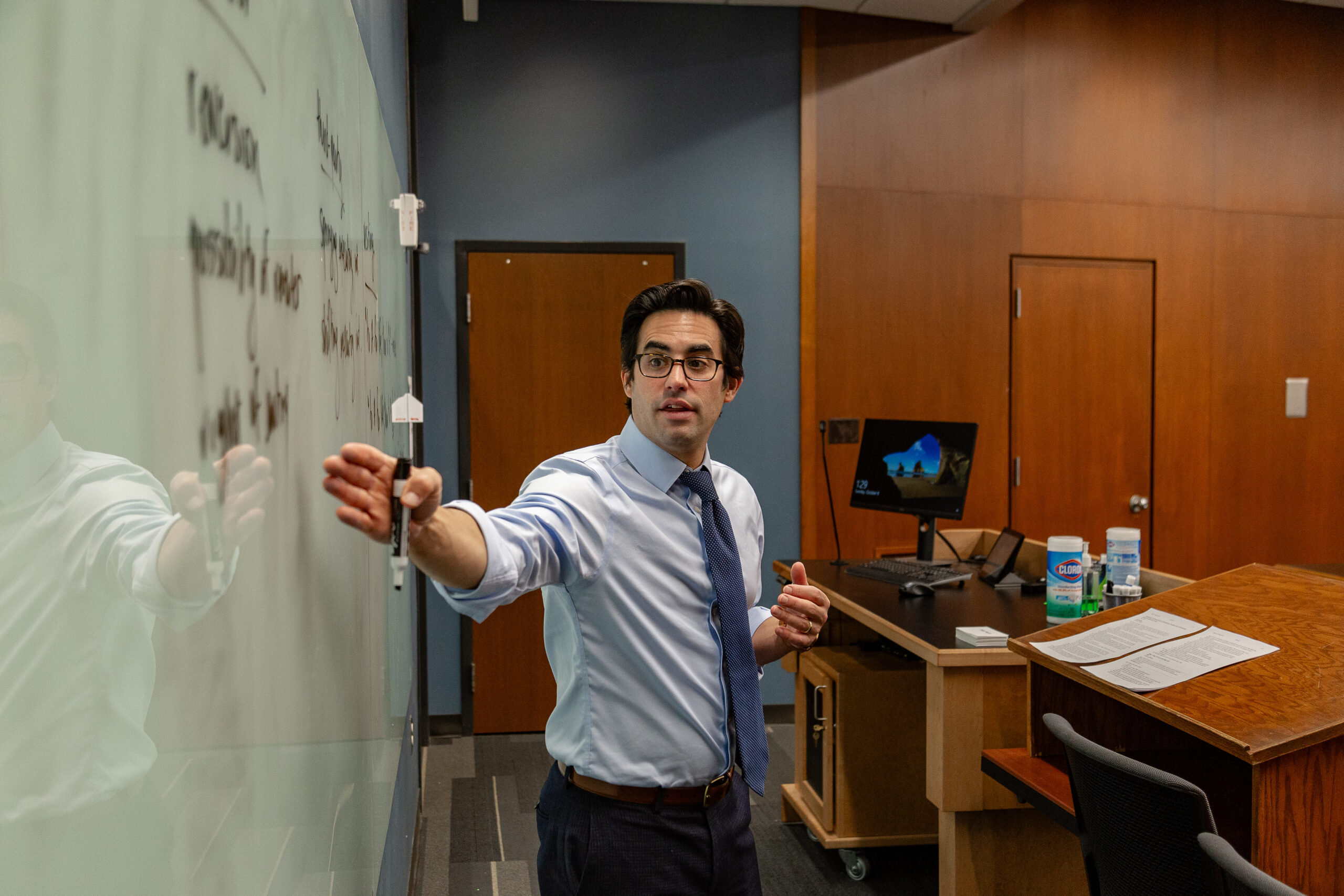
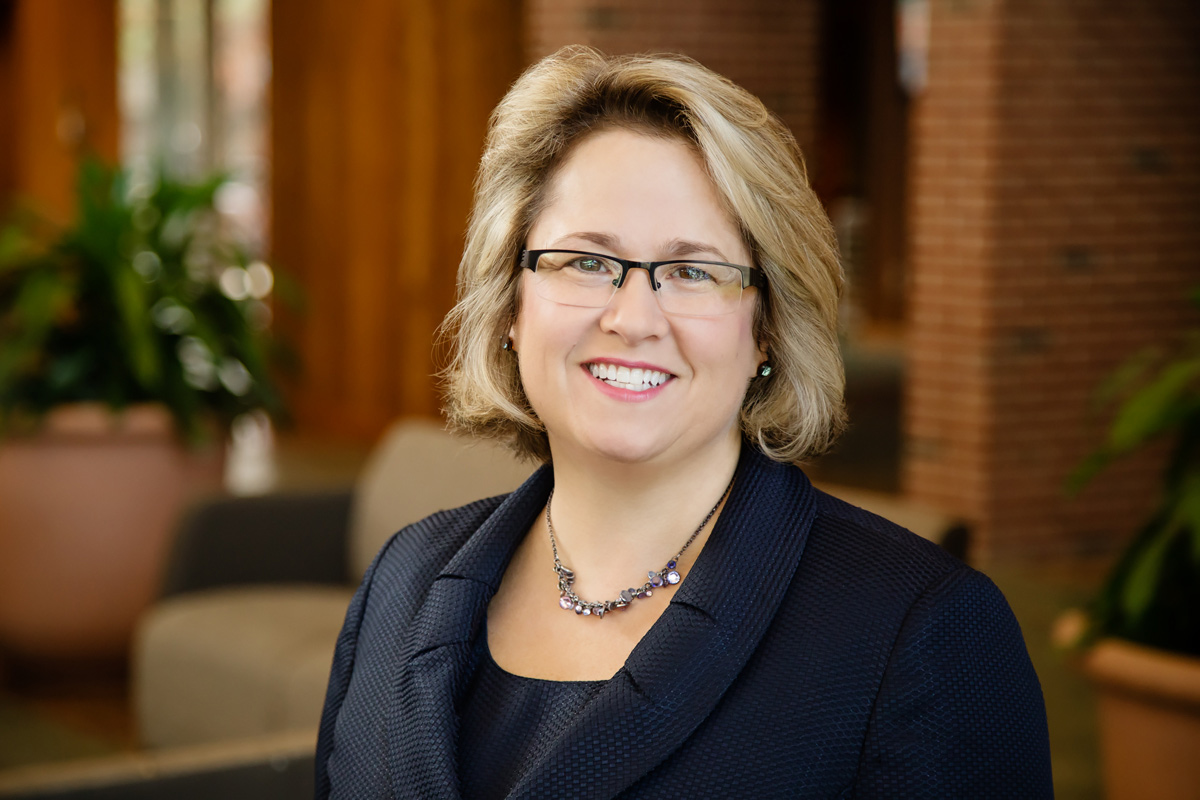
In addition to her role as Associate Dean for Academic Affairs at the College of Law, Professor Colleen Murphy has also been appointed as Interim Associate Chancellor and Vice Provost for Global Affairs & Strategies Designate. She recently spoke with Illinois International about the role, her vision for global engagement at the University, how she hopes to facilitate global research collaborations, and areas of opportunity in the coming year.

R. Ross publishes new essay in The Cambridge History of the American Revolution

Professor Richard Ross recently published an essay about how the Patriots’ use of law facilitated political mobilization for the American Revolution. The essay, “Legal Orders,” was co-authored with Steven Wilf, and appears in Cambridge History of the American Revolution, Volume 1: Revolutionary Contexts, ed. Marjoleine Kars, Michael A. McDonnell, and Andrew M. Schocket (New York: Cambridge University Press, 2026), I, 513-33.

Gerke publishes article in AMA Journal of Ethics

As artificial intelligence technology becomes more commonplace, questions about its ethical use are of more salience. In the AMA Journal of Ethics, Professor Sara Gerke examines one area of interest in this field: how ambient listening and transcription technology influences medical doctors’ documentation practices and clinical encounters. In her article, Gerke and her co-author seek to answer questions and provide best-practice recommendations for informed consent processes and patient-clinician relationships.

Sherkow publishes new paper in Stanford Law Review

“Infringement by label” is when a court treats drug labels as if they were patent claims, assessing whether their text merely “contains” a patented method of use, and it is also the subject of the latest scholarly research from Professor Jacob Sherkow. Writing in the Stanford Law Review, Sherkow explains how infringement by label threatens the ability of generic drugs to enter the market and how this creates a lack of clarity in the about patent infringement.

Aronson pens op-ed for Ms. Magazine

“The weight of society’s expectations of working moms on a normal day is crushing,” Professor Lauren Aronson writes in a new editorial published by Ms. Magazine. “With the added obligation that moms ensure our families experience a quintessential holiday season, this weight feels insurmountable.” From her role as an immigration lawyer as well as a mother of two, Aronson examines the obligations and expectations of mothers during the holiday season and concludes that every mom truly deserves a day off.

Watson honored with AALS Future Promise Award

Association of American Law Schools’ (AALS) Section on Jurisprudence has selected Professor Bill Watson as the 2026 recipient of its Future Promise Award. The award is given annually to recognize the research accomplishments of junior scholars working in the area of jurisprudence whose work reflects future promise in both philosophy and law. Watson was be honored at the AALS annual meeting in early January. The College of Law offers its sincere congratulations to Professor Watson for this honor.

Trump v. Barbara is biggest case of term, Mazzone writes

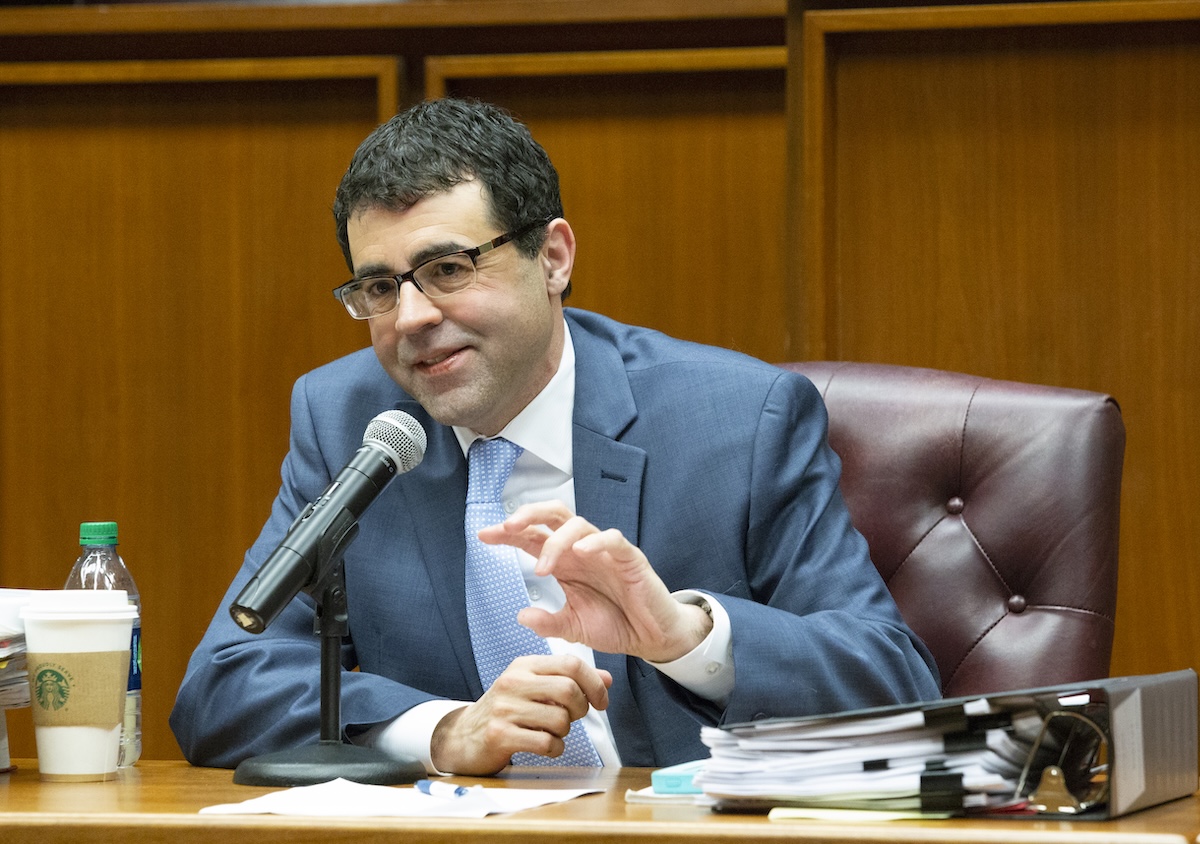
In terms of impact, the biggest case before the United States Supreme Court in its current term is Trump v. Barbara, Professor Jason Mazzone predicted in the News-Gazette. The case, which will consider the constitutionality of President Donald Trump’s executive order denying birthright citizenship to individuals born in the United States, is “plainly unconstitutional,” he states. “I expect that when the court rules in Trump v. Barbara, it will issue a strongly originalist decision that deploys constitutional text, structure and history to reject the president’s attempt to evade the plain words of the Fourteenth Amendment. That will be a fitting outcome in the year in which we celebrate the 250th anniversary of the Declaration of Independence,” he concludes.

Thomas authors article on UK and US juries

Writing in The George Washington Law Review, Professor Suja Thomas contrasts the ways in which employment cases are adjudicated in United Kingdom and the United States. Though the United States modeled its system on that of the United Kingdom, “the U.K. has more heavily circumscribed the right to a jury trial in both criminal and civil cases,” she writes. One main difference, Thomas concludes, is that the U.S. is more prone to dismissal of employment discrimination cases, whereas U.K. is wary of such outcomes.

Rowell files regulatory comment, prompting change in regulation of nuclear safety

Working with an interdisciplinary team of nuclear engineers, Professor Arden Rowell coauthored a public comment submitted to the Nuclear Regulatory Commission in response to its proposed “Sunset Rule.” The rule had proposed “sunsetting” ten regulatory rules addressing nuclear safety.

The comment addressed foundational administrative law issues, including statutory authority, the agency’s current mission, and the requirements of reasoned decision-making under the Administrative Procedure Act. Following the close of the public comment period, the NRC partially withdrew the proposed rule.

The episode highlights the importance of expert participation in the administrative process. It also reflects the College of Law’s strong engagement with national policy questions at the intersection of law, technology, and public governance.

College of Law
504 East Pennsylvania Avenue
Champaign, IL 61820
(217) 333-0931