In a settlement deal over claims Moderna infringed upon patents owned by Roviant in its COVID-19 vaccine, Moderna has agreed to pay up to $2.25 billion. The settlement, however, has a unique structure in which Moderna will pay $950 million up front and then another $1.3 million if an appeal to have parts of its liability offloaded to the federal government fail. “This was a case that should have settled at the very beginning,” Sherkow told STAT. “There was never any real dispute that Moderna was infringing. It was just a matter of coming up with a number that was mutually acceptable.”
Professor Arden Rowell was part of an interdisciplinary team of University of Illinois researchers raising concerns about a proposed rule that could reduce environmental oversight for advanced nuclear reactors. The group submitted a public comment to the U.S. Department of Energy about a rule that would allow certain advanced reactor activities—including siting, construction, operation, and decommissioning—to proceed without standard environmental reviews. The team concluded the U.S. Nuclear Regulatory Commission should not adopt the Department of Energy’s characterization of advanced reactors as technologies that normally have no significant environmental impacts.
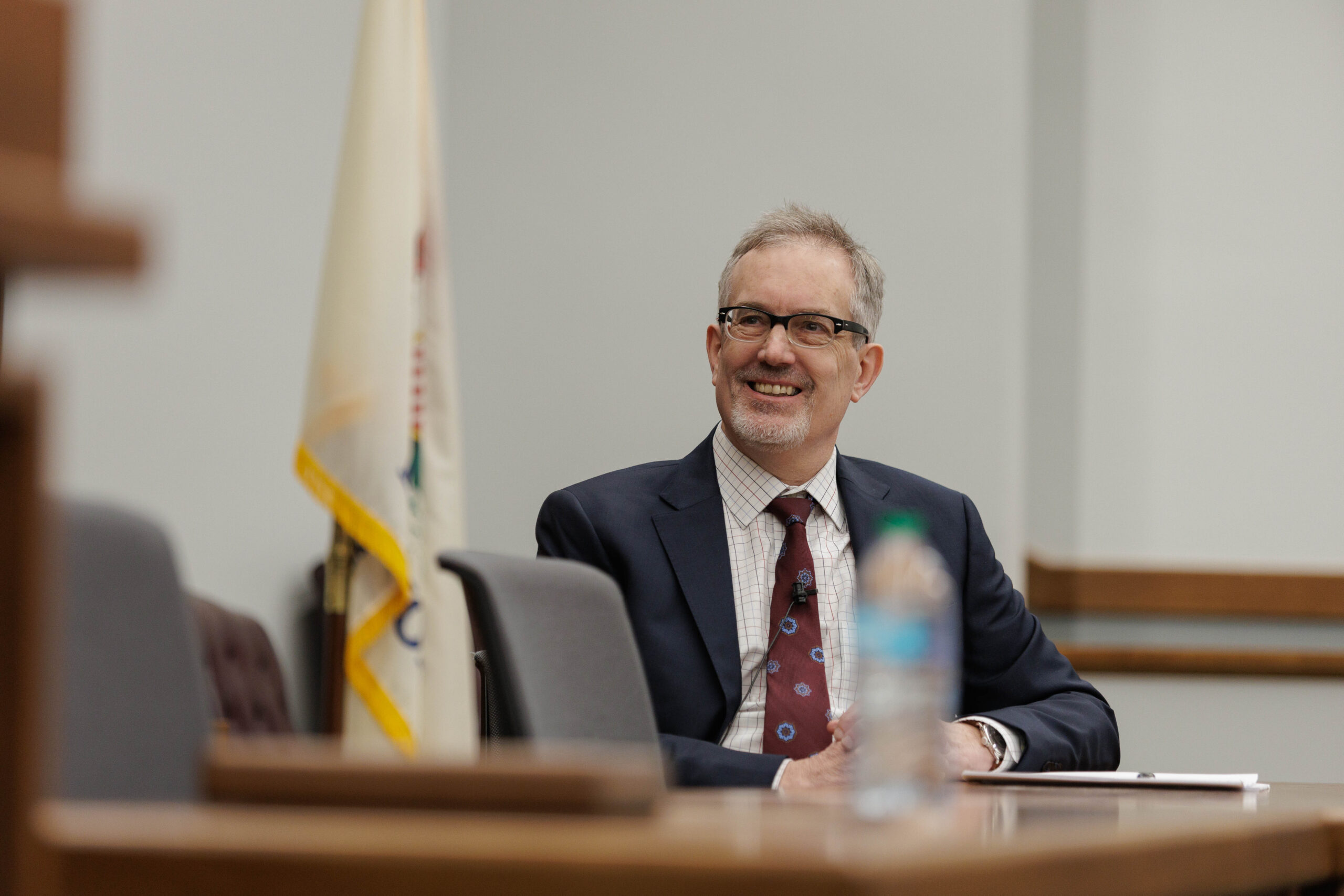
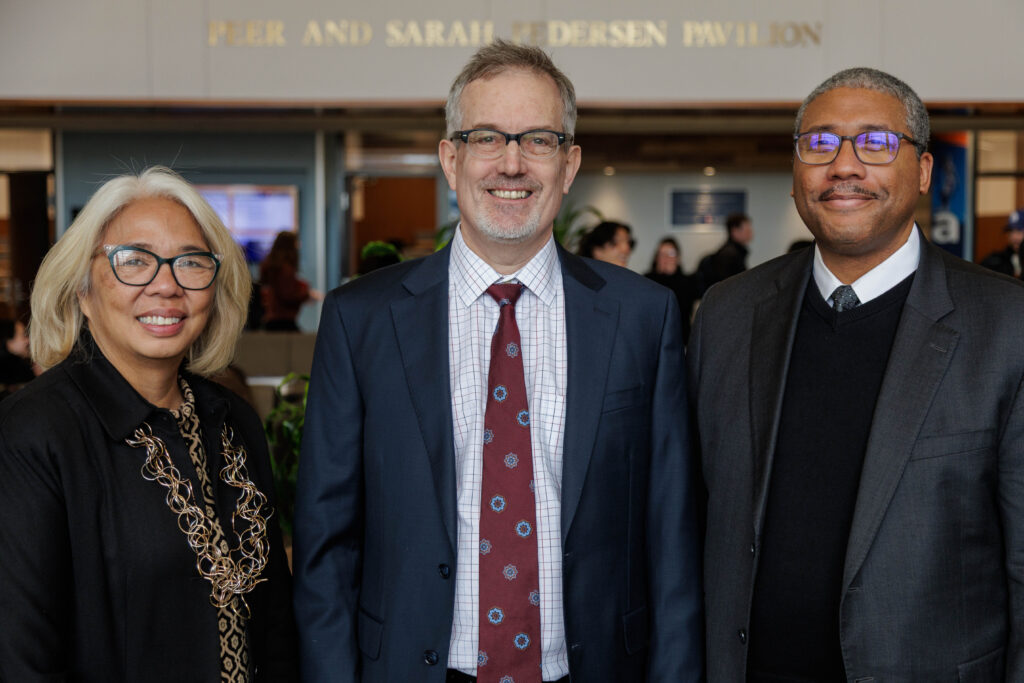
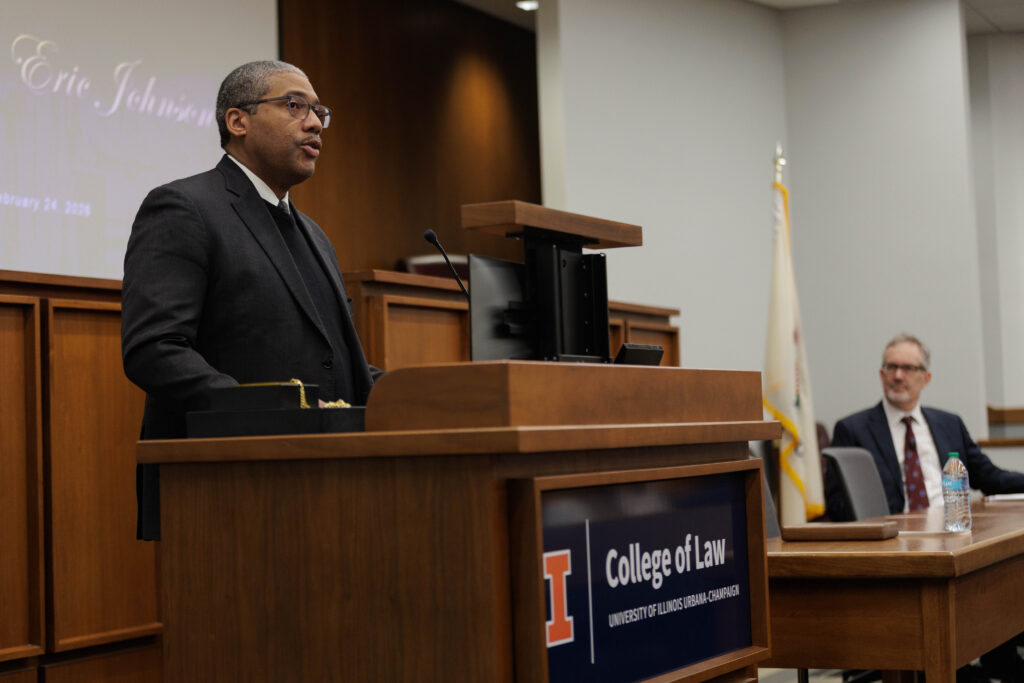
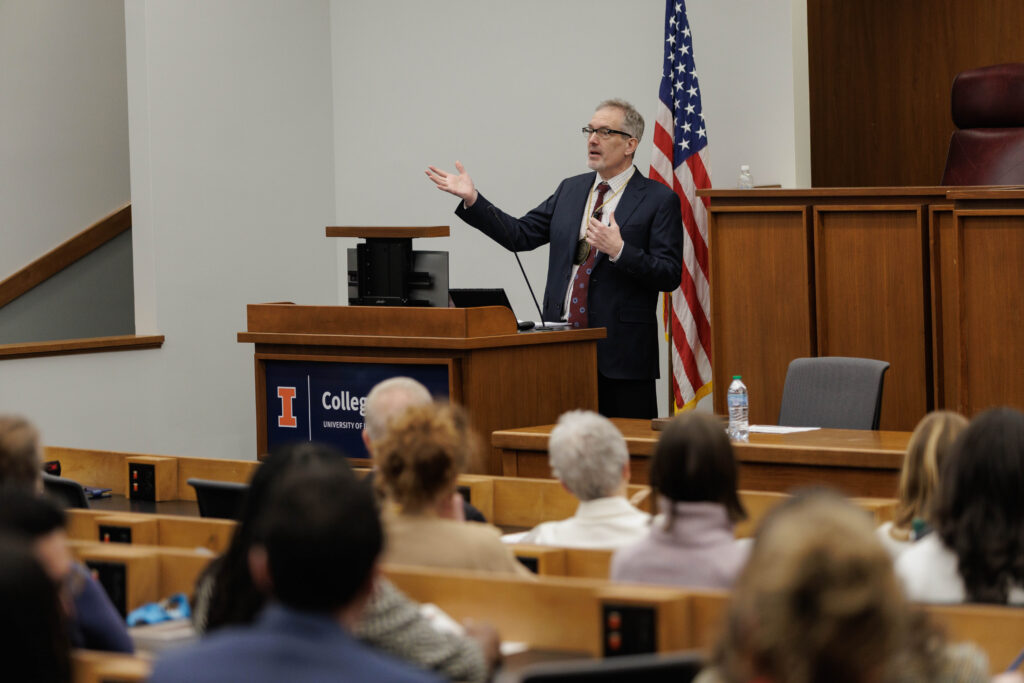
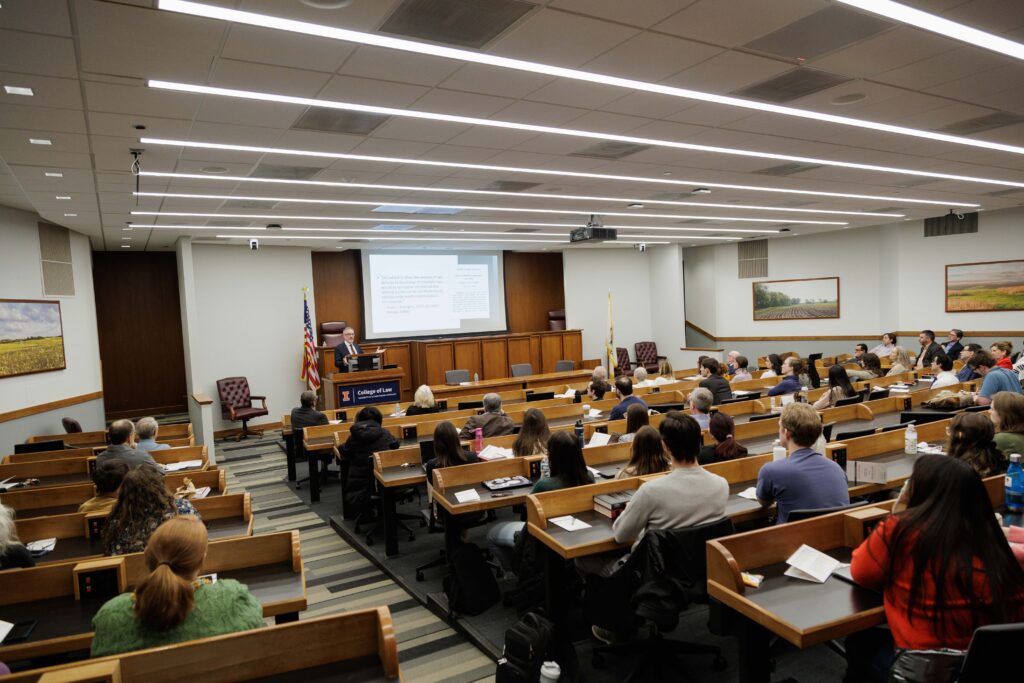
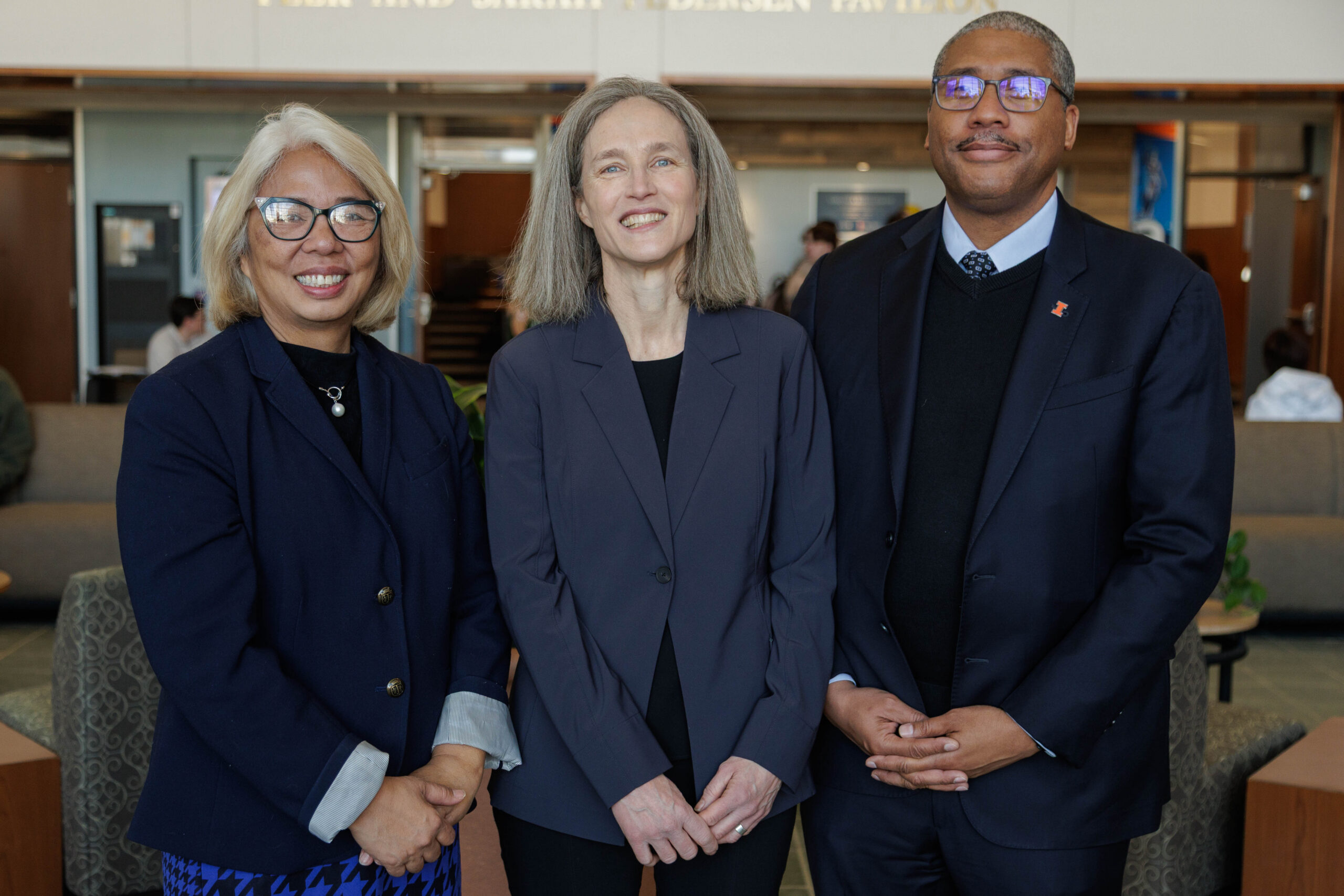
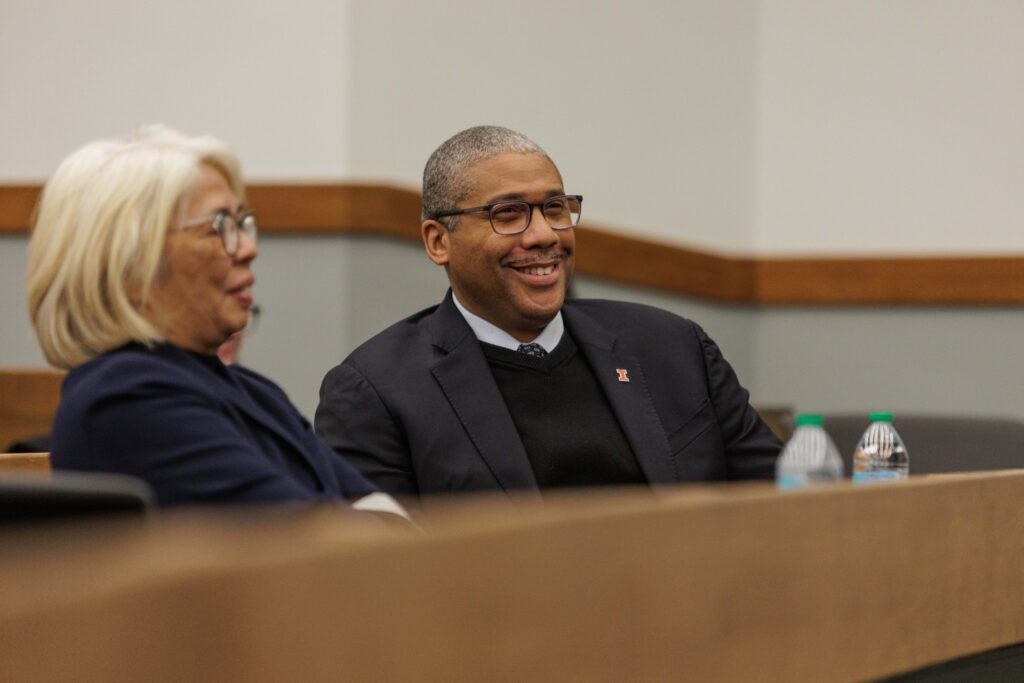
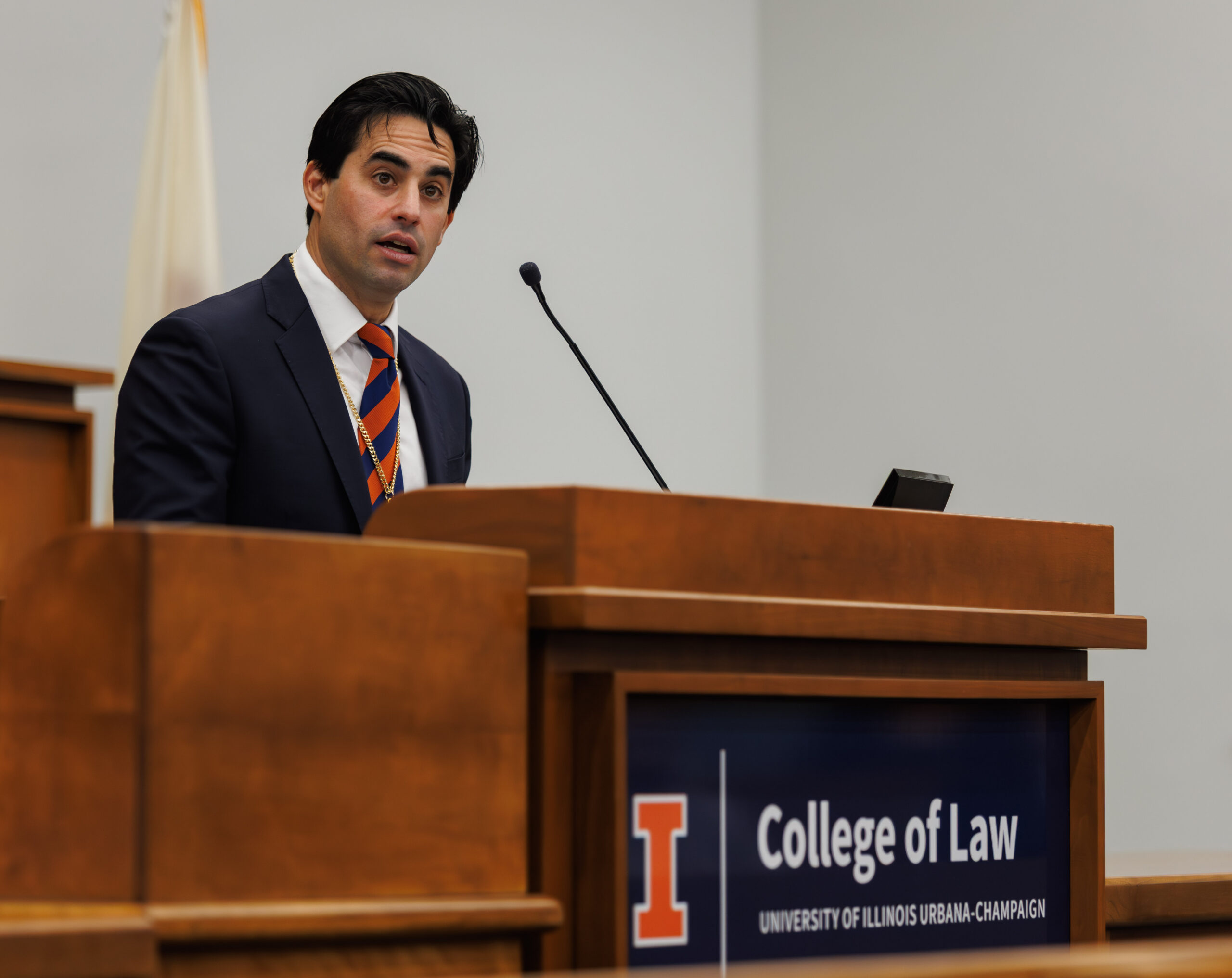
On February 24, 2026, Eric A. Johnson was invested as the Edward W. Cleary Professor of Law in a ceremony at the College of Law Building. The investiture ceremony honored Johnson for his commitment to and ways he has helped further advance the mission of the University of Illinois College of Law.
In remarks shared at the ceremony, Professor Heidi Hurd praised his tenure at Illinois thus far: “Professor Johnson is a profoundly impactful scholar with an enviable national reputation for doing exquisitely careful, detailed and rigorous work.” Dean Jamelle Sharpe added an example of the impact he has had, noting that the Illinois Supreme Court unanimously sided with Johnson’s opinion of how causal problems in overdetermination cases ought to be resolved over that of former United States Supreme Court Justice Antonin Scalia
Professor Johnson joined the University of Illinois in 2009 after a career as a government attorney. He spent 11 years in the Alaska Attorney General’s Office and an additional three years as assistant solicitor general in the New York State Attorney General’s Office before entering academia as the directo of the prosecution clinic at the University of Wyoming College of Law. Since coming to Illinois, Johnson has enhanced his reputation as an expert in criminal law, criminal procedure, and evidence. His work has been published in an array of peer- and student-edited journals, including Law and Philosophy, the Boston University Law Review, and the Journal of Criminal Law and Criminology. Twice Johnson has received the college’s annual Carroll P. Hurd Award for Excellence in Faculty Scholarship; he has also served as associate dean for academic affairs and students named him the 2L Professor of the Year in 2013 and have chosen him as convocation hooder eight times. His full bio is available on his faculty profile page.
Professor Johnson’s endowed position was established by an estate donation from Albert E. Jenner in honor of Professor Edward Cleary. Cleary was a distinguished graduate of the Illinois Law Class of 1932 and went on to practice law and serve in the United States Navy before joining the College of Law faculty in 1946, where he established himself as an expert on legal procedure and evidence. Johnson, who was joined by members of his family at the ceremony, was honored with speeches from Dr. Amy Santos, associate provost for faculty development and professor in the Department of Special Education, as well as Dean Jamelle Sharpe.
In his latest paper, Professor Jacob Sherkow argues that recent court decisions that treat safety information on a drug’s package as key evidence in patent cases against generic-drug manufacturers have been incorrectly adjudicated and should be reversed by the Supreme Court. “Those lower court decisions, which embrace a legal theory we call ‘infringement by label,’ are incorrect. It’s a fictional turn in the law that we hope the Supreme Court shuts down,” he told the Illinois News Bureau.
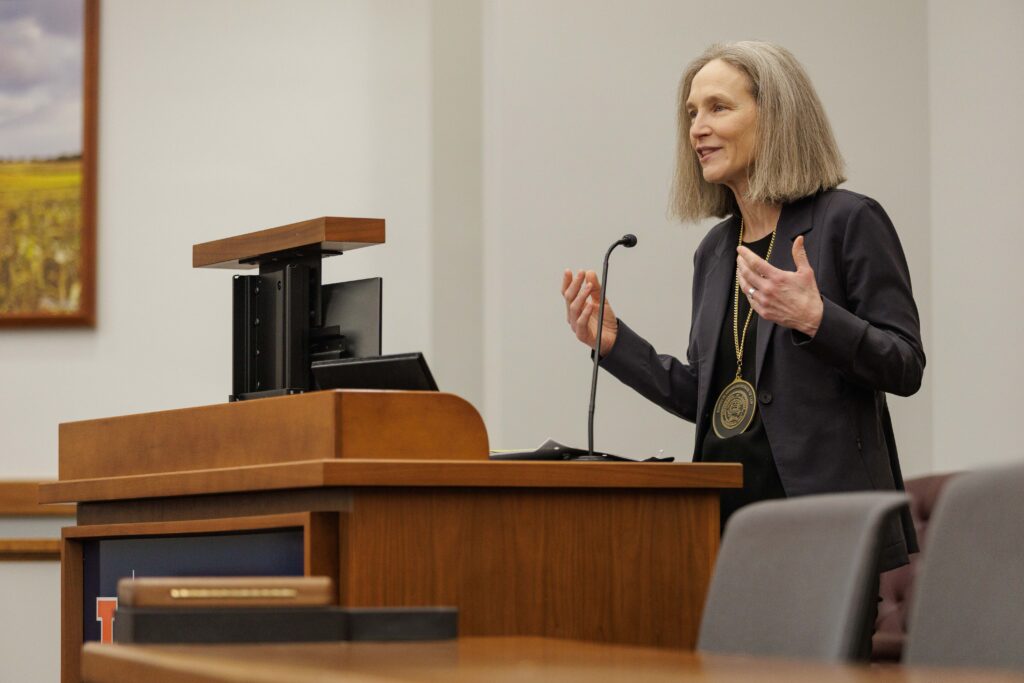
On February 10, 2026, Verity Winship was invested as the Edwin M. Adams Professor of Law in a ceremony honoring her commitment to scholarship, teaching, and public engagement.
An expert in business law and complex litigation, Professor Winship has been a vital part of the College of Law since 2010, twice earning the Carroll P. Hurd Award for Excellence in Faculty Scholarship as well as serving as Interim Dean of the College of Law and the Senior Associate Dean for Academic Affairs. She has also served as fellow in the Academic Leadership Program in the Big Ten Academic Alliance and chaired the Securities Regulation section of the American Association of Law Schools during her time at Illinois. Her full bio is available on her faculty profile page.
Professor Winship’s endowed position was made possible through a generous gift from the late Edwin M. Adams, a well-known lawyer and actor, who earned his law degree at Illinois in 1939. Joined by her family, Winship was honored with speeches from Dr. Amy Santos, associate provost for faculty development and professor in the Department of Special Education, as well as Dean Jamelle Sharpe.
Professor Jake Sherkow spoke to Bloomberg Law on several occasions in February, regarding patent lawsuits that are making their way through the courts.
One of the lawsuits, filed by Novo Nordisk A/S against Hims & Hers Health Inc., takes aim at the practice of drug compounding and highlights the ambiguity between the FDA’s compounding framework and US patent law. Sherkow said that the lawsuit demonstrates that compounding pharmacies and direct-to-consumer telehealth platforms have grown from “minuscule operations” into “real players” that brand-name drugmakers now view as worth targeting in patent litigation. Read more from Sherkow on this case at bloomberglaw.com.
Another lawsuit, filed by BioNTech SE against Moderna Inc., claims patent infringement involving mRNA vaccine technology.
“This is typical of cutting-edge technology as it matures,” Sherkow said. “The original patents—and patent disputes—are often about using the technology more broadly, with one or few early entrants suing manufacturers. As the technology develops—and that first generation of patents gets older—we see more, albeit narrower, patenting focusing on specific products, and a great number of patent holders suing (and cross-suing) other manufacturers.” Read more from Sherkow on this case at bloomberglaw.com.
The College of Law was well-represented at the recent St. Louis University Colloquium on Law, Behavioral Science, and Social Science. Professor Jennifer Robbennolt presented a work-in-progress called “’The Rule of Law’ Silo” that is co-authored by Professors Verity Winship and Colleen Murphy. The paper presents the results of a survey to understand what people understand the phrase “the rule of law” to mean.
Professor Arden Rowell presented a paper called “Why Behavior?” The paper develops a model to systematize how different scholarly traditions approach the question of why law & behavior matters.
Professor Bob Lawless and recent graduate Emily Woo ’25 presented a paper that they co-authored with Jennifer Robbennolt and Angela Koo ’25, entitled “Who Gets the Last Word? Interruptions and Floor Control on the Supreme Court.” The paper, forthcoming in the University of Illinois Law Review, began as Emily and Angela’s class project for Empirical Methods. Using data scraped from transcripts of Supreme Court oral arguments, the paper reinforces past findings about gendered patterns of interruptions between the justices and also builds a more complex story by focusing on which justices retain floor control after being interrupted.
Finally, Professors Kenworthey Bilz, Lesley Wexler, and Verity Winship were commentators for papers at the colloquium.
The federal government’s moves to reform the rules surrounding nuclear energy plants might have had the effect of streamlining the process of bringing new reactors online and, thus, creating more nuclear energy for the United States’ power grid. Federal agencies making changes behind closed doors, without input from experts, has chilled scientists, however. Moving quickly and creating uncertainty, Professor Arden Rowell tells Science, could backfire and slow progress.
Professors Ralph Brubaker and Robert Lawless were both featured in the commentary featured on the American Bankruptcy Institute’s blog, Rochelle’s Daily Wire. Their commentary discussed the most recent decision in the ongoing controversy over the propriety and legitimacy of so-called “Texas Two-Step” mass-tort bankruptcies. The decision, from the Fourth Circuit, continues to stoke opinion and Lawless writes that it sets up “a Supreme Court decision in the coming years.”
President Donald Trump issued an executive order that would end birthright citizenship as commonly understood. More than a year later, the Supreme Court is set to hear arguments on the case, and Professors Jason Mazzone and Vikram Amar believe the order should be invalidated. Writing at Justia Verdict, the professors argue, again, that the order violates the first sentence of Section One of the Fourteenth Amendment, and it also flouts the 1952 Immigration and Nationality Act.