Thomas authors article on UK and US juries

Writing in The George Washington Law Review, Professor Suja Thomas contrasts the ways in which employment cases are adjudicated in United Kingdom and the United States. Though the United States modeled its system on that of the United Kingdom, “the U.K. has more heavily circumscribed the right to a jury trial in both criminal and civil cases,” she writes. One main difference, Thomas concludes, is that the U.S. is more prone to dismissal of employment discrimination cases, whereas U.K. is wary of such outcomes.

Article on diminishing number of jury trials cites Thomas

Since the 1960s, the number of jury trials a judge presides over has been steadily decreasing, with state courts only seeing one or two percent of cases resolved by a jury. This significant shift has great effects, such as depriving the public of a view on how the justice system works. A recent article about this trend cites the work of Professor Suja Thomas and her work exposing significant problems with the justice system.

Thomas cited in article on disappearing jury trials

Today, juries decide only about 1% of civil cases, a far cry from 1962 when juries decided about 6% of civil cases. An article examining this trend, published by The Conversation, the authors cite Professor Suja Thomas’ book “The Missing American Jury” to illustrate their point about how the trend has the effect of less fairness. “They…benefit political and economic elites by wresting away some of the power that formerly belonged to juries. The cumulative effect is fewer community judgments and more private, judicial and legislative control over outcomes,” the authors write.

Thomas speaks about significant developments in employment law at National Employment Lawyers Association Annual Convention

Earlier this summer, Professor Suja Thomas participated in a panel at the National Employment Lawyers Association (NELA) Annual Convention. Thomas and her co-presenters led a discussion on the employment cases decided by the Supreme Court during its 2024-25 term; significant appellate court, legislative, and state law developments; and emerging issues in plaintiffs’ employment law.

Thomas receives grant from Ford Foundation to advance her documentary project on the justice system

Professor Suja Thomas has been awarded a grant from the Ford Foundation’s JustFilms program, which will fund her documentary project on the American justice system. The Foundation’s investment will support 46 film projects and initiatives, highlighting its unwavering commitment to advancing narrative power and justice through the art of storytelling. Learn more about JustFilms and the projects that have been funded at fordfoundation.org.

New York Times quotes Thomas on Greenpeace case

In March, a North Dakota jury awarded a Texas-based pipeline company more than $660 million in damages related to protests against the Dakota Access Pipeline. Greenpeace is expected to appeal the decision, in part because of their issue with jurors who had ties to the oil industry. Professor Suja Thomas, an expert in jury trials, told The New York Times North Dakota courts do not use “blanket disqualifications of jurors just because they might have some kind of interest.”

Thomas speaks at Survival of the Jury symposium

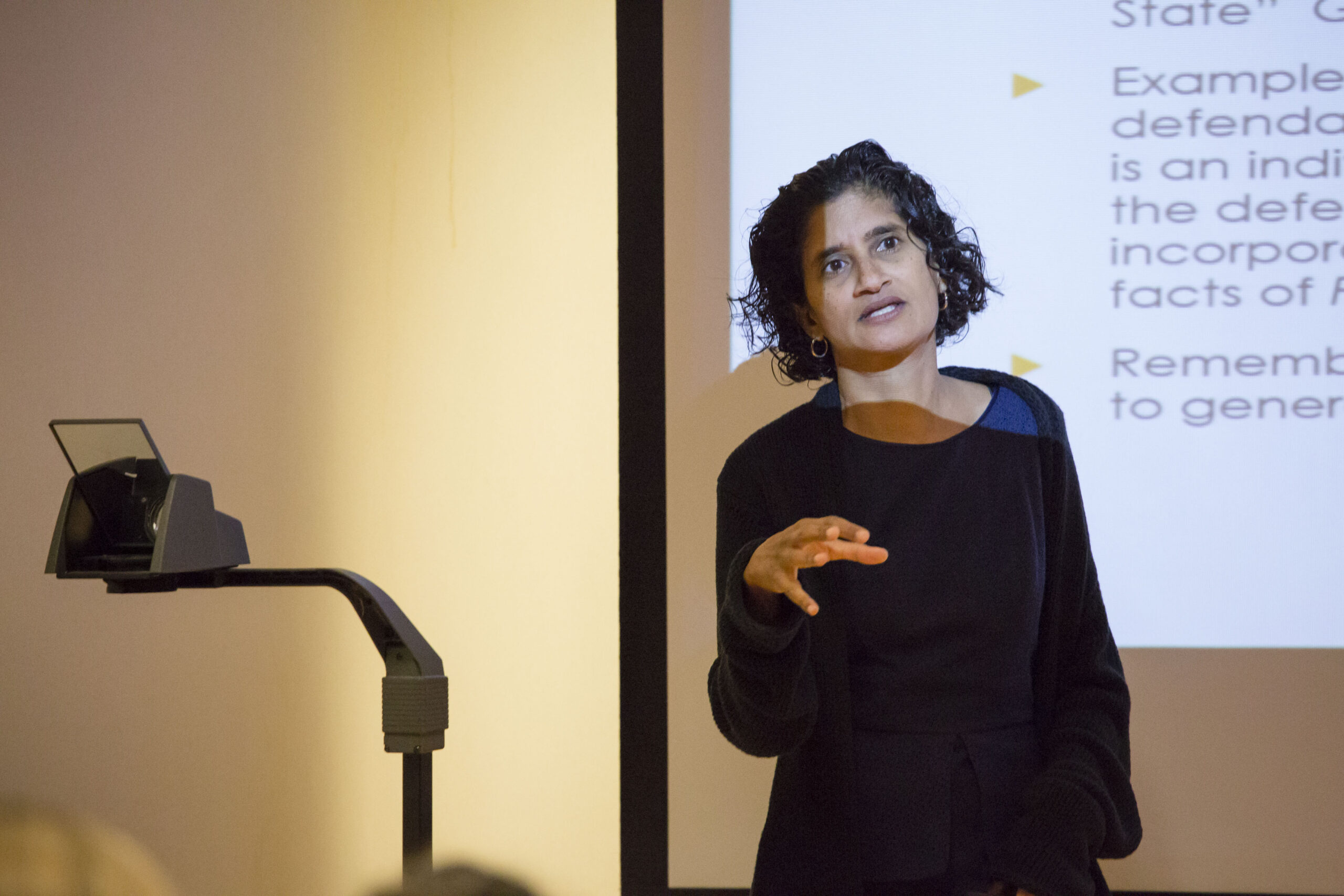
On Friday, October 25, 2024, Professor Suja Thomas spoke at the Survival of the Jury at George Washington Law School in Washington, DC. The symposium focused on the past, present, and future of the jury in the U.S. legal system and Professor Thomas spoke about how federal judges in the U.S. dismiss far more employment discrimination cases before trial than judges in the United Kingdom.

Thomas presents at Employment Lawyers convention

Professor Suja Thomas presented on Court of Appeals cases decided this past year as part of “The Year in Review: Significant Developments in Employment Law” at the Annual National Employment Lawyers Association Convention in Philadelphia on June 29, 2024. The convention is designed to provide continuing legal education for the plaintiffs’ bar, including attorneys, paraprofessionals, law students, and other workers’ rights advocates.

Thomas discusses Trump trials and juries with Illinois News Bureau

“I hope all of the criminal Trump trials highlight the importance of juries,” Professor Suja Thomas told the Illinois News Bureau in a recent interview. She spoke at length on what impact former President Donald Trump’s trials may have on the public perception of jury duty. Though there has been a decline in jury trials due to plea bargains in criminal cases and private arbitration or dismissals in civil cases, Thomas emphasized the crucial role of jury trials in checking governmental power and ensuring fair justice, noting systemic biases favoring the wealthy in the current criminal justice system.

Thomas quoted by WSJ: In Win for Workers, Supreme Court Opens Door to More Discrimination Claims

The Supreme Court issued a decision in Muldrow v. City of St. Louis on April 17, 2024, ruling in favor of a female police sergeant who said she was unlawfully transferred from the intelligence division to a less prestigious patrol position because she is a woman. The case had previously been dismissed by a federal appeals court; the Supreme Court said that “while an employee must show more than trifling harm from an employer’s discriminatory action, the appeals court had raised the bar too high.” While the decision is seen as a win for workers, employment discrimination expert and professor Suja Thomas worries that workers still face many hurdles getting discrimination claims before juries. Speaking to the Wall Street Journal about the decision, she said, “Unfortunately, there are lots of other ways courts are dismissing these cases.”

College of Law
504 East Pennsylvania Avenue
Champaign, IL 61820
(217) 333-0931