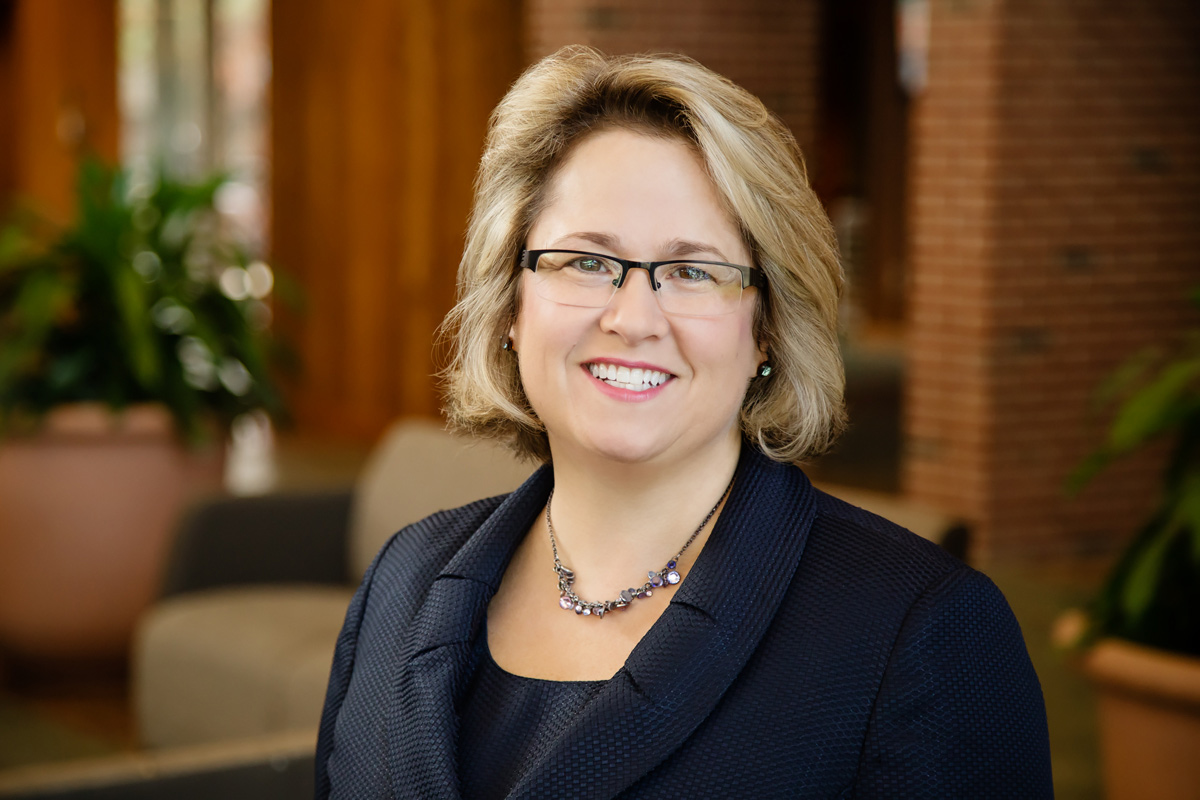
Wexler invited to affiliate with National Institute of Military Justice as a Fellow

In recognition of her excellence and distinction as a leader in the field of military law, Professor Lesley Wexler has been invited to affiliate with the National Institute of Military Justice (NIMJ) as a Fellow. NIMJ was founded in 1991, and is the only American non-profit institute dedicated to the study of improvement of the military justice system. Wexler joins fellow College of Law professor and military veteran Tony Ghiotto in her affiliation with NIMJ.

Hurd delivers Alistair Macleod Distinguished Lecture in Philosophy at Queen’s University

Heidi M. Hurd gave the prestigious Alistair Macleod Distinguished Lecture in Philosophy at Queen’s University in Kingston, Ontario, in late February 2025. Entitled “The Immorality of Mercy,” Professor Hurd’s talk to a packed auditorium of faculty and graduate students in law and the humanities challenged the claim that mercy is compatible with justice. 

Gerke publishes co-authored article in New England Journal of Medicine

If 23andMe goes bankrupt, what happens to their millions of customers’ personal and genetic data?

Sara Gerke, Melissa B. Jacoby, and I. Glenn Cohen explore this issue in a new article published on March 2 in the New England Journal of Medicine, titled “Bankruptcy, Genetic Information, and Privacy — Selling Personal Information.”

The data are not protected by HIPAA, the authors note. The U.S. has no comprehensive federal privacy laws (and handful of overlapping, conflicting state laws.) Sure, Congress could pass consumer protection laws, but “it has been difficult to get large-scale privacy reform through Congress.”

Indeed, as the authors note, 23andMe’s privacy statement “reserves the company’s right to transfer customers’ personal information in the event of a company sale or bankruptcy.”

Basically, Gerke, Jacoby, and Cohen argue, little is stopping this data (potentially 14 million consumers’ worth) from being sold to the highest bidder.

Conclusion: “We believe it’s time to reconsider how [genetic information] data are regulated.”

Sara Gerke is an associate professor at the University of Illinois Urbana-Champaign College of Law. Melissa B. Jacoby is a law professor at the University of North Carolina at Chapel Hill. I. Glenn Cohen is a Harvard Law professor and faculty director of the Petrie-Flom Center for health law policy, biotechnology, and bioethics at Harvard Law School.

J. Sharpe and Rowell quoted in article on threats to DEI programs

The “Dear Colleague Letter” issued by the U.S. Department of Education in February expressed a threat that schools that support diversity initiatives could face funding cuts. With several cultural houses on campus, University of Illinois Urbana-Champaign could be among the targets to lose funding. In an extensive examination, Illinois Public Media quotes both Dean Jamelle Sharpe and Professor Arden Rowell on how the letter may affect the Illinois campus and the levels of uncertainty that exist currently. “The Department is taking a very aggressive and expansive view of the Supreme Court’s decision,” Sharpe said. “They believe it should be applied to situations that the Supreme Court’s decision itself did not address.”

Forthcoming paper by Sherkow focuses on drug labels

A drug label is a vital piece of information in patent cases, but a series of recent decisions from the U.S. Court of Appeals for the Federal Circuit have changed how the court assesses claims. In a forthcoming article in the Stanford Law Review, Professor Jacob Sherkow calls this new confusion over labels “infringement by label.” In the paper, Sherkow and his co-author examine unresolved questions in patent law and return pharmaceutical patent litigation to factual and doctrinal basis.

Murphy publishes co-edited volume on Technology and Equality

What role does technology have in global inequalities and can new technologies be instrumental in making the world less unfair? In the new volume Technology and Equality, co-edited by Professor Colleen Murphy, these issues and others are addressed from a wide range of perspectives by scholars from multiple disciplines. The book is published by Rowman & Littlefield Publishers and available now.

Learn more about Technology and Equality.

Robbennolt to present at Annual Dispute Resolution Symposium

Professor Jennifer Robbennolt will speak at the Texas A&M Annual Dispute Resolution Symposium in March. The symposium will explore the roles pudges play in court-connected “alternative” dispute resolution, including referring or ordering cases to these processes and enforcing negotiated/mediated settlement agreements and arbitration awards and overseeing the incorporation and quality of dispute resolution in the courts. The symposium will feature several prominent judges and other law professors.

Symposium papers from “The Future of History and Tradition” available

In early 2024, the Program in Constitutional Theory, History and Law co-sponsored with the Harvard Law School and the University of Richmond School of Law a symposium on “The Future of History and Tradition.” The symposium, held at Harvard, brought together leading scholars to discuss the Supreme Court’s recent renewed interest in history and tradition as a tool for interpreting and applying the Constitution and the attendant puzzles and challenges that lie ahead. Essays from the symposium have now been published in the Harvard Journal of Law and Public Policy .

Watson reviews Law Is a Moral Practice

The argument that law is a moral practice is, appropriately, the topic of the book Law Is a Moral Practice, and Professor Bill Watson examines that premise in his new review article. Published in the Washington University Jurisprudence Review, the article, titled “In What Sense Is Law a Moral Practice?,” concludes the argument is unsuccessful but a topic worthy of consideration.

College of Law
504 East Pennsylvania Avenue
Champaign, IL 61820
(217) 333-0931