New paper from Robbennolt and Winship – “From Tweets to Testimony: A Case Study of Apologies After the FTX Collapse”

A new co-authored essay from Professors Jennifer Robbennolt and Verity Winship will be published in the FSU Business Review, as part of the 2026 Symposium on Behavioral Perspectives on Corporate Law. The essay is titled “From Tweets to Testimony: A Case Study of Apologies After the FTX Collapse,” and the abstract follows:

In the wake of the collapse of cryptocurrency exchange FTX, chief executive Sam Bankman-Fried delivered a constellation of apologies to a variety of constituents. Bankman-Fried included apologetic statements in a series of tweets, in a letter to company employees, in a host of interviews, and, ultimately, in his remarks at his criminal sentencing hearing. We use the FTX collapse and Bankman-Fried’s apologies to make some observations about the differences between competence-based and integrity violations and the psychology of corporate apologies in the context of highly salient founder-CEOs.

6 faculty present research and provide commentary at St. Louis University Colloquium on Law, Behavioral Science, and Social Science

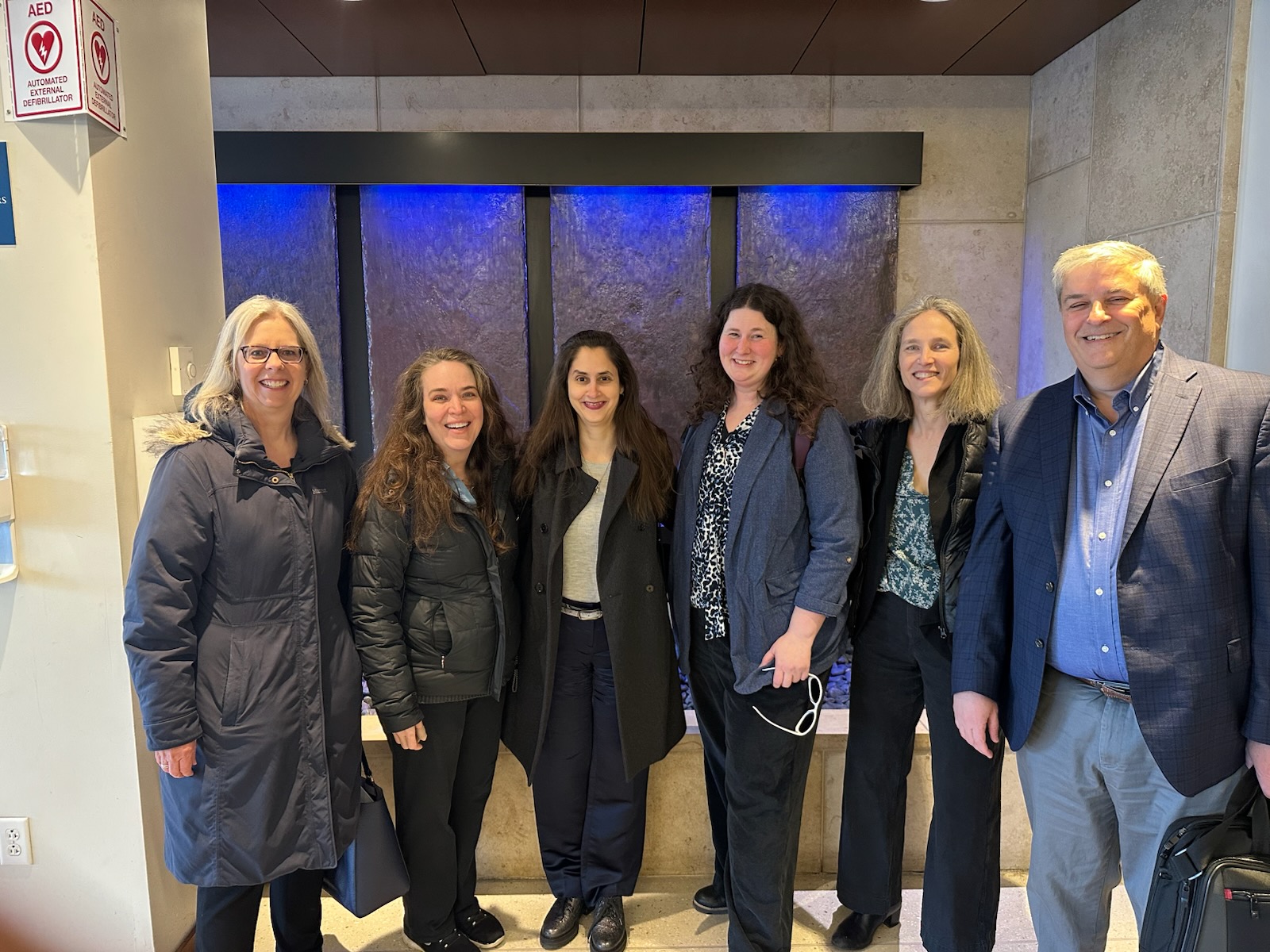
The College of Law was well-represented at the recent St. Louis University Colloquium on Law, Behavioral Science, and Social Science. Professor Jennifer Robbennolt presented a work-in-progress called “’The Rule of Law’ Silo” that is co-authored by Professors Verity Winship and Colleen Murphy. The paper presents the results of a survey to understand what people understand the phrase “the rule of law” to mean.

Professor Arden Rowell presented a paper called “Why Behavior?” The paper develops a model to systematize how different scholarly traditions approach the question of why law & behavior matters.

Professor Bob Lawless and recent graduate Emily Woo ’25 presented a paper that they co-authored with Jennifer Robbennolt and Angela Koo ’25, entitled “Who Gets the Last Word? Interruptions and Floor Control on the Supreme Court.” The paper, forthcoming in the University of Illinois Law Review, began as Emily and Angela’s class project for Empirical Methods. Using data scraped from transcripts of Supreme Court oral arguments, the paper reinforces past findings about gendered patterns of interruptions between the justices and also builds a more complex story by focusing on which justices retain floor control after being interrupted.

Finally, Professors Kenworthey Bilz, Lesley Wexler, and Verity Winship were commentators for papers at the colloquium.

Illinois Law faculty, students, and alumni present at LSA meeting

Law and Society Association Annual Meeting

The Law and Society Association Annual Meeting took place in Chicago, Illinois, on May 22–25, 2025, and featured a number of College of Law faculty and JSD students as presenters. Illinois Law professors presenting included Kenworthey Bilz, Bob Lawless, Jennifer Robbennolt, and Verity Winship; affiliated faculty presenting included Jose Atiles and Anna Marshall; and JSD students presenting included Thallyta Cavoli, Elsa Zawedde, and Qiaoyuan Zhi. Among others at the conference affiliated with Illinois were Vanessa Villanueva Collao, JSD ’24; Catherine Grosso, visiting assistant professor from 2005-’08; Dara Purvis, visiting assistant professor from 2010-’13; and So Young Park, JD ’21. The 2025 meeting explored questions central to control and compassion related to the human body, ranging from reproductive justice and LGBTQ equality to disability rights and the death penalty.

Robbennolt presents research at DePaul

Professor Jennifer Robbennolt was a featured presenter at the 31st Annual Clifford Symposium on Tort Law and Social Policy at DePaul. The symposium focused on the influence of key social science insights on civil justice, including key questions raised by social science scholarship, such as the work of the late Daniel Kahneman, Nobel Prize winner in Economics.

Journal of Empirical Legal Studies selects article by Robbennolt and Winship for publication

The Journal of Empirical Legal Studies has selected “Settlementality,” an article co-authored by Professors Jennifer Robbennolt, Verity Winship, and alumna Jessica Bregant, for publication. Slated to be published later this year, the article is meanwhile available at https://papers.ssrn.com/sol3/papers.cfm?abstract_id=4773926.

According to the authors, “Settlementality” breaks new ground by exploring how everyday people perceive the role of settlements in the legal system. Their novel empirical study provides the first systematic investigation into lay opinions of settlement. They surveyed a nationally representative sample of more than 1,000 U.S. adults to ask them what they think about settlement. Respondents told them, for example, the extent they agreed or disagreed with statements like these: “A settlement between two parties is nobody’s business but their own.” “Settling parties are more interested in money than justice.” “Settlementality” promises to be a foundational article in an emerging body of empirical scholarship about settlement, reporting for the first-time what respondents thought settlement should look like.

The Journal of Empirical Legal Studies is a peer-edited, peer-refereed, interdisciplinary journal that publishes high-quality, empirically-oriented articles of interest to scholars in a diverse range of law and law-related fields, including civil justice, corporate law, criminal justice, domestic relations, economic, finance, health care, political science, psychology, public policy, securities regulation, and sociology. 

Robbennolt to present at Annual Dispute Resolution Symposium

Professor Jennifer Robbennolt will speak at the Texas A&M Annual Dispute Resolution Symposium in March. The symposium will explore the roles pudges play in court-connected “alternative” dispute resolution, including referring or ordering cases to these processes and enforcing negotiated/mediated settlement agreements and arbitration awards and overseeing the incorporation and quality of dispute resolution in the courts. The symposium will feature several prominent judges and other law professors.

SPOTLITE data used in report on police-involved killings

Data from the SPOTLITE project, of which Professor Jennifer Robbennolt is a co-principal investigator, was featured in an in-depth report about efforts to create more transparency in Illinois around police-involved killings. Illinois law requires departments to release a report on police-involved killings if no charges are filed, but the patchwork system of reporting leaves many gaps in the record. Illinois Public Media’s reporting helps fill in gaps thanks to data collected by Robbennolt and her fellow researchers.

Robbennolt elected as APA Fellow

Professor Jennifer Robbennolt has been elected as a Fellow of the American Psychological Association, effective January 1, 2025. Fellow status is awarded to those who have demonstrated outstanding contributions in the field of psychology, enhancing the field by their diligent work and commitment. In addition, Fellows are those whose work has had a national impact on the field of psychology beyond a local, state or regional level. On behalf of everyone at the College of Law, we congratulate Professor Robbennolt for this distinguished honor.

Lawless and Robbennolt: Purdue Pharma, Bankruptcy, and Procedural Justice

Professors Bob Lawless and Jennifer Robbennolt co-authored a blog post for Psychology Today, titled “Purdue Pharma, Bankruptcy, and Procedural Justice.” In the post, they discuss how the Sackler family sought a release in the Purdue Pharma bankruptcy case that would protect them from facing opioid lawsuits, despite not having declared bankruptcy themselves. Many claimants were opposed to a settlement plan and wanted to face the Sacklers in court. The authors argue that psychologists should explore concerns for procedural justice when tort cases are resolved through bankruptcy.

The Civilian features Robbennolt and Winship article on settlement

People generally grasp the basic concept of settlement, recognizing it as an agreement between parties to resolve a dispute without the need for a trial, but some confusion exists regarding the settlement process. Professors Jennifer Robbennolt and Verity Winship, along with Jessica Bregant ’09, have made examining settlements one of the hallmarks of their scholarship, and their work was highlighted in The Civilian, an online journal out of Stanford that makes research accessible to lay audiences. The Robbennolt-Winship study surveyed more than 1,000 individuals to learn more about people’s perceptions of fault and responsibility in settled cases, revealing that about half of the respondents believe settlement implies some admission of responsibility, emphasizing the impact of public perception on individuals’ confidence in the legal system.

College of Law
504 East Pennsylvania Avenue
Champaign, IL 61820
(217) 333-0931