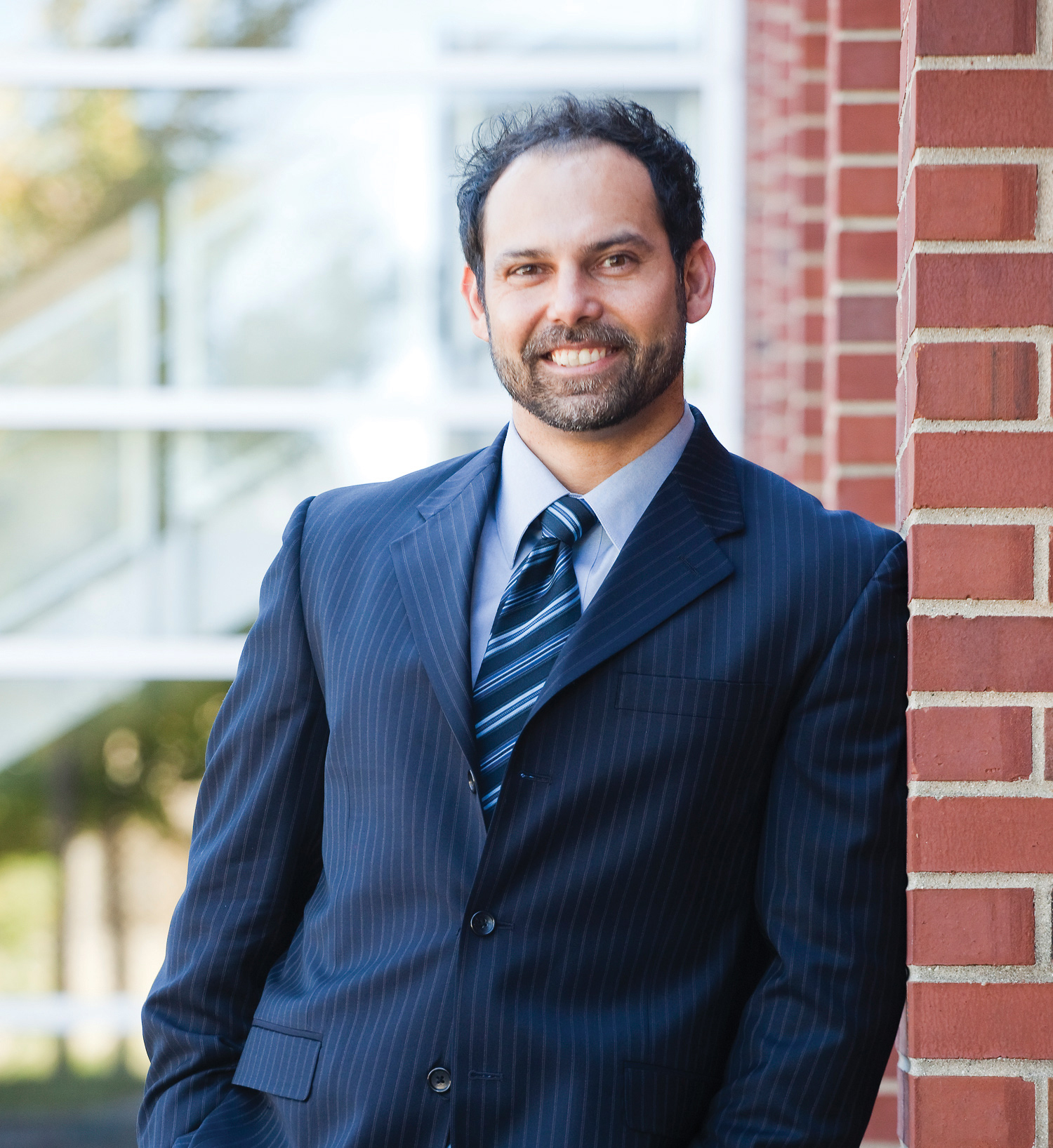
Kaplan presents research at Harvard Law and University of Cambridge

Professor Richard Kaplan presented Modernizing Medicare for Extended Healthspans at the Conference on Law, Healthcare, and the Aging Brain and Body, Harvard Law School’s Petrie-Flom Center on June 9, 2025. This paper considered how the Medicare program is likely to be affected by the latest developments in medical science pertaining to the aging brain and body. It then used these developments to consider what Medicare should look like if it were designed from scratch today.

Kaplan is also scheduled to present The Fundamental Fragility of Tax Reform: Lessons for Legislators After Forty Years at the Conference on Legal Perspectives on the Development and Enactment of Tax Policy, University of Cambridge (U.K.) Centre for Tax Law, on July 8, 2025. This paper examines the development of major tax reform in the United States by focusing on the monumental Tax Reform Act of 1986, addressing the economic, legal, and political forces that led to its enactment. It then analyzes what has happened to that law’s achievements since that time.

Illinois Law faculty, students, and alumni present at LSA meeting

Law and Society Association Annual Meeting

The Law and Society Association Annual Meeting took place in Chicago, Illinois, on May 22–25, 2025, and featured a number of College of Law faculty and JSD students as presenters. Illinois Law professors presenting included Kenworthey Bilz, Bob Lawless, Jennifer Robbennolt, and Verity Winship; affiliated faculty presenting included Jose Atiles and Anna Marshall; and JSD students presenting included Thallyta Cavoli, Elsa Zawedde, and Qiaoyuan Zhi. Among others at the conference affiliated with Illinois were Vanessa Villanueva Collao, JSD ’24; Catherine Grosso, visiting assistant professor from 2005-’08; Dara Purvis, visiting assistant professor from 2010-’13; and So Young Park, JD ’21. The 2025 meeting explored questions central to control and compassion related to the human body, ranging from reproductive justice and LGBTQ equality to disability rights and the death penalty.

Robbennolt presents research at DePaul

Professor Jennifer Robbennolt was a featured presenter at the 31st Annual Clifford Symposium on Tort Law and Social Policy at DePaul. The symposium focused on the influence of key social science insights on civil justice, including key questions raised by social science scholarship, such as the work of the late Daniel Kahneman, Nobel Prize winner in Economics.

Gerke publishes article on 23andMe in BMJ

One of the most concerning aspects of genetic testing company 23andMe filing for Chapter 11 bankruptcy, Professor Sara Gerke writes in a new article published in BMJ, is the range of information the company holds. Along with her co-authors, Gerke explores the issues presented by the genetic information, such as from saliva samples, self-reported health and personal information, biometric information, and other basic information controlled by 23andMe. They argue customers made a deal to share information, at some privacy risk, in exchange for potential ancestry and health-related insights, but that does not absolve the company from protecting privacy in bankruptcy.

Sherkow presents research at Cambridge

Professor Jacob Sherkow recently had the chance to present his research, “A Sociotechnical Approach to Genomic Data Security: A Comparative Legal Analysis,” to the Law, Medicine and Life Sciences group at the University of Cambridge Faculty of Law. In addition to his position at the College of Law, where he serves as director of the Intellectual Property and Technology Law Program, Sherkow also holds appointments at the at the Carle Illinois College of Medicine, the European Union Center, and the Carl R. Woese Institute for Genomic Biology. He is a leading expert on IP protection for genome-editing technologies, such as CRISPR.

Multiple outlets quote Sherkow on CRISPR patent dispute

The US Court of Appeals for the Federal Circuit ruled in May that the key patents on what many consider the defining biotechnology invention of the 21st century should be reconsidered. Jennifer Doudna and Emmanuelle Charpentier shared a 2020 Nobel Prize for developing the versatile gene-editing system CRISPR; however, the key patent rights were granted Feng Zhang of the Broad Institute of MIT and Harvard in 2014. The rights have been contested since, and the appeals court ruling officially opens the question of ownership anew. Our intellectual property expert, Professor Jacob Sherkow, was quoted in multiple outlets about the dispute and what it means.

Gender pay disparities create liabilities, LeRoy writes in new article

Title IX requires schools to eliminate gender disparities, but NCAA men’s basketball players in major conferences were paid 10 times more NIL money than their counterparts on women’s basketball teams. Professor Michael LeRoy examines the disparities in NIL payments and how they are creating liabilities for schools in his latest article published in the University of Cincinnati Law Review. “The NCAA has not addressed the massive inequalities that are structurally built into the athletic departments of all Power Four conference schools, where men are paid much more than women,” LeRoy writes.

Gerke co-authors paper on pulse oximeters in JAMA

Pulse oximeters are known to be less accurate for patients with darker skin, but manufacturers have not changed their design or included a warning label disclosing this information. A recent settlement and guidance from the FDA could prompt changes in the market, however. In a new paper published in JAMA, Professor Sara Gerke and her co-authors examine how these developments could solve problems and where issues may still exist.

Criticism of medical journal by federal prosecutor is unconstitutional, Shapiro tells Law360

When Edward Martin Jr., the interim U.S. Attorney for the District of Columbia, chose to publish a letter criticizing the medical journal CHEST it raised a number of concerns. For free speech advocates, the most pressing concern was why a federal prosecutor would target the protected speech of an independent entity. Speaking to Law360, Professor Lena Shapiro, director of the First Amendment Clinic, said, “letter reads squarely as an attempt to engage in viewpoint discrimination against the journal, which is presumptively unconstitutional.”

Amar and Mazzone pen series on recent Fifth Circuit case

The case of Umphress v. Hall is ripe with teachable moments, and Professors Vikram Amar and Jason Mazzone gladly took the bait in a recent two-part series of articles published at Justia Verdict. The case involves a judge in Texas who is seeking declaratory and injunctive relief from the Fifth Circuit because he refuses to perform same-sex weddings because of his religious convictions. In the first part of the series, Amar and Mazzone examine the “justiciability” of the case; that is, whether a federal court can or should entertain a particular dispute. In part two, the authors examine how the case may be determined and the central question of whether judges may discriminate in officiating a marriage.

Read part 1 and part 2 on Justia Verdict.

College of Law
504 East Pennsylvania Avenue
Champaign, IL 61820
(217) 333-0931