Mazzone speaks with Wall Street Journal about state “divorce”

“New Illinois” comprising all counties but Cook may have passed nonbinding votes in 33 of Illinois’s counties, but it is still far from becoming reality according to Professor Jason Mazzone. In an article examining the phenomenon of red counties seeking to divorce from their blue states, the Wall Street Journal shares data and anecdotes driving the movement and quotes Mazzone. ““It seems far-fetched. But we live in uncertain times. So if you’ve got the right people in Congress—and I don’t think we do have the right people in Congress—you could do it,” he said.

SPOTLITE data used in report on police-involved killings

Data from the SPOTLITE project, of which Professor Jennifer Robbennolt is a co-principal investigator, was featured in an in-depth report about efforts to create more transparency in Illinois around police-involved killings. Illinois law requires departments to release a report on police-involved killings if no charges are filed, but the patchwork system of reporting leaves many gaps in the record. Illinois Public Media’s reporting helps fill in gaps thanks to data collected by Robbennolt and her fellow researchers.

Amar and Mazzone publish article on rule of law in Pennsylvania

Are state executive officials in Pennsylvania are allowed, under the state constitution, to decline to enforce a statutory provision if the executive officials conclude that the provision violates the state’s highest law, the state constitution? That’s the primary concern of a new article by Professors Vikram Amar and Jason Mazzone. Writing at Justia Verdict, the pair investigate how the rule of law and precedent should apply to this case and how local officials and justices have failed in equal measure.

CBS quotes Lawless on when to file bankruptcy

When struggling with debt, many people delay filing for bankruptcy as long as possible; however, delaying may be more harmful than many realize. “People misunderstand bankruptcy and wait too long to see a bankruptcy lawyer. Most people would benefit by going earlier,” Professor Robert Lawless told CBS in a new article about the timing of personal bankruptcy filings. Lawless also shares tips for those who may need to file and his opinion on how the system could be improved.

Sherkow talks about Myriad’s importance a decade later

Association for Molecular Pathology v. Myriad Genetics, Inc. was a cultural phenomenon when the Supreme Court’s ruling was issued, with the outcome taking a place on the front-page of most major newspapers in the United States. Reflecting more than 10 years on from the decision, however, Professor Jacob Sherkow tells the Carl R. Woese Institute for Genomic Biology that the Myriad decision ended up having little impact on biotechnology research. 

Mazzone pens op-ed on presidential election effects on SCOTUS

“In any presidential election, the Supreme Court is on the ballot,” Professor Jason Mazzone writes in the News-Gazette. He details some of the ways in which the election of Donald Trump to a second term might affect the makeup of the Supreme Court. “The first Trump presidency generated a long list of novel legal issues, many of which reached the Supreme Court. Trump’s current bold agenda and the opposition it will produce will mean many more lawsuits in the next four years,” he concludes.

Nature quotes Sherkow on researcher who treated her own cancer

Self-treatment is a risky and controversial choice, as detailed in a new Nature article about a cancer researcher who decided to do research and treat her own breast cancer. In the article, Professor Jacob Sherkow is quoted about the dangers of publishing this kind of work; his comments are also included in a story for Futurism.

Read both the Nature article and the Futurism article online.

Thomas speaks at Survival of the Jury symposium

On Friday, October 25, 2024, Professor Suja Thomas spoke at the Survival of the Jury at George Washington Law School in Washington, DC. The symposium focused on the past, present, and future of the jury in the U.S. legal system and Professor Thomas spoke about how federal judges in the U.S. dismiss far more employment discrimination cases before trial than judges in the United Kingdom.

Markus ’86 discusses Russia sanctions with News Bureau

“Much depends on our leaders and whether a judicious long-term approach to easing sanctions is taken. A president should also be cognizant of responses from our allies in a changing world order,” Taisa Markus ’86 told the Illinois News Bureau. She spoke at length about the sanctions the United States has placed on Russia in the wake of the invasion of Ukraine and how those might change under a new administration.

College of Law establishes Jurist in Residence program and welcomes inaugural guest Judge Thomas Kirsch

Judge Thomas Kirsch of the United States Court of Appeals for the Seventh Circuit recently completed a multi-day visit at the College of Law, as the inaugural Jurist in Residence. The newly launched program aims to deepen the College’s connections to the bench, inspire students to pursue judicial clerkships, and provide them with the opportunity to learn from leading legal minds. Although Jurist in Residence programs are not uncommon at law schools around the country, the University of Illinois College of Law is one of only two law schools in the state to formalize the initiative. Moving forward, the College intends to host a Jurist in Residence on an annual basis. 

Executive Assistant Dean for Career Planning and Professional Development Greg Miarecki, who was instrumental in the creation and launch of the program, said “Our state and federal judges are on the cutting edge of legal issues and developments. Through the Jurist in Residence program and other College of Law initiatives, we are excited to partner with them to prepare the next generation of leading legal minds.” 

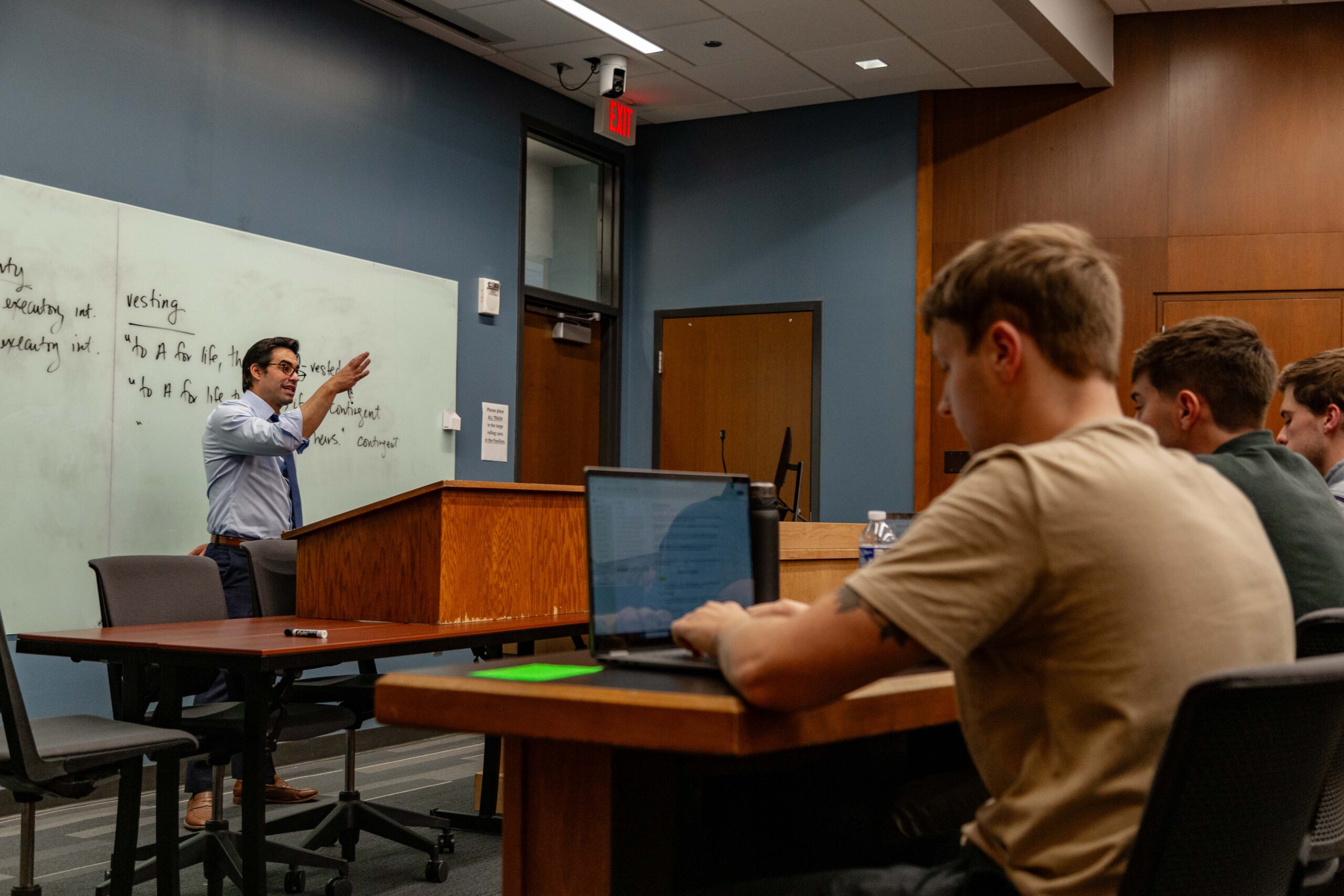
During his time at the College, Judge Kirsch taught a seminar-style short course on public corruption and participated in several student-focused events. Over 90 students attended a Fireside Chat with Judge Kirsch, co-sponsored by the Anderson Center for Advocacy and Professionalism and moderated by the Center’s Director, Professor Tony Ghiotto, along with Dean Miarecki.

3L Bobby Mannis was grateful for the opportunity to take Judge Kirsch’s course.

“Judge Kirsch sharing his perspective as a Seventh Circuit jurist and former U.S. Attorney deepened my desire to pursue white-collar prosecution,” he said. “This class, where Judge Kirsch knew each of our names, taught about statutes and their interpretation, and shared his experiences, is a defining moment in my law school career.”

Student organizations were also eager to make connections with Judge Kirsch, and a Federalist Society-sponsored talk on how to have a meaningful career in public service gave them the opportunity to do just that.

Sophia Downes, 2L and president of the student chapter of the Federalist Society, helped coordinate that event.

“Judge Kirsch shared his experience working at the Department of Justice as the United States Attorney and on the bench, providing valuable advice to students interested in becoming federal prosecutors and judges. He also discussed his transition from the private to public sector and qualities judges and government employers look for when hiring candidates.”

The visit also featured a luncheon for College of Law faculty and local judges from the state and federal benches. Judge Kirsch and Andy Leipold, a professor of law at the College and a leading criminal law scholar, led a wide-ranging discussion.

Dean Jamelle Sharpe said, “Providing opportunities for our students to learn directly from judges is imperative for them to better understand the judicial system. It also encourages them to consider careers in the judiciary. I am grateful to Judge Kirsch for so generously giving of his time to make our inaugural session of the program a success. I look forward to hosting him at the College again in the near future, and to hosting other jurists for many years to come.”


Thomas L. Kirsch II is a Circuit Judge of the United States Court of Appeals for the Seventh Circuit. Prior to his judicial appointment in 2020, he served as the United States Attorney for the Northern District of Indiana since 2017. From 2008 until 2017, Judge Kirsch was a partner at Winston & Strawn LLP in Chicago, litigating commercial and criminal matters in trial and appellate courts across the United States and conducting corporate internal investigations. Before joining Winston & Strawn, Judge Kirsch served as an Assistant United States Attorney in the Northern District of Indiana from 2001 to 2008, focusing on white collar investigations and prosecutions, including the prosecution of numerous elected and appointed public officials. In 2006 and 2007, Judge Kirsch served as Counsel to the Assistant Attorney General at the United States Department of Justice Office of Legal Policy in Washington, D.C. He is a former law clerk to the Honorable John D. Tinder in the Southern District of Indiana. Judge Kirsch is a Fellow of the American College of Trial Lawyers.

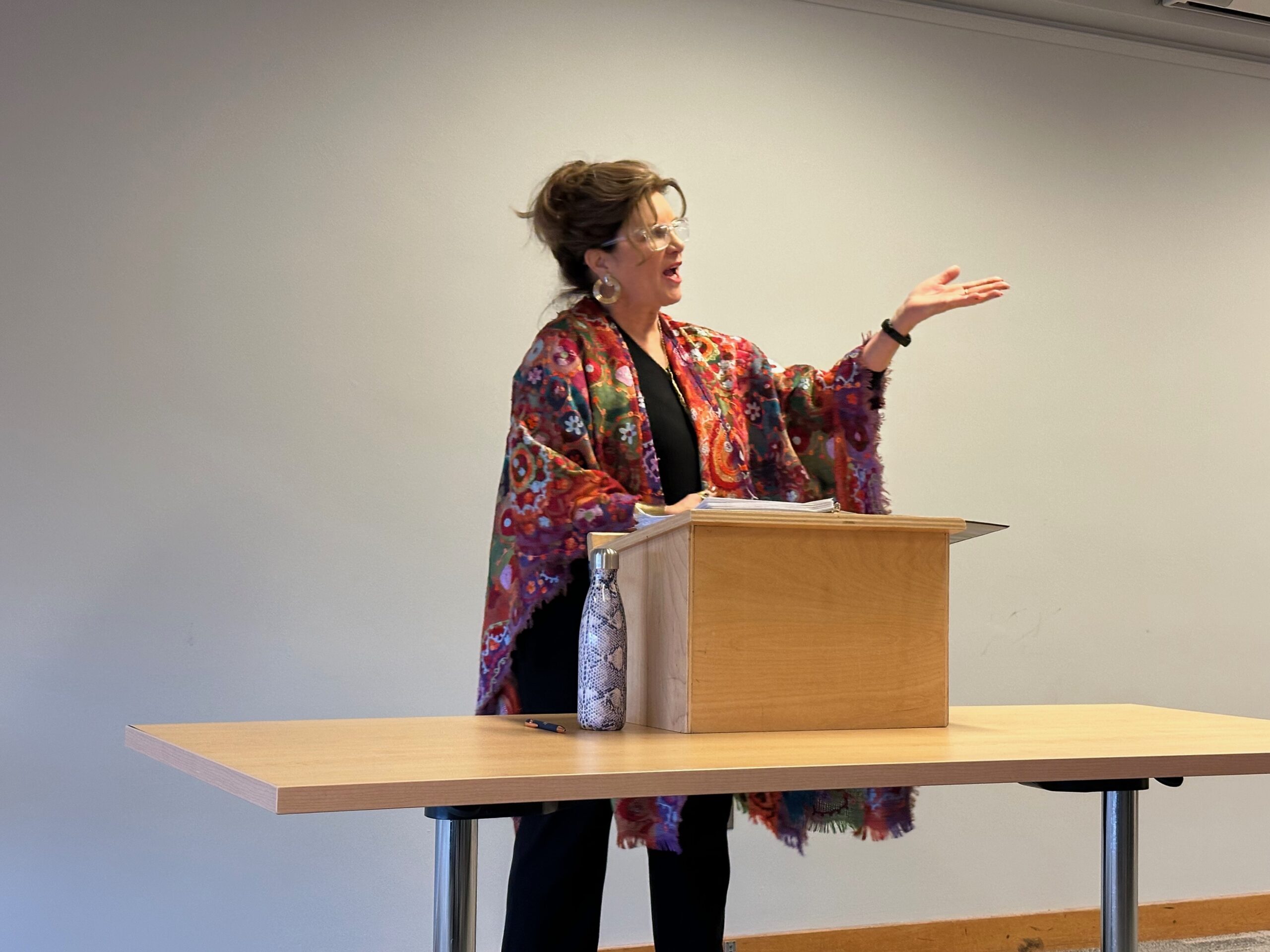
Judge Thomas Kirsch teaches a class at the College of Law
College of Law
504 East Pennsylvania Avenue
Champaign, IL 61820
(217) 333-0931