Wilson witnesses bill she provided written testimony for be signed into law at Wisconsin State Capitol

On Friday, August 8, 2025, Professor Robin Fretwell Wilson had the privilege of attending the signing of bill SB 14 at the Wisconsin State Capitol, making Wisconsin the 29th state to afford patients respect in medical teaching. Wilson filed written testimony in May that was used in both Wisconsin Senate and Assembly hearings surrounding the bill, wherein she advocated for written, informed consent for educational pelvic exams. Wilson is pictured with Wisconsin Governor Tony Evers and Wisconsin patient advocate Sarah Wright. Wilson says that her Illinois Law students have benefitted from Sarah’s commitment to this cause, as she has guest lectured in class and will be returning again this fall to discuss the passage of SB 14 with Wilson’s students.

Mazzone explains how SCOTUS order in Louisiana redistricting case could have major implications for Voting Rights Act

Professor Jason Mazzone recently spoke to the Alabama Reflector regarding an order from the U.S. Supreme Court to the parties in a Louisiana redistricting case. The Court asked parties to submit briefs on whether majority-minority congressional districts violate the 14th and 15th amendments to the U.S. Constitution. Experts say the Court may be considering invalidating Section 2 of the Voting Rights Act, which forbids election laws that discriminate based on race, color or membership in language minority groups.

“The case might result in the Court invalidating entirely Section 2 of the VRA on the basis that the Constitution is color blind and it bars race-conscious districting, including when mandated by Congress to remedy historical racial discrimination in voting,” Mazzone said. “Such a result would represent a massive change in election laws and practices with seismic consequences for democratic processes at every level of government.”

Kar publishes new article in Harvard Journal of Law & Technology

Professor Rob Kar has published “The Contractual Death and Rebirth of Privacy” in the Harvard Journal of Law & Technology. Co-authored with Xiaowei Yu, the abstract follows:

This Article proposes, for the first time, the application of “shared meaning analysis” — a method of contract interpretation grounded in traditional contract principles, as developed in Pseudo-Contract and Shared Meaning Analysis, 132 HARV. L. REV. 1135 (2019) (“PseudoContract”) — to online privacy policies. The method identifies when policy text adds enforceable terms to a contract, as opposed to mere unenforceable boilerplate, addressing an underappreciated paradigm slip in contract law that is enabling widespread digital surveillance. Consumers routinely click “I agree” to online privacy policies — which purport to permit cookies, other tracking devices (like pixels and SDKs), and AI-driven data analysis — without reading or comprehending their text, leading to massive transfers of personal information that erode privacy, facilitate consumer and political manipulation, and threaten freedom and democracy. Critiquing the binary debate over whether online privacy policies are contracts at all, this Article argues for a more nuanced reform: courts, operating within their common law authority, should revive privacy by focusing contract interpretation on the shared meanings of any contracts over privacy formed in digital contexts. Through examples involving policy scope, unilateral modifications, and conflicts between shared meaning and deceptive boilerplate, this Article demonstrates how contract interpretation — once returned to its rightful focus on shared meaning — can be used to counter modern surveillance harms without requiring new legislation, complementing other privacy frameworks and restoring the proper moral relationship between contract and privacy.

Research: Police uses of lethal force dropped dramatically in US from 2021-23

The number of police-involved lethal force incidents in the U.S. dropped 24% from 2021 to 2023, according to the Cline Center for Advanced Social Research and an interdisciplinary team of University of Illinois Urbana-Champaign experts, including College of Law professor Jennifer Robbennolt, who have developed a nationwide registry on the uses of lethal force by police officers in the U.S. 

The Cline Center’s SPOTLITE project has compiled nearly a decade’s worth of data to track and identify police uses of lethal force across the U.S.

“SPOTLITE remains a work in progress. We have compiled data up through 2023 so far, but we’re not done yet,” Robbennolt said. “We’re actively looking for funding to bring SPOTLITE data up to the present, with national data that can be released in nearly real time, and with a level of detail that helps to inform research and conversations about policing across the country.”

Thomas speaks about significant developments in employment law at National Employment Lawyers Association Annual Convention

Earlier this summer, Professor Suja Thomas participated in a panel at the National Employment Lawyers Association (NELA) Annual Convention. Thomas and her co-presenters led a discussion on the employment cases decided by the Supreme Court during its 2024-25 term; significant appellate court, legislative, and state law developments; and emerging issues in plaintiffs’ employment law.

New paper from Gerke: FDA needs to develop labeling standards for AI-powered medical devices

The regulatory framework for artificial intelligence-based medical devices needs to be improved to ensure transparency and protect patients’ health, says Sara Gerke, the Richard W. & Marie L. Corman Scholar at the University of Illinois Urbana-Champaign and expert in the ethical and legal challenges of artificial intelligence for health care. Gerke argues that the Food and Drug Administration should prioritize the development of labeling standards for AI-powered medical devices in much the same way that there are nutrition facts labels on packaged food. 

Gerke spoke to the Illinois News Bureau about her new paper, recently published in the Emory Law Journal, “A comprehensive labeling framework for AI/ML-based medical devices: From AI Facts labels to a front-of-package AI labeling system — Lessons learned from food labeling.”

The College of Law welcomes Eric Baudry and Sarah Lawsky to faculty

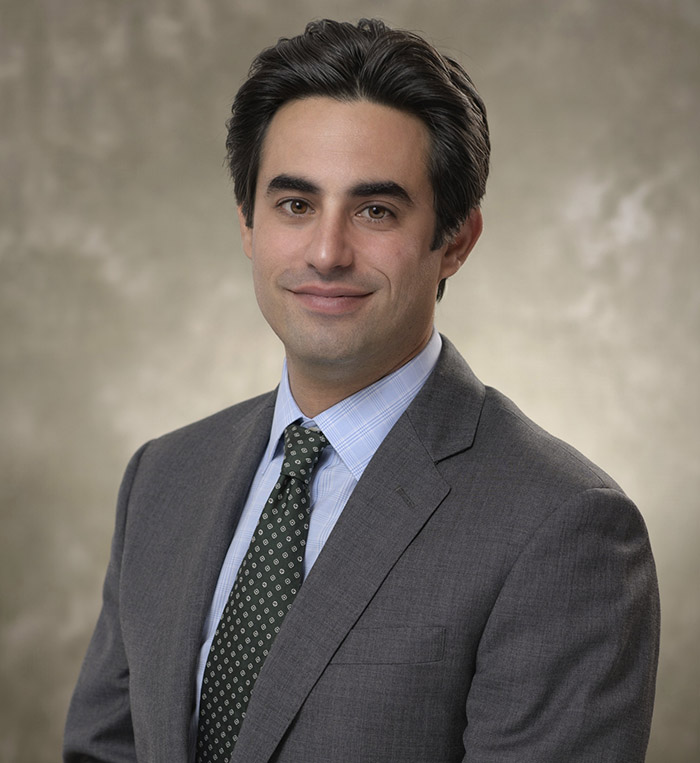
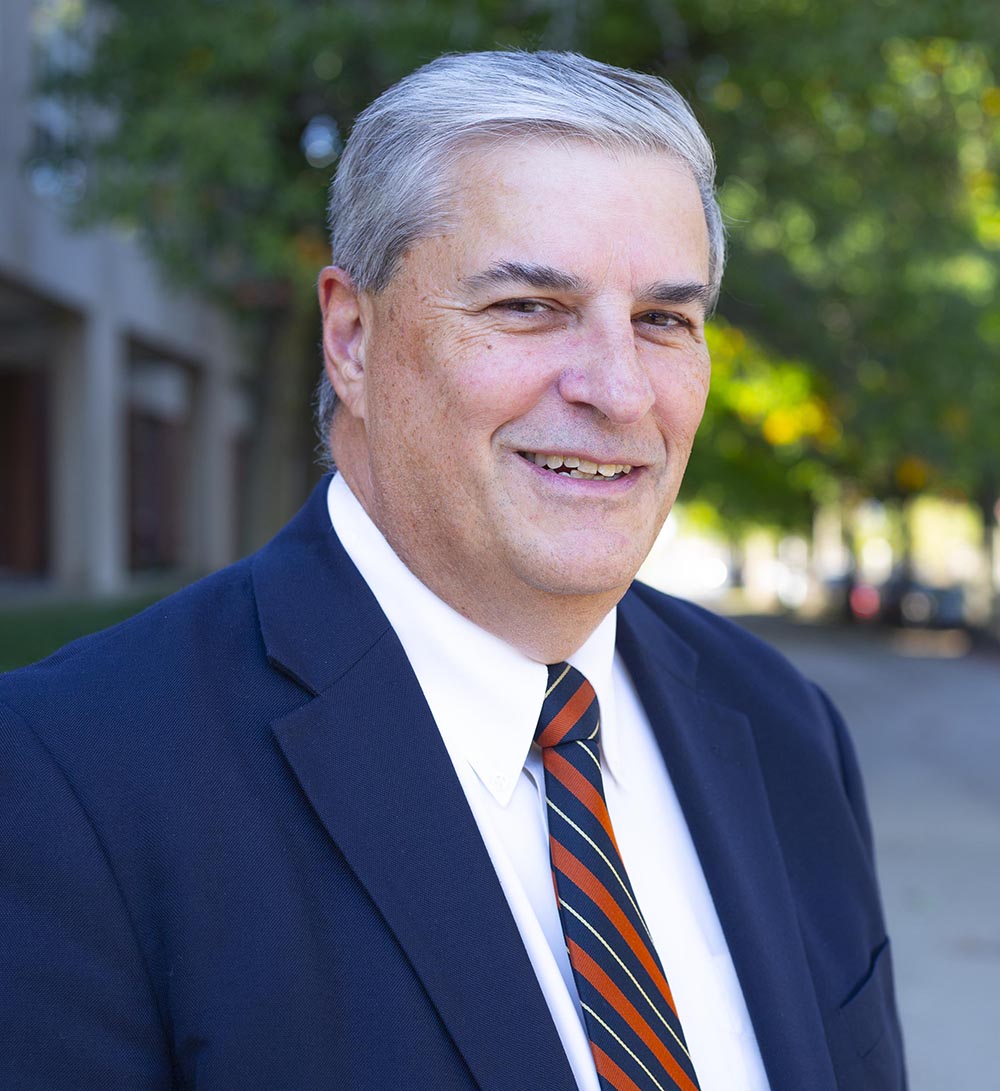
The University of Illinois College of Law is proud to welcome Eric Baudry and Sarah Lawsky as new faculty members this fall. Baudry joins as an assistant professor of law with a specialty in tax law, poverty, and redistribution; Lawsky will serve as the L.B. Lall and Sumitra Devi Lall Professor of Law and the co-director of the Innovation Law and Technology Program.

“I’m really excited about joining the law school here because of the vibrant intellectual life among the faculty,” Lawsky said. “The University of Illinois is such an incredible institution, and the opportunity to do interdisciplinary work here at the law school with the other parts of this university is really exciting.”

Lawsky comes to Illinois having previously taught at George Washington University Law School, UC Irvine School of Law, and, most recently, at Northwestern Pritzker School of Law. Her work focuses on computational law, with a focus on formal methods and the formalization of tax law. As part of the Innovation Law and Technology Program, she hopes to continue her work in conjunction with experts from the Siebel School of Computing and Data Science and the School of Information Sciences as well as others. At the College of Law, Lawsky will be teaching contracts and federal income tax courses, aiming to meet the existing high standards of the law school.

“Illinois has an amazing tax professor in Dick Kaplan, who’s terrific. My goal is to try to match the very high level of quality of tax instruction that he has established,” she said.

Also an expert in tax law, Baudry comes to Illinois Law with experience as a clerk in the Eastern District of Michigan and the Ninth Circuit, a Skadden Fellow at Mid-Minnesota Legal Aid, and a faculty fellow at the University of Michigan Law School. He will teach income taxation, corporate taxation, and a seminar on the intersections of taxation and poverty.

“I’m interested in planting roots in this community, both as a person who lives in Champaign and as a tax scholar who cares about inequality in our community. Specifically, I’m interested in how residents experience impoverishment and how our local and state governments can use tax law as a vehicle to help improve the lives of their citizens” Baudry said. “My long-term goal as a professor would be to bring that work into the law school.”

Both Lawsky, who has spent the last nine years at Northwestern, and Baudry, a native Minnesotan, expressed their excitement to be a part of Illinois Law and the local community. Having a son in the state university system gave Lawsky an idea what to expect, and she says she’s eager to “learn what it means to be a part of the University of Illinois system.” Baudry shared his enthusiasm to talk to students, alumni, and faculty about his professional expertise as well as his personal passion for games.

“Getting to know the faculty and the staff and the spaces at Illinois Law, I immediately felt like this is a place that would push me to be my best, while also offering fantastic resources and supports for my journey to get there,” he said.

The College of Law is pleased to welcome Baudry and Lawsky to the faculty and looks forward to their accomplishments as part of the University of Illinois.

Lawless publishes new book on debt in the United States

Over the almost 45 years the Consumer Bankruptcy Project has been collecting data, the landscape of debt in the United States has shifted significantly. Updating that work is “Debt’s Grip,” a new book by Professor Robert Lawless and his fellow principal investigators telling the story of financial struggle in the United States in the words of bankruptcy filers themselves.

“It was time to document the many ways things have changed, but also the way things have not,” Lawless said. “One of the sad things is American households continue to struggle for many of the same reasons they did 35 years ago.”

“Debt’s Grip,” which is available everywhere now, provides an update on the Consumer Bankruptcy Project, started by Teresa Sullivan, Elizabeth Warren, and Jay Westbrook. Their work, dating back to the 1980s, provided novel insight by combining bankruptcy court records and surveys that asked individuals to tell their story in their own words.

Lawless joined the Consumer Bankruptcy Project in 2001 and later became one of its principal investigators. Along with many student research assistants from the College of Law, Lawless and co-authors Pamela Foohey (who served as a visiting assistant professor at Illinois from 2012–14) and Deborah Thorne have been doing continuous data collection for the project since 2013 and publishing in law reviews and sociology journals. This intensive effort, along with greater access to technology, has helped the group provide new insights into debt in the U.S and provided the foundation for “Debt’s Grip.”

“We lean more into the demographics of bankruptcy in this book because the last book was written with data before the internet,” Lawless said. “There’s a lot more we know now about the demographics of who files bankruptcy…. We have a nationally representative picture of who files bankruptcy.”

This book is the first Lawless has written for a broader audience. As with textbooks, the goal of “Debt’s Grip” is to share his expertise and teach the reader, but Lawless hopes this book can inform decision makers like lawyers, judges, other policy leaders in the field of bankruptcy.

“We put some context into what it means to live at the financial edge. People have stories of going without medicine, without food, or sacrifices to keep a car running so they can get to work or they can get their children to school. The book, I hope, details and lays out what that really means,” he said.

“Debt’s Grip” is published by the University of California Press and available now. For more information on Professor Lawless, visit his faculty page on our website.

Sherkow cited extensively in blog post on drug labels

In an analysis of a brief expected to be filed in the fall, the Patently-O blog cites the work of Professor Jacob Sherkow extensively in examining the ‘label-plus’ theory of inducement. This framework establishes that a generic drug’s label by itself cannot violate patent protections because of a congressionally authorized regulatory scheme. Sherkow’s work, in particular, helps illuminate the distinction between regulatory and factual speech in the particulars of the case at issue.

Sherkow presents at ATRIP Congress in Copenhagen

In June, Professor Jacob Sherkow traveled to Denmark to present his work, “Patent Eligibility, Secure Computing, and Genomic Data Sharing,” at the ATRIP Congress at the University of Copenhagen. His presentation took place on Monday, June 23, as part of the Intellectual Property & Justice: Balancing Frameworks in Patent Law portion of the conference.

College of Law
504 East Pennsylvania Avenue
Champaign, IL 61820
(217) 333-0931