Rolling back hazing protections is concerning, Wexler writes

The Department of Defense’s review of definitions of toxic leadership, bullying, and hazing, which were announced recently by Secretary Pete Hegseth, are cause for concern, Professor Lesley Wexler writes in a new editorial for Justia Verdict. She examines the history of these rules to understand their necessity and underline why any review that weakens protections could be dangerous. “Hazing can create significant mental health issues where none existed before. While Secretary Hegseth might accept such a toll as a necessary cost of doing business, of course, the impact to those victimized ought to count in the calculus,” Wexler writes.

Moore and Hurd give lecture as part of Australian fellowship

Michael S. Moore and Heidi M. Hurd are currently Distinguished Visiting Fellows at The Australian National University in Canberra, Australia’s capital. On October 15 they gave a joint public lecture sponsored by the ANU Philosophy Department and attended by ANU faculty, graduate students, and members of the larger federal civil service on “The Impropriety of Punishing for Negligent Wrongdoing.”

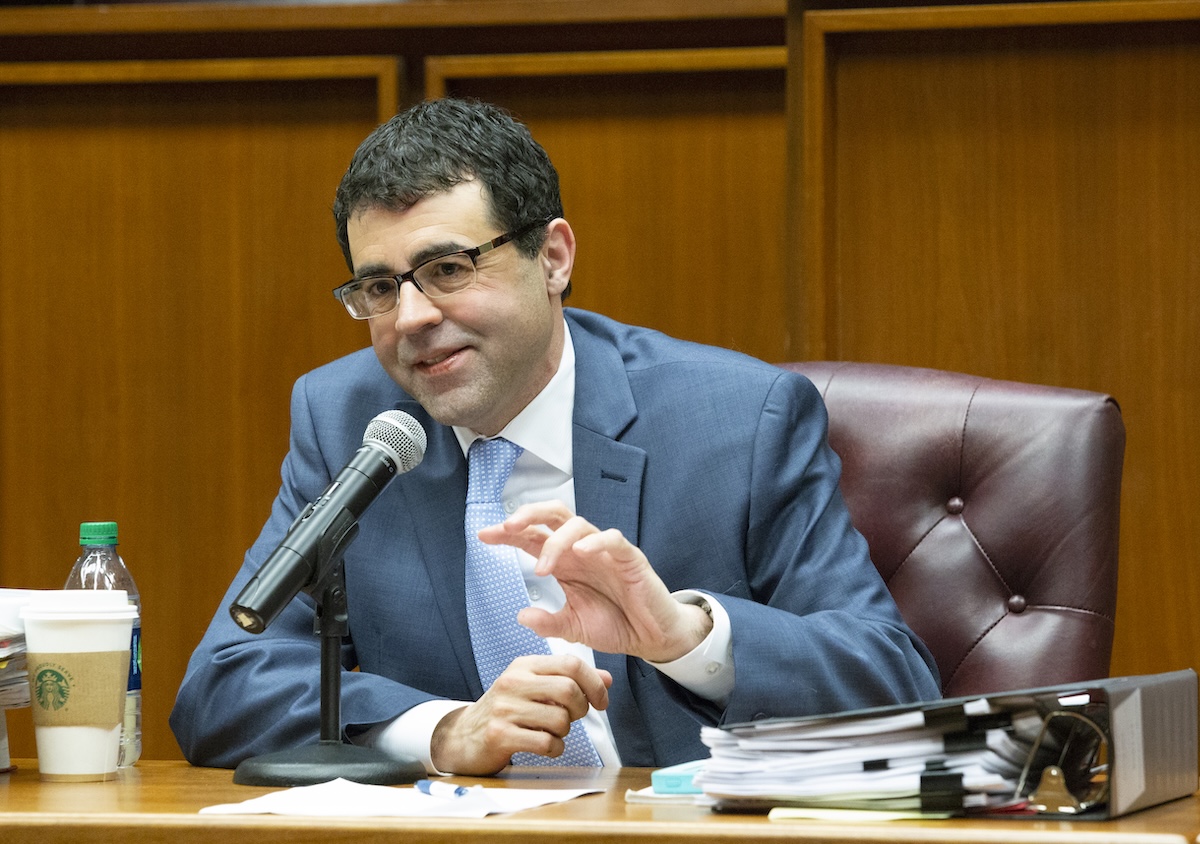
Lawsky speaks on tax panel at Pittsburgh School of Law

On October 17, Professor Sarah Lawsky was part of a panel discussion at the University of Pittsburgh School of Law covering “AI in Tax Law: Tax Administration &
Educating the Next Generation.” She was one of eight panelists from academia, industry, government sharing expertise on the role of artificial intelligence in tax administration, legal practice, and tax law education.

Lawsky publishes article in Yale Journal on Regulation

In the most recent issue of the Yale Journal on Regulation, Professor Sarah Lawsky has published a note as part of the symposium on Joshua D. Blank and Leigh Osofsky’s “Automated Agencies: The Transformation of Government Guidance.” In her article, she concludes, “Automated guidance thus might exacerbate the access to justice gap. Unlike publications, automated guidance may fool people into thinking that they have received individualized guidance, when they actually have not.”

Mazzone and Amar breakdown Bost v. Illinois State Board of Elections

The U.S. Supreme Court granted review in Bost v. Illinois State Board of Elections on a preliminary question of whether the parties who brought suit had standing under Article III of the Constitution to invoke the power of the federal courts in the first place. Writing at Justia Verdict, Professors Jason Mazzone and Vikram Amar offer analysis as to how the Court should approach the issues raised by Bost, and why it should rule in plaintiffs’ favor.

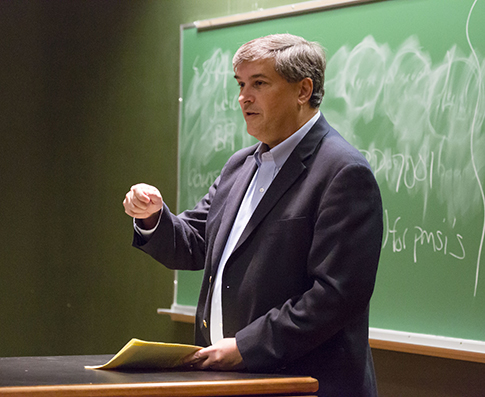
Finkin delivers lectures in Europe

Professor Matthew Finkin was an invited lecturer at a pair of European institutions this October. At the Institut de Recherche Juridique de la Sorbonne (IRJS), part of the Sorbonne Law School of Université Paris, Finkin presented a lecture on labor law in the United States on October 15; at the University of Frankfurt, in Frankfurt am Main, Germany, Finkin spoke to the European Academy of Labour on October 20 about the impact of the Trump Administration on American Labour Law.

Lawless discusses new book with WBGL

Speaking about his new book, “Debt’s Grip,” Professor Robert Lawless sat down with WBGL’s Community Matters program. He discussed the research that went into the work, how bankruptcy affects the lives of everyday Americans, and common misconceptions about the bankruptcy process. He concluded with advice for how to support those going through financial hardships.

Fairness in sport case is already moot, Mazzone and Amar contend

One of the cases before the U.S. Supreme Court in its latest term is already moot, Professors Jason Mazzone and Vikram Amar argue in a new editorial published at Justia Verdict. Little v. Hecox present the justices with the question of whether laws to protect women’s and girls’ sports by limiting participation based on sex assigned at birth violate the Equal Protection Clause of the Fourteenth Amendment. Examining the facts in the case, they find that the justices should find the case moot and order vacatur.

Mazzone shares what to watch for in new Supreme Court term

Tariffs, voting rights, conversion therapy—these are a few of the biggest issues that will be debated before the U.S. Supreme Court in their new term, which began in October. Professor Jason Mazzone, writing at the News-Gazette, shares his take on these issues, as well as the Court’s use of the emergency docket. With this term, “the justices are plainly not interested in keeping a low profile,” he writes.

Article on diminishing number of jury trials cites Thomas

Since the 1960s, the number of jury trials a judge presides over has been steadily decreasing, with state courts only seeing one or two percent of cases resolved by a jury. This significant shift has great effects, such as depriving the public of a view on how the justice system works. A recent article about this trend cites the work of Professor Suja Thomas and her work exposing significant problems with the justice system.

College of Law
504 East Pennsylvania Avenue
Champaign, IL 61820
(217) 333-0931