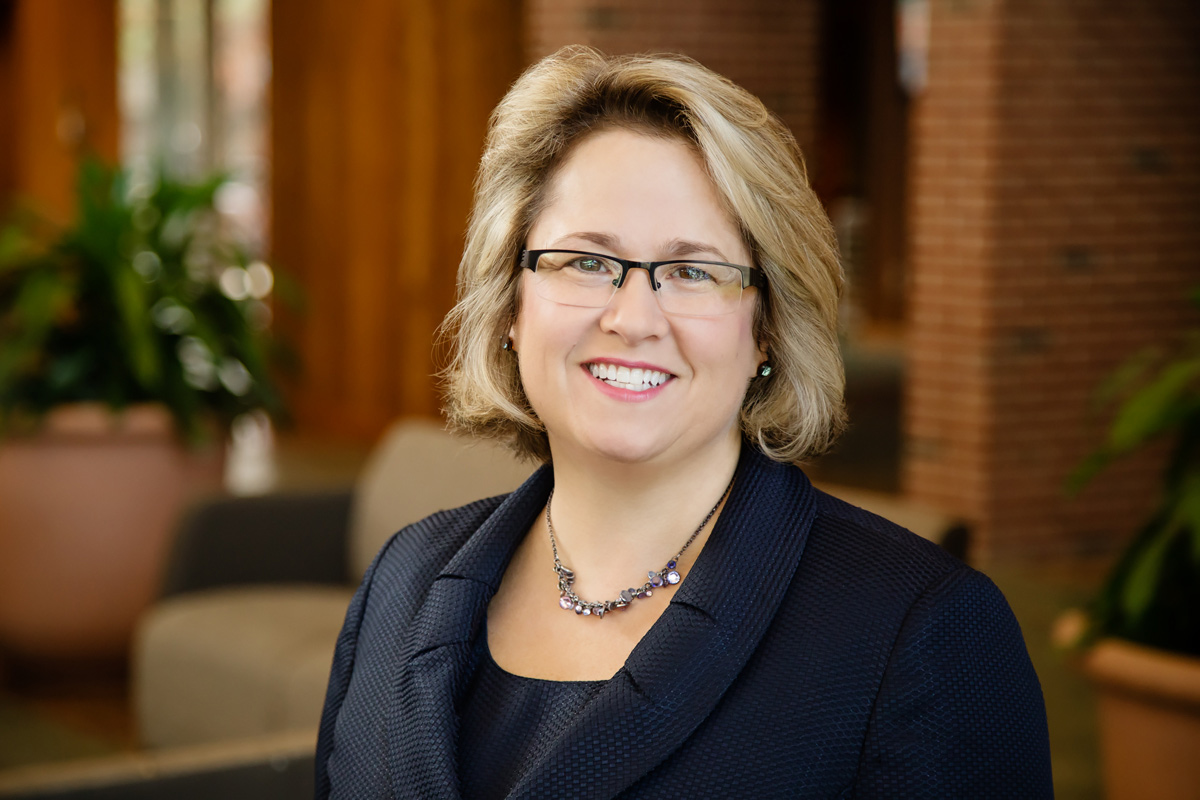
American Health Law Association Names Julia Sun Inaugural Student Writing Competition Winner 

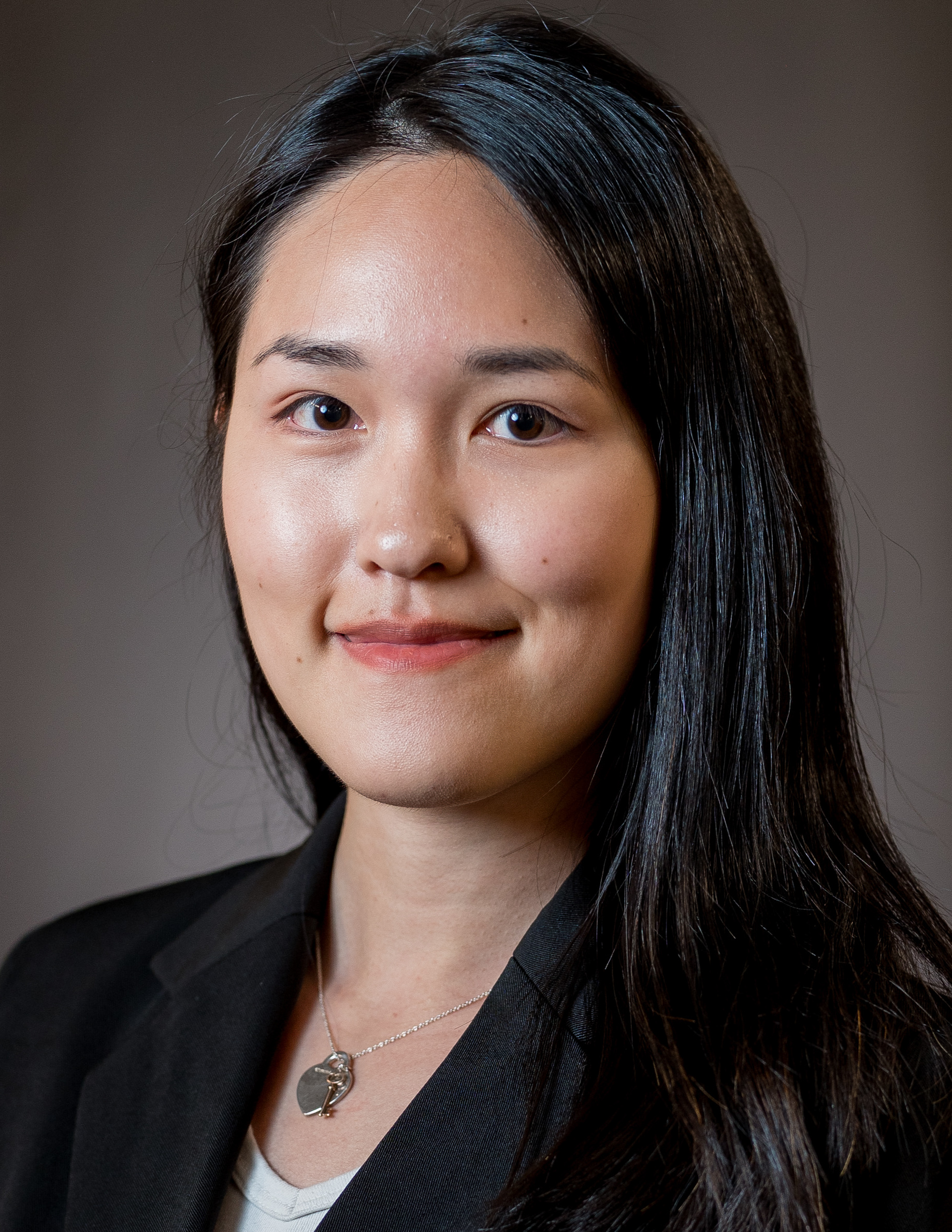
The American Health Law Association (AHLA) is pleased to announce Julia Sun, a second-year law student at the University of Illinois College of Law, as the recipient of its inaugural Student Writing Competition Award. This new recognition program celebrates emerging talent and fresh perspectives in health law scholarship. 

The Student Writing Competition represents AHLA’s commitment to fostering excellence in health law education and supporting the next generation of health care legal professionals. The award includes a $500 prize and featured publication of the winning paper on AHLA’s digital platforms. 

“Julia’s work exemplifies the innovative thinking and rigorous analysis we aim to cultivate within the health law community,” says Asha B. Scielzo, AHLA President. “Her unique background in human biology and regulatory affairs brings valuable interdisciplinary insights to complex health care legal challenges.” 

Sun brings distinctive expertise to health law through her previous experience in pharmaceutical and medical device industry regulatory matters. Her winning paper was selected through a blind review process by a distinguished panel of AHLA member judges, who evaluated submissions based on their analysis of timely health law, policy, and compliance issues. 

A graduate of UC San Diego with a bachelor’s degree in human biology, Sun’s research interests focus on the intersection of law, science, and innovation, particularly in navigating complex regulatory frameworks within the health care sector. She is currently pursuing her J.D. at the University of Illinois College of Law, Class of 2026. 

The competition, which drew submissions from ABA-accredited law schools nationwide, required professor nominations and evaluated papers based on their examination of current health law issues, analytical depth, and balanced presentation of legal and policy considerations. 

AHLA will feature Sun’s winning paper on its website and promote her scholarship through its social media channels, providing visibility to her work among the Association’s 12,000 members representing the entire spectrum of the health care industry. 

For more information about the AHLA Student Writing Competition and future opportunities, please contact awards@americanhealthlaw.org. 

Veterans Legal Clinic students help win discharge upgrade

Maybe you’ve heard this one before: an employee fails a urine test despite never having used drugs, only to discover the culprit was a poppyseed muffin. As this story unfolded over a half-hour episode of Seinfeld, the comedy of errors was easy to laugh at, but when a similar case was brought to the Veterans Legal Clinic it was no laughing matter.

As a result of his failed urinalysis, the veteran received a general rather than an honorable discharge and came to the Clinic seeking a discharge upgrade. Discharges that are not honorable can have many effects on veterans, including preventing them from accessing some veteran resources and making future employment more difficult to obtain; in addition, having an honorable discharge can be a matter of pride for veterans, recognizing their service to country. Students in the Clinic eagerly took on the case, excited by the chance to help and to tackle an interesting challenge.

Several groups of students worked on this case for the Veterans Legal Clinic, including Wyatt Decker ‘24, Briley McVey ’24, Matthew Schwartz ’24, and Ian Waggoner ‘24. According to Clinic Director Yulanda Curtis, students logged more than 115 hours working on the case and it took more than a year to hear back from the government after filing a brief. In the end, however, the clinicians prevailed and earned their client a discharge upgrade.

“There aren’t many lawyers who assist veterans with discharge upgrades…. The most recent data I have shows only about a third of veterans successfully secure a character of discharge upgrade from our client’s branch of service, so when we win these cases it feels like we took on Goliath and won,” Curtis said. “Additionally, our client just wanted someone to believe him and I think we were the first people to take him seriously.”

Immediately after his urine test came back positive, the veteran submitted hair follicles to reputable labs for secondary testing and both labs reported negative results for all drugs. However, when the veteran presented those tests to his commanding officer, they were not considered. Clinic students, however, did not dismiss the veteran’s claims of innocence and worked diligently to support him.

“A lot of the routine cases you get can be pretty formulaic…not that every case is the same, but you’ve got the same sort of motions that you’re drafting or submitting to the court arguing the same sort of preliminary hearings. But this one was a lot, you had to delve into the science of it,” Waggoner said.

In addition to skillful fact investigation that uncovered character references and grocery receipts for the offending muffins, students collaborated with professionals across campus. Research librarians helped find materials supporting the validity of hair follicle tests over urinalysis, which proved an important aspect of the case. This research, combined with a memorandum from the Department of Defense, issued shortly after their client was discharged, warning servicemembers to avoid consuming poppy seeds, created a strong case that overcame the odds against obtaining a discharge upgrade.

Because of the delays in the case, however, the students who had put in so much hard work ended their semester in the clinic and graduated without a resolution in the case.

“Having to just walk away was definitely a little frustrating, especially because he was a very involved client in the best way possible. He was easy to reach, and he trusted us,” Schwartz said.

Though their professional careers have taken them in different directions and areas of the law that may not require them to think about urinalysis, Schwartz and Waggoner felt “ecstatic” to receive news of their client’s success in upgrading his discharge early in 2025. The positive outcome also reinforced their belief in the value of clinics.

“Law school helps teach a lot and train you, but it doesn’t always feel as practical,” Schwartz said.

“You talk about the black letter law, but you will never get a class that teaches you how to respond to a client,” Waggoner added. “It’s invaluable. I think everyone should be required to do a clinic or some sort of like, practical class.”

American College of Bankruptcy names Joshua Livingston ’25 a Distinguished Bankruptcy Student

The American College of Bankruptcy has selected Joshua Livingston ’25 as the Seventh Circuit Distinguished Bankruptcy Law Student for 2025. Distinguished Bankruptcy Law Students are selected annually for each Circuit based on their academic excellence, professional accomplishments in bankruptcy or restructuring-related courses, passion for restructuring and insolvency, and commitment to public service and pro bono efforts.

Livingston was nominated for the award by Professors Ralph Brubaker and Robert Lawless, internationally renowned scholars in the field of bankruptcy. In their letter recommending Livingston, the professors were effusive in their praise for him, highlighting the way his enthusiasm for bankruptcy matches their own. Specifically, Brubaker and Lawless noted he is “someone who obviously appreciates all of the nuance and complexity of bankruptcy law and practice, asking very thoughtful and sophisticated questions.”

Bankruptcy is a topic that Livingston learned about early in life, having personally witnessed the process through the failure of his father’s business when he was just 10 years old. The fresh start his father was afforded via bankruptcy allowed him to find a new career, which he has successfully practiced for 35 years; bankruptcy as a “catalyst for positive life changes,” as Livingston explained, helped fuel his eagerness to work in the field. He also cited his experience in the College of Law’s bankruptcy courses as a spark for the “intellectual passion for the subject that has shaped my academic career.”

Last summer, Livingston completed an internship with the U.S. Trustee’s office in Chicago and is planning on a career in bankruptcy law. He is seeking a clerkship position with a bankruptcy judge after graduation and ultimately wants to work in a business bankruptcy practice. “He is immensely practical and has a broad and sophisticated skill set that equips him to be a fantastically successful bankruptcy attorney (which we fully expect him to be),” Brubaker and Lawless wrote in their letter recommending him.

As recipient of the Distinguished Bankruptcy Law Student award, Livingston will be honored at a special reception on Thursday, March 20, in Washington D.C. In addition, the American College of Bankruptcy will provide him an all-expense paid trip to attend the College Induction Ceremony and Annual Meeting.

College of Law establishes Jurist in Residence program and welcomes inaugural guest Judge Thomas Kirsch

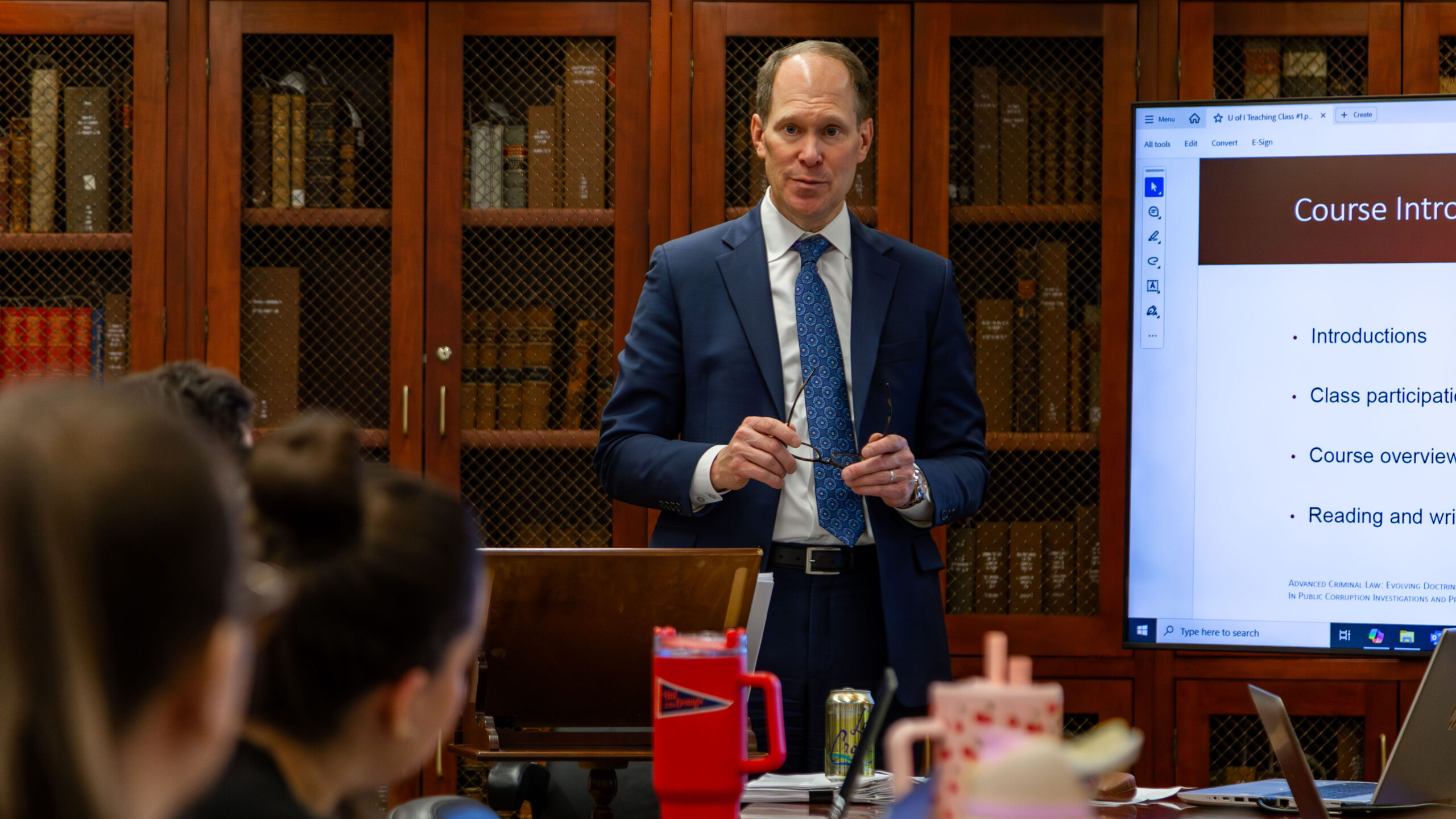
Judge Thomas Kirsch of the United States Court of Appeals for the Seventh Circuit recently completed a multi-day visit at the College of Law, as the inaugural Jurist in Residence. The newly launched program aims to deepen the College’s connections to the bench, inspire students to pursue judicial clerkships, and provide them with the opportunity to learn from leading legal minds. Although Jurist in Residence programs are not uncommon at law schools around the country, the University of Illinois College of Law is one of only two law schools in the state to formalize the initiative. Moving forward, the College intends to host a Jurist in Residence on an annual basis. 

Executive Assistant Dean for Career Planning and Professional Development Greg Miarecki, who was instrumental in the creation and launch of the program, said “Our state and federal judges are on the cutting edge of legal issues and developments. Through the Jurist in Residence program and other College of Law initiatives, we are excited to partner with them to prepare the next generation of leading legal minds.” 

During his time at the College, Judge Kirsch taught a seminar-style short course on public corruption and participated in several student-focused events. Over 90 students attended a Fireside Chat with Judge Kirsch, co-sponsored by the Anderson Center for Advocacy and Professionalism and moderated by the Center’s Director, Professor Tony Ghiotto, along with Dean Miarecki.

3L Bobby Mannis was grateful for the opportunity to take Judge Kirsch’s course.

“Judge Kirsch sharing his perspective as a Seventh Circuit jurist and former U.S. Attorney deepened my desire to pursue white-collar prosecution,” he said. “This class, where Judge Kirsch knew each of our names, taught about statutes and their interpretation, and shared his experiences, is a defining moment in my law school career.”

Student organizations were also eager to make connections with Judge Kirsch, and a Federalist Society-sponsored talk on how to have a meaningful career in public service gave them the opportunity to do just that.

Sophia Downes, 2L and president of the student chapter of the Federalist Society, helped coordinate that event.

“Judge Kirsch shared his experience working at the Department of Justice as the United States Attorney and on the bench, providing valuable advice to students interested in becoming federal prosecutors and judges. He also discussed his transition from the private to public sector and qualities judges and government employers look for when hiring candidates.”

The visit also featured a luncheon for College of Law faculty and local judges from the state and federal benches. Judge Kirsch and Andy Leipold, a professor of law at the College and a leading criminal law scholar, led a wide-ranging discussion.

Dean Jamelle Sharpe said, “Providing opportunities for our students to learn directly from judges is imperative for them to better understand the judicial system. It also encourages them to consider careers in the judiciary. I am grateful to Judge Kirsch for so generously giving of his time to make our inaugural session of the program a success. I look forward to hosting him at the College again in the near future, and to hosting other jurists for many years to come.”


Thomas L. Kirsch II is a Circuit Judge of the United States Court of Appeals for the Seventh Circuit. Prior to his judicial appointment in 2020, he served as the United States Attorney for the Northern District of Indiana since 2017. From 2008 until 2017, Judge Kirsch was a partner at Winston & Strawn LLP in Chicago, litigating commercial and criminal matters in trial and appellate courts across the United States and conducting corporate internal investigations. Before joining Winston & Strawn, Judge Kirsch served as an Assistant United States Attorney in the Northern District of Indiana from 2001 to 2008, focusing on white collar investigations and prosecutions, including the prosecution of numerous elected and appointed public officials. In 2006 and 2007, Judge Kirsch served as Counsel to the Assistant Attorney General at the United States Department of Justice Office of Legal Policy in Washington, D.C. He is a former law clerk to the Honorable John D. Tinder in the Southern District of Indiana. Judge Kirsch is a Fellow of the American College of Trial Lawyers.

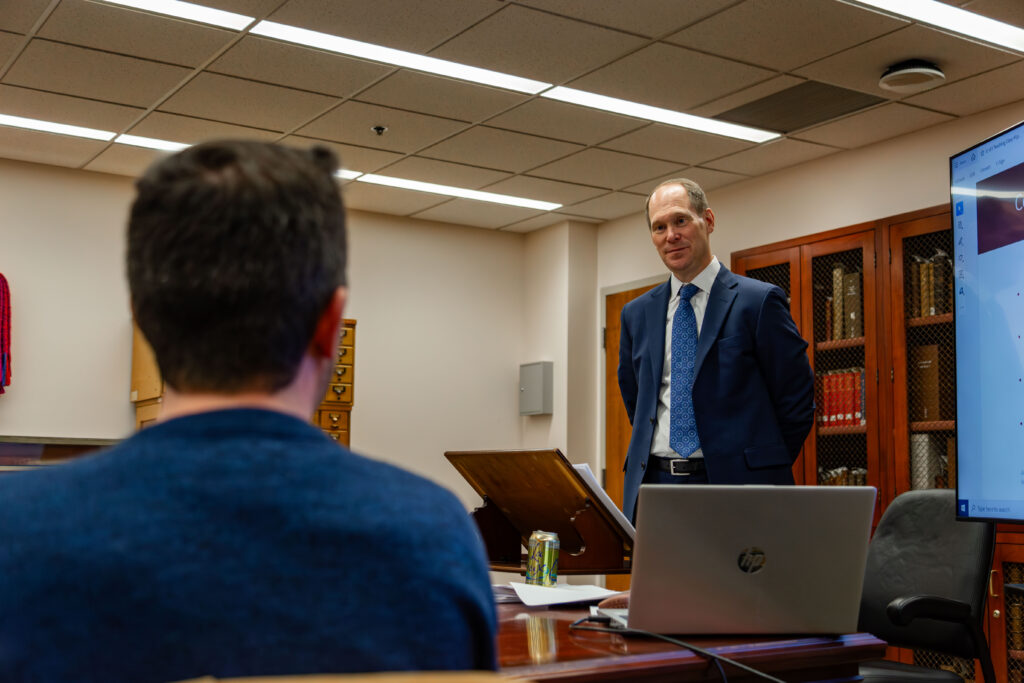
Judge Thomas Kirsch teaches a class at the College of Law

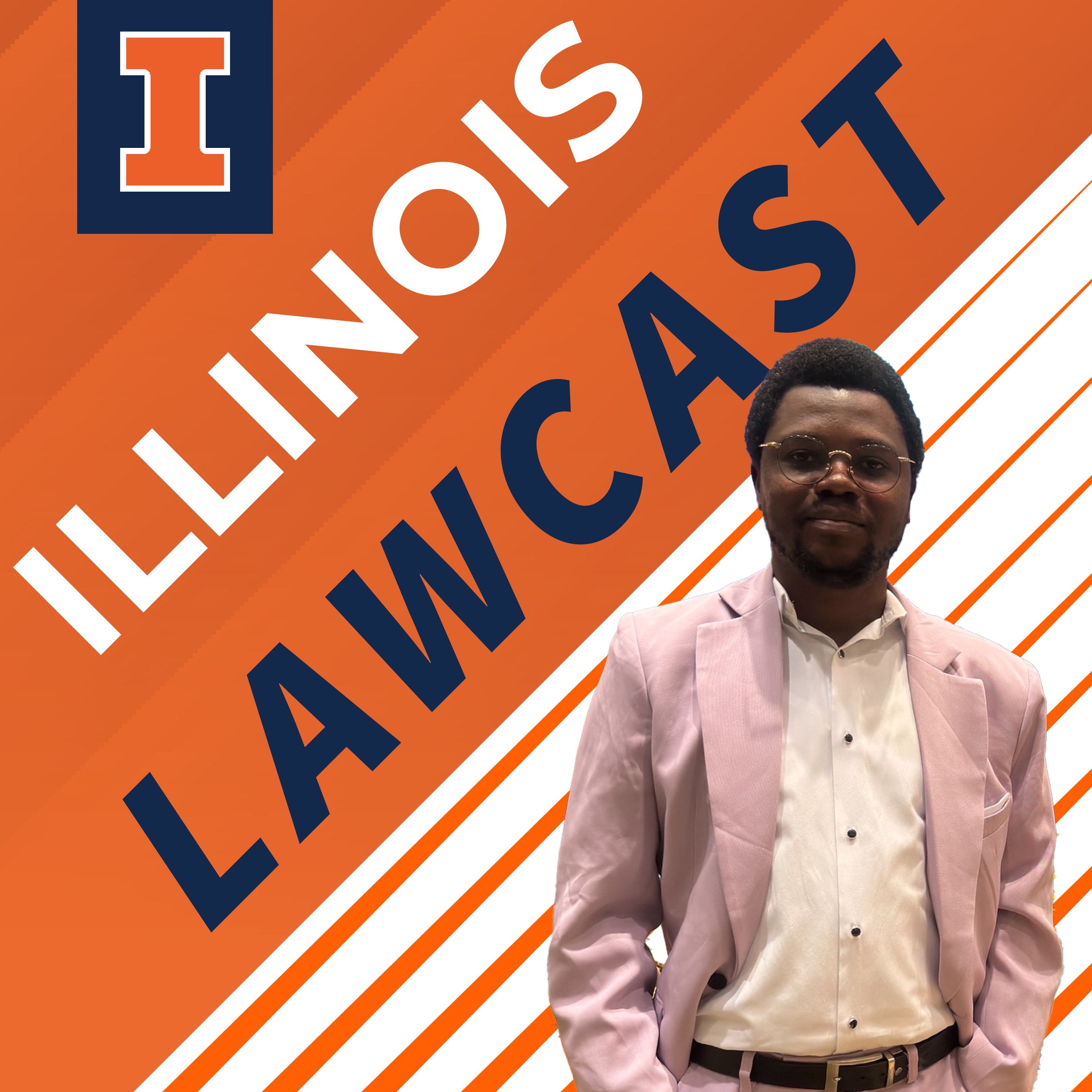
Illinois LawCast: Acting locally and globally with Abass Sesay

This episode features Abass Sesay, an LLM student from Sierra Leone and founder of the nonprofit, Campaign for Social Justice and Human Rights. We discussed his work promoting climate change action, youth empowerment, and justice, as well as attending the United Nations’ Summit of the Future in and IMF and World Bank Annual Meetings.

If you have any comments or suggestions for the podcast, please contact podcast@law.illinois.edu.

Illinois LawCast: Veterans Legal Clinic with Yulanda Curtis and Luke Hemmerla

Founder and director of the Veterans Legal Clinic, Yulanda Curtis, joins the podcast to discuss her passion for providing civil legal services to the veteran community. In the second half of this episode, 3L student Luke Hemmerla, a current member of the Missouri Army National Guard, joins to discuss his work as a clinician and how his military background has helped him in this role.

More information about the Veterans Legal Clinic can be found on their website. If you would like to contact the Clinic to see if their services might be right for you, the number to call is (217) 244-9494 or you may email law-clinics@illinois.edu.

If you have comments or suggestions for the podcast, please email podcast@law.illinois.edu.

Wilson and students take part in “Undebates” on reproductive health

Sitting in front of an audience at the University of Illinois-Springfield, Sara Jane Peal, a 3L student, had no idea what to expect. Alongside Professor Robin Fretwell Wilson, Peal was on stage to discuss their research on reproductive health and reproductive rights in the different states as part of the Institute of Government and Public Affairs “Undebates” series, a discussion series on hot topics in the presidential election.

“It was nerve wracking. I had no idea who was going to show up,” Peal explained. On the strength of their hard work, though, the Illinois Law cohort handled the questions ably and helped inform many voters in the audience and beyond, as the panel was later distributed by Illinois Public Media as part of The 21st Show.

“The biggest surprise was this pocket of old men, and I expected them to ask me, like, some really hard-hitting, sort of more pro-life stances because, you know, they did look quite older. But they were pretty much just wondering about [questions like] what was the right to travel, how does this affect like health care and IVF? And that was surprising to me because I did expect a little bit more of an attack question,” Peal added. 

Prior to Peal’s turn on the stage, 2L student Ellen Florence Jones and LLM student Saraf Farhin Choudhury participated in a small group discussion of reproductive health. Professor Wilson described their discussion as “a vibrant exchange of thoughts and information between the law and medical students, where they supplemented each other’s knowledge, shared their opinions, and learned from each other.”

For Choudhury, the experience was “eye-opening.” She described her involvement in the project as deeply personal, with a long-term interest in women’s rights and reproductive health that was underlined by the Dobbs decision that allowed states to restrict access to abortion. Knowing of Professor Wilson’s work in this field, she sought the chance to work as a research assistant. Taking that chance paid off on the Springfield stage.

“The feedback we received for our research was incredibly inspiring. Everyone agreed that it’s an important and much-needed project. In many ways, the research came to life for me during this event, as it was my first time seeing Professor Wilson and Sara share our findings with an audience. It was truly motivational and inspiring to witness their presentation and the positive reception our work received,” Choudhury said.

Peal, who is interested in working in medical malpractice defense after graduation, came away from the Undebates event feeling encouraged by the collaboration with the doctors on the panels and eager to share more of their work.

“It’s just been such a fun, unique experience,” she said. “Actually spearheading the project and helping determine how it’s been shaped and what direction it goes in has been really fun and interesting. And I definitely think, especially for jobs and talking to my employer this summer, they were very impressed that I’ve had that research skill and that I’ve been able to look at a lot of different things and sort of condense it down into something that everybody can understand.”

An edited version of Peal and Wilson’s panel discussion is available to stream via Illinois Public Media.

Illinois LawCast: Work experiences with Sarah Shamsi and Alex Bailey

The debut episode of the Illinois LawCast explores some of the work experiences open to current students and recent graduates. Guests for this discussion are Sarah Shamsi, a rising 3L student who spent her summer externing as a law clerk with the City of Chicago, and Alex Bailey, a 2023 graduate who has been a judicial law clerk in the Southern District of Indiana for the past year. Both guests had great stories and reasons why they are grateful to have had these experiences.

If you have any questions or comments, please email us at podcast@law.illinois.edu.

College of Law welcomes new staff in student support roles

The College of Law is pleased to announce a significant expansion in our Student Services team, with the addition of two new staff members and a new role for Jolynn Caroline, a dedicated member of the Career Planning and Professional Development team. 

An 18-year veteran of the College staff and a graduate of the school herself, Jolynn has spent the last several months gathering views on diversity, equity, and inclusion from our students, faculty, and alumni. After reflecting on a summary of these conversations, Dean Sharpe concluded that the College would benefit from her continued leadership in this critical area. Jolynn will serve as the College’s Senior Director for Inclusive Excellence, Career Planning and Professional Development. In this new role, she will split her time between Career Services and helping Dean Sharpe to foster inclusion and belonging at the College.

Michael Loch joins the College as our first Director of Academic Success and Bar Support, as well as a Lecturer in Law. He joins us from the University of Oregon School of Law, where he served as the director of academic success and taught several classes on bar preparation and fundamental law school skills. In his role at Illinois, Michael will work directly with students, starting in their 1L year, to build academic and analytical skills that will set them on the path toward success during law school, on the bar exam, and ultimately, in their careers. 

Maggie Verklan, in partnership with the campus Counseling Center, joins the College as our new (and first) embedded counselor. Assigned exclusively to the law school, Maggie will support our students’ mental health and well-being through individual counseling and programming. 

Dean Jamelle Sharpe is eager to collaborate with the new staff members on a variety of initiatives.

“Since the beginning of my deanship, I have been vocal about my commitment to inclusion, belonging, and student health and well-being. I am confident that the addition of our newest team members will enhance our ability to support the diverse needs of our students and advance us in our goal of fostering a community where everyone can thrive,” he said.

First Amendment Clinic students present argument before the Sixth Circuit

Tuesday, June 11, was about as perfect a day as you could ask for in Cincinnati, Ohio. There was barely a cloud in the sky and the mercury never surpassed 77 degrees. As First Amendment Clinic Director Lena Shapiro and clinicians Lilian Alexandrova ‘24 and Jonathan Resnick ‘24 approached the steps of the U.S. Court of Appeals for the Sixth Circuit, however, Resnick’s brow might have been a bit dewy.

“The night before and the morning of, I was incredibly stressed and nervous, like nothing I’ve ever felt in my life,” Resnick said with a laugh.

His nerves were understandable, of course, as he stood before the last appellate court before the Supreme Court, ready to take part in the first arguments presented by any First Amendment Clinic students.

He, Alexandrova, and Shapiro were appearing on behalf of a group of Libertarians whose members fell out of favor with the national party and were banned from using the national organization’s name and logo. The group had been restricted via an injunction from U.S. District Judge Judith E. Levy in August. It was at this point the Clinic got involved, helping appeal the decision to the Sixth Circuit in the case of Libertarian National Committee v. Saliba.

Alexandrova and Resnick were paired together for this case in fall 2023 and dove headlong into the work, finding inspiration in other classes and drawing upon their whole experience at the College of Law to create a strong argument for their clients. Close to the deadline for the brief, the clinicians, along with Shapiro and co-counsel, C. Nicholas Curcio of the Curcio Law Firm, went through an estimated eight or nine revisions over the course of several weeks, sacrificing free time and working late. The experience was nearly overwhelming, but the pair agreed it was among the most consequential aspects of their legal education.

“I honestly think it’s the most valuable thing I did in law school,” Alexandrova said.

“I think this type of experience is almost necessary,” Resnick agreed.

Brief writing was just a part of the experience, however, and the immensity of it did not scare the students away from signing up for another semester. To prepare for oral arguments in spring, College of Law professors put Alexandrova and Resnick through a litany of moot court sessions. With help from fellow students Christian Hallerud ’24 and Diana Sweeney ’24, the duo created arguments to present before the likes of Rummana Alam, Vikram Amar, Sean Anderson, Jim Fessler, Eric Johnson, Andrew Leipold, and Jason Mazzone. Despite the challenge—particularly from Amar and Mazzone, Resnick noted—the young attorneys felt much better prepared as a result.

“They were pretty intense. They didn’t hold back. They would interrupt you nonstop,” Alexandrova recounted. “I think that helped make me a better advocate for sure. I learned how to think on my feet a lot more than I ever have before. I personally, I have six years of mock trial experience, so I’m used to responding to evidentiary objections on the spot, but when it’s about the law and your entire argument, I think that’s a little bit harder.”

Although the anxiety was real as they entered the courtroom in June, their preparation and the presence of Shapiro at their side helped to settle their nerves. As the last case on the day’s schedule, the experience of watching other arguments—including arguments from University of Michigan law students—calmed them further.

When Libertarian National Committee v. Saliba was brought before the judges, Alexandrova delivered the argument while Resnick and Shapiro took notes and helped organize their rebuttal, which Resnick delivered. Their line of reasoning, that the case is fundamentally about the right to dissent and how not overturning or vacating the preliminary injunction would have a chilling effect on free speech, drew kind words from the judges hearing the case.

Shapiro had nothing but praise for her students as well.

“I’m extraordinarily proud,” she said. “They were very diligent. They took this very seriously, and they gave up time during their bar prep study in the summer to do this…. They worked great as a team. It was a pleasure to have them both semesters and into the summer. I would just really commend their hard work and their persistence to get better and advocate on behalf of our clients.”

Though they must wait on a decision, the experience itself has been something both clinicians reflected fondly upon as they studied for the bar and prepared for careers in litigation.

“When we were in the Sixth Circuit in Ohio, I felt like there was a reason we were doing this kind of work,” Alexandrova said. “And when you really think about it, if the Clinic didn’t take the case, I think effectively our clients would have been silenced. So, on a big-picture level, I think what we did was important.”
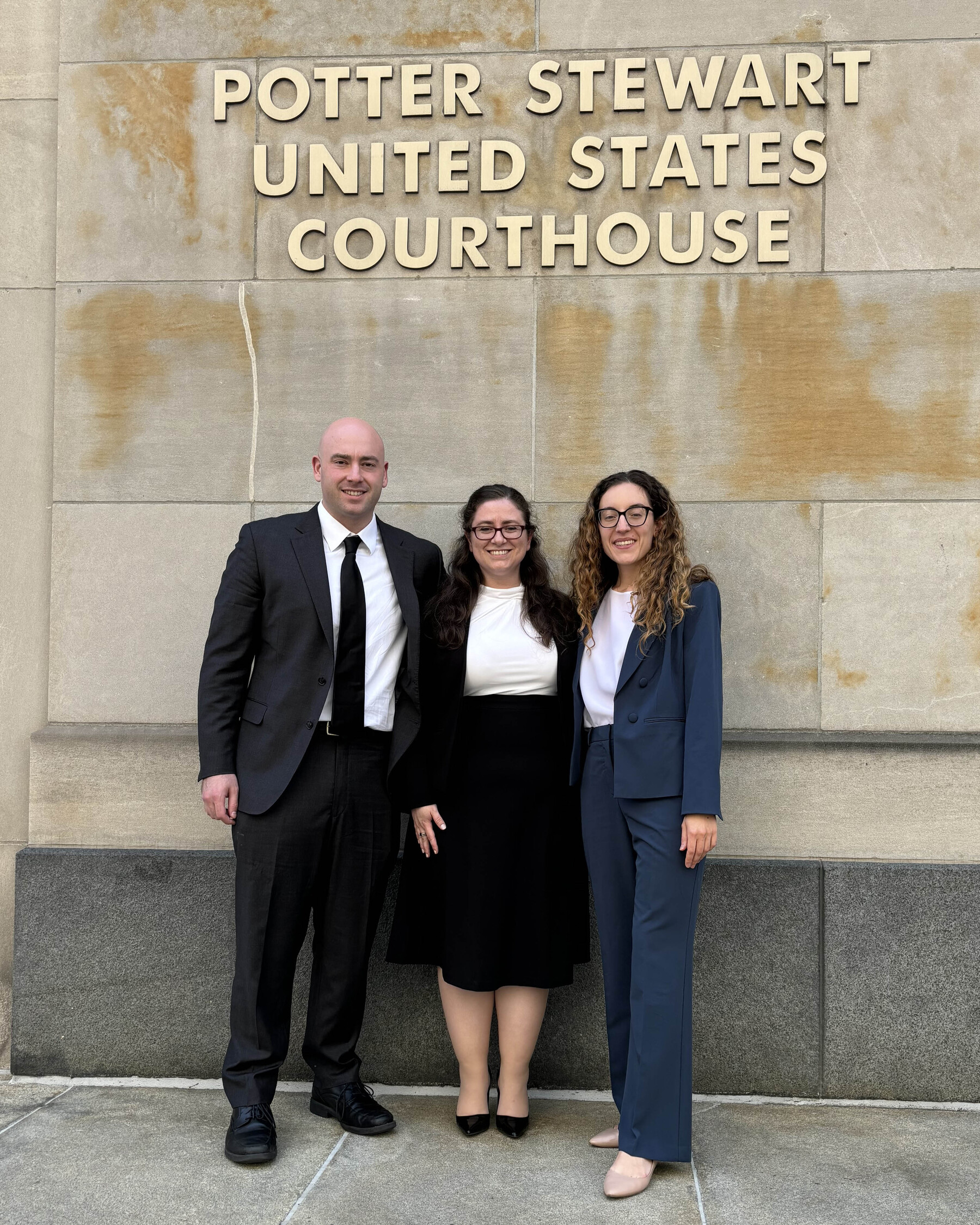
Jonathan Resnick, Director Lena Shapiro, and Lilian Alexandrova in front of the Sixth Circuit Courthouse in Cincinnati, Ohio.

Jonathan Resnick, Director Lena Shapiro, and Lilian Alexandrova in front of the Sixth Circuit Courthouse in Cincinnati, Ohio.

Delete

Edit embedded media in the Files Tab and re-insert as needed.

College of Law
504 East Pennsylvania Avenue
Champaign, IL 61820
(217) 333-0931