New paper from Sherkow: “Intellectual Property, New Genomic Technologies And Plant Innovation: Clearing Innovation Pathways”

Professor Jacob Sherkow has co-authored a new paper with Laura Valtere (University of Copenhagen – CeBIL) and Timo Minssen (University of Copenhagen – CeBIL) titled “Intellectual Property, New Genomic Technologies And Plant Innovation: Clearing Innovation Pathways.” The abstract follows:

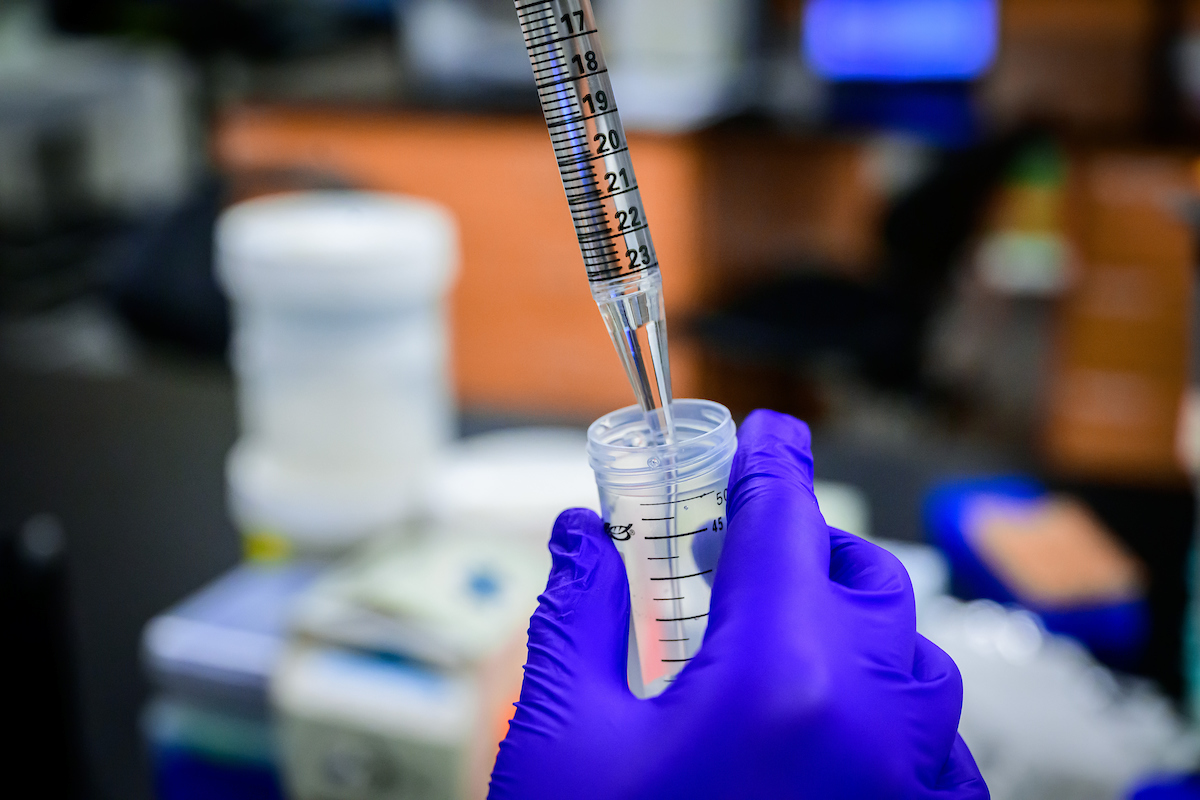
New genomic technologies (NGTs), such as genome editing-the modification of DNA in living cells-promises to revolutionize agriculture. Beyond simply yielding new, commercially viable crop varieties, NGTs also hold out promise of using novel crops as a “biosolution”-methods to improve sustainability practices by reducing pesticide usage, improving drought tolerance, increasing yield, and minimizing food and fertilizer waste. At the same time, the complex global system of intellectual property (IP) protection for crops has largely been unchanged for decades. There is accordingly some concern that the current crop IP system will not bring the promise of agricultural biosolutions to fruition. This Article reviews NGTs as biosolution and explores how they fit into the current international IP system for crops. Against this backdrop, this Article also reviews several current proposals to crop IP regime, before tentatively suggesting recommendations for rebalancing the incentive structures in crop IP.

Sherkow invested as Richard W. and Marie L. Corman Professor of Law

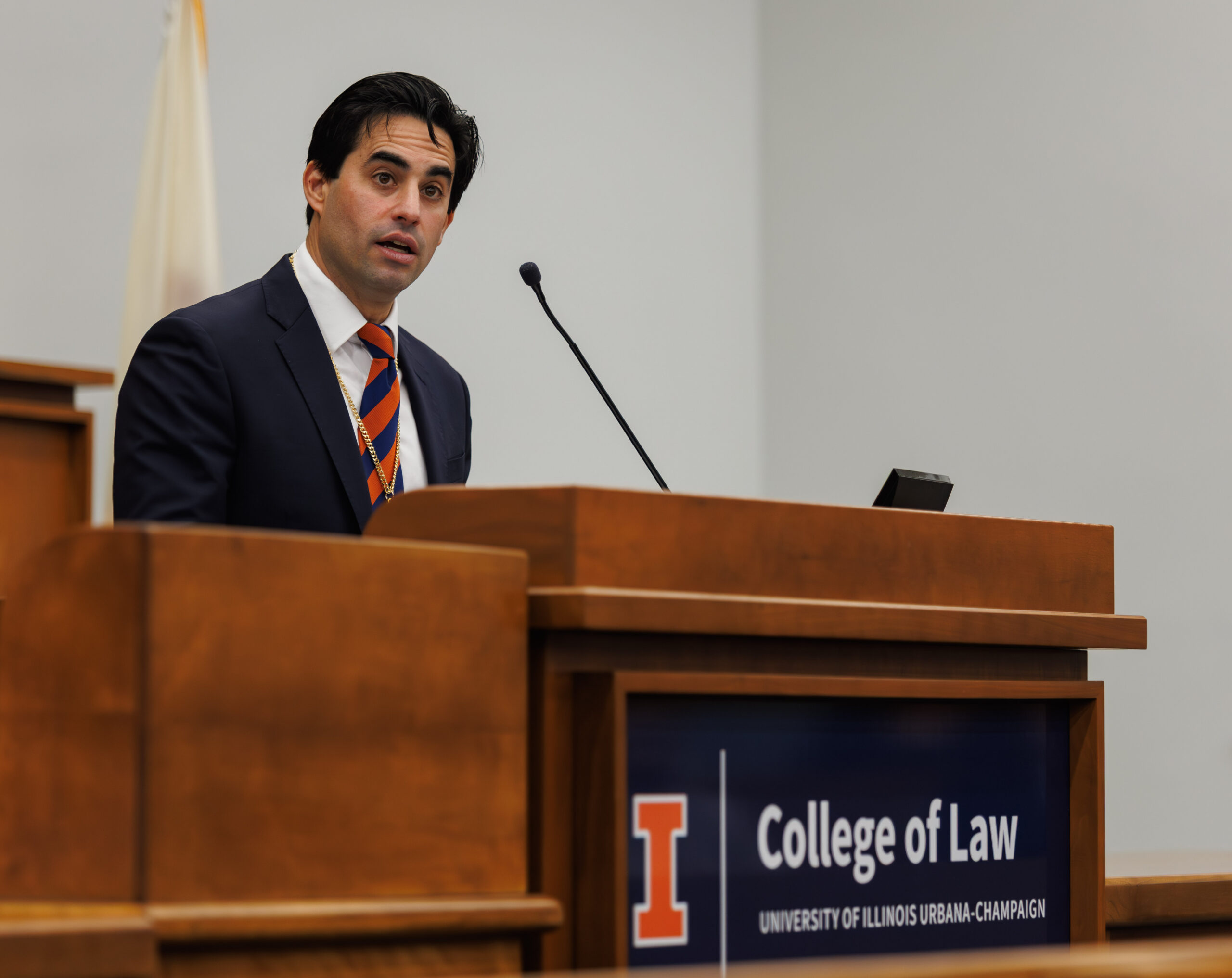
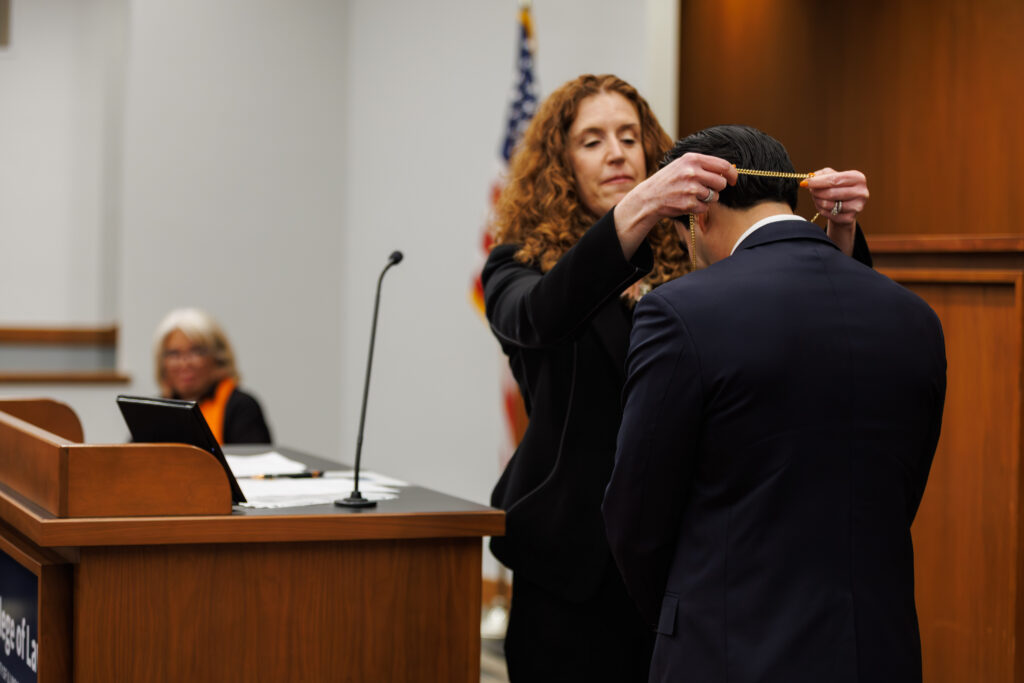
On November 11, 2025, Jacob S. Sherkow was invested as the Richard W. and Marie L. Corman Professor of Law in a ceremony honoring his commitment to scholarship, teaching, and public engagement. In remarks shared at the ceremony, Dean Jamelle Sharpe said, “Professor Sherkow’s achievements—and the real-world impact of his work—represent the very best of what makes the University of Illinois one of the world’s finest research institutions.”

Professor Sherkow joined the University of Illinois in 2020, where he holds appointments in the College of Law, the Carle Illinois College of Medicine, the European Union Center, and the Carl R. Woese Institute for Genomic Biology. His research focuses on intellectual property, regulation, and bioethics of advanced biotechnologies. He is a leading expert on IP protection for genome-editing technologies, such as CRISPR. Jake is the author of over 75 articles published in both scientific journals and traditional law reviews, including Science, Nature, JAMA, the Yale Law Journal, and the Stanford Law Review. His scholarship has been cited by various federal courts, including the Supreme Court, and he has been extensively quoted in popular media outlets such as The Wall Street Journal, The New York Times, The Washington Post, and NPR. His full bio is available on his faculty profile page.

Professor Sherkow’s endowed position was established by Richard W. Corman (‘40) and Marie L. Corman in 1984. Mr. Corman was a special agent of the FBI for 23 years before practicing in Virginia, where he became a member of the judiciary and also served in the Virginia General Assembly. Joined by his family, Sherkow was honored with speeches from Dr. Amy Santos, associate provost for faculty development and professor in the Department of Special Education, as well as Professor Colleen Murphy, associate dean for academic affairs.

Watch the investiture ceremony on our YouTube channel.

Professor Colleen Murphy places a medallion around the neck of Professor Jake Sherkow during his investiture ceremony.
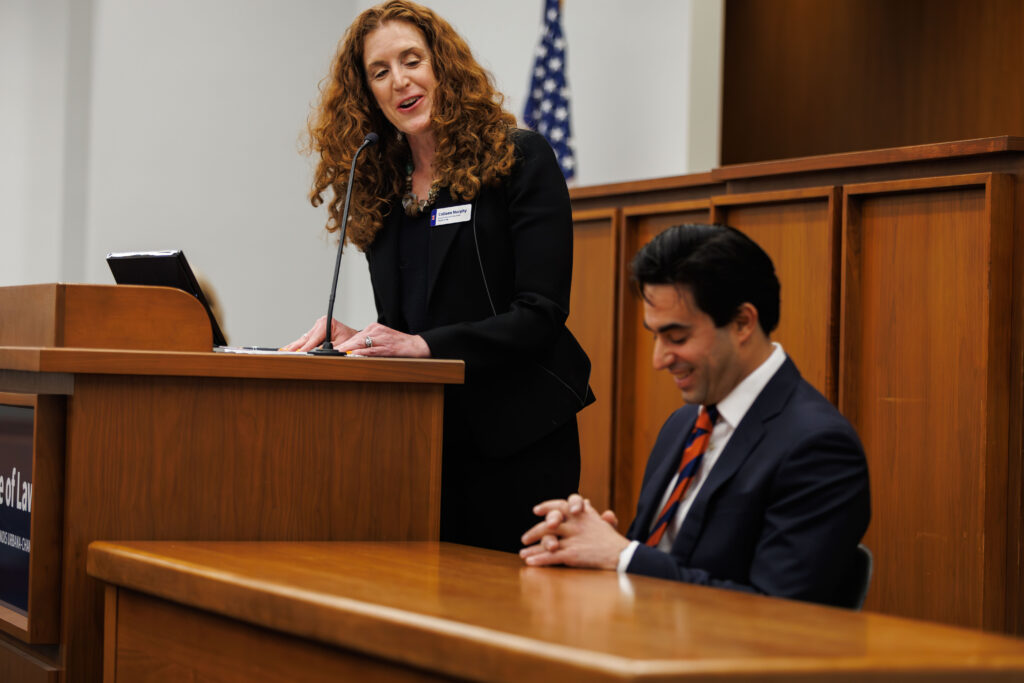
Professor Colleen Murphy gives remarks and shares a laugh with Professor Jake Sherkow.
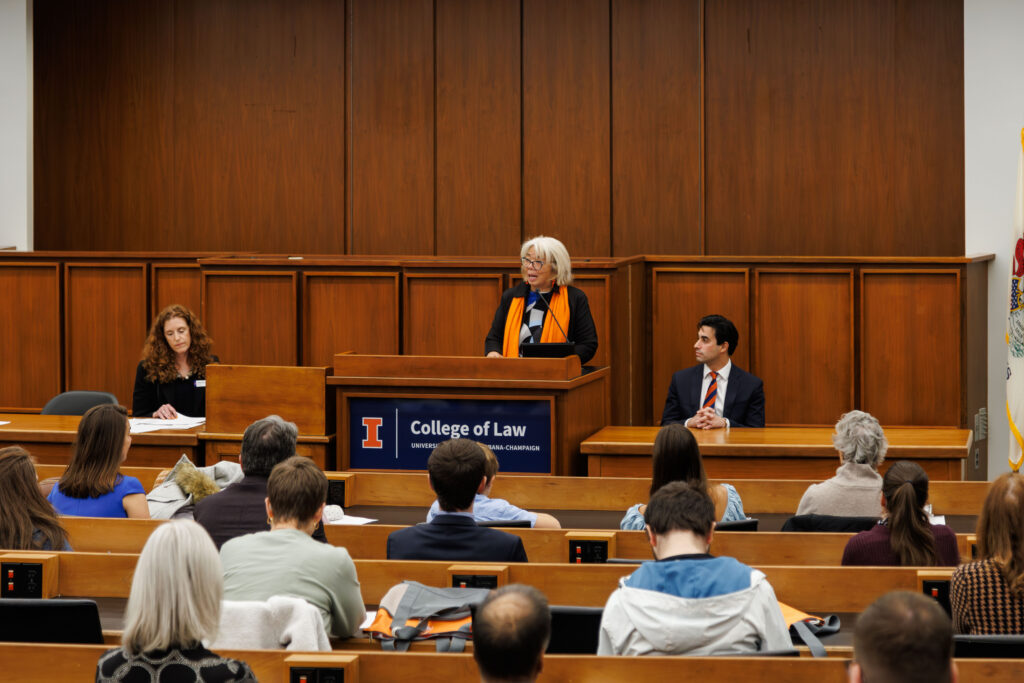
Dr. Amy Santos speaks at a podium, with Colleen Murphy to her left and Jake Sherkow to her right.
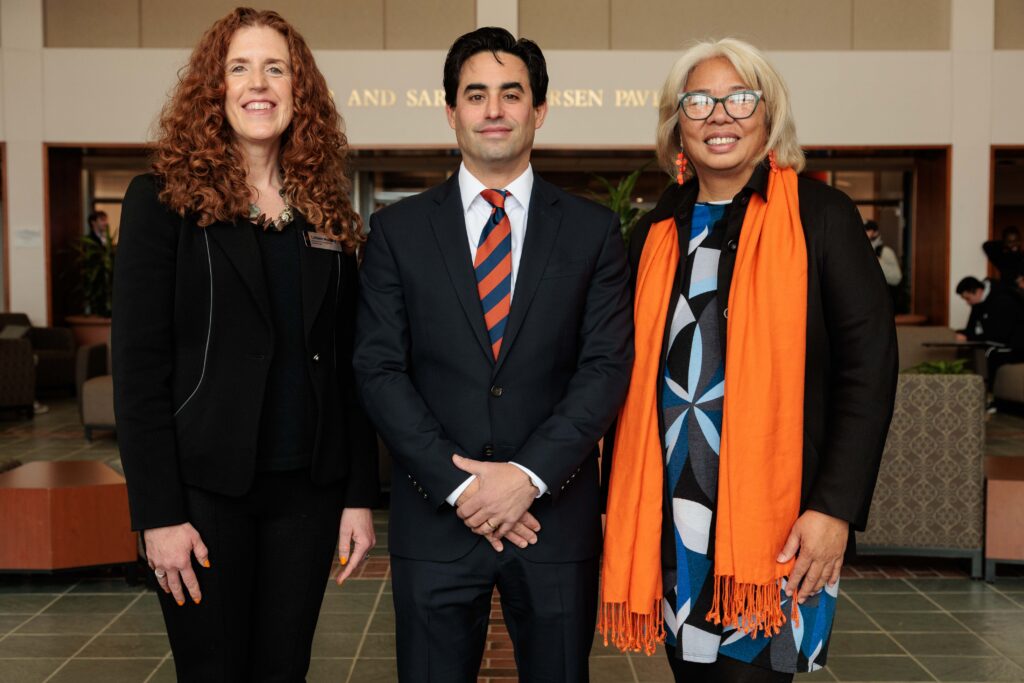
Colleen Murphy, Jake Sherkow, and Dr. Amy Santos pose for a photo in the Pavilion.

International Data Privacy Law publishes new paper from Sherkow

A new article covering the sharing of genomic data across international borders by Professor Jacob Sherkow has been published by the journal International Data Privacy Law. “A sociotechnical approach to genomic data privacy: a comparative analysis” examines new technology designed to process genomic data within a secure computing
environment that can comply with and align European Union and U.S. privacy laws that may differ in several ways.

Sherkow delivers lecture at Chicago-Kent

Professor Jacob Sherkow delivered his lecture, “What’s the Skinny? Drug Labels and Patent Infringement,” at Chicago-Kent College of Law on Tuesday, October 28. The event focused on the role of drug labeling in pharmaceutical patent litigation and included discussion of the pending Supreme Court cert petition in Hikma v. Amarin, on which the Supreme Court has called for the views of the Solicitor General.

Lawsky speaks on tax panel at Pittsburgh School of Law

On October 17, Professor Sarah Lawsky was part of a panel discussion at the University of Pittsburgh School of Law covering “AI in Tax Law: Tax Administration &
Educating the Next Generation.” She was one of eight panelists from academia, industry, government sharing expertise on the role of artificial intelligence in tax administration, legal practice, and tax law education.

Lawsky publishes article in Yale Journal on Regulation

In the most recent issue of the Yale Journal on Regulation, Professor Sarah Lawsky has published a note as part of the symposium on Joshua D. Blank and Leigh Osofsky’s “Automated Agencies: The Transformation of Government Guidance.” In her article, she concludes, “Automated guidance thus might exacerbate the access to justice gap. Unlike publications, automated guidance may fool people into thinking that they have received individualized guidance, when they actually have not.”

IGPA interviews Gerke on Illinois’s ban on AI therapists

Recent legislation made Illinois the first state to enact a ban on artificial intelligence serving as mental help therapists without oversight from a licensed clinician. To add context to this development, the Illinois Institute of Government and Public Affairs spoke to Professor Sara Gerke, an expert in the ethical and legal challenges of artificial intelligence and big data for health care and health law. “The problem with unsupervised AI in mental health is that chatbots are designed to keep conversations flowing, not to ensure accuracy or safety,” Gerke explained.

AI in Cancer Surgery and Care Conference features wide range of expertise and fosters interdisciplinary dialogue

In partnership with the Cancer Center at Illinois, the University of Illinois College of Law hosted the AI in Cancer Surgery and Care Conference on September 4th and 5th, 2025.

Organized by Sara Gerke, Associate Professor of Law & Richard W. & Marie L. Corman Scholar at the University of Illinois, the conference brought together a diverse group of experts to explore the transformative impact of AI on cancer diagnosis, treatment, and surgery. Keynote addresses were delivered by Dr. Ronan Cahill (University College Dublin) and Dr. Ravi Parikh (Emory University), and panel discussions featured 17 additional speakers from within academia and the medical field. The conference facilitated dialogue across disciplines and addressed not only medical and technical breakthroughs, but also the ethical and legal implications of these innovations. 

A male speaker presents during the AI in Cancer Surgery and Care Conference
Timothy Fan, a presenter at the AI in Cancer Surgery and Care Conference, holds a microphone and speaks
Dr. Ronan Cahill delivers a keynote address during the AI in Cancer Surgery and Care Conference
A woman holds a microphone and speaks during the AI in Cancer Surgery and Care Conference
Professor Sara Gerke and other panelists enjoy a reception during the AI in Cancer Surgery and Care Conference
Dr. Rohit Bhargava delivers a keynote address during the AI in Cancer Surgery and Care Conference

College of Law
504 East Pennsylvania Avenue
Champaign, IL 61820
(217) 333-0931