Anderson and Lawless write about crypto and retirement for Bloomberg

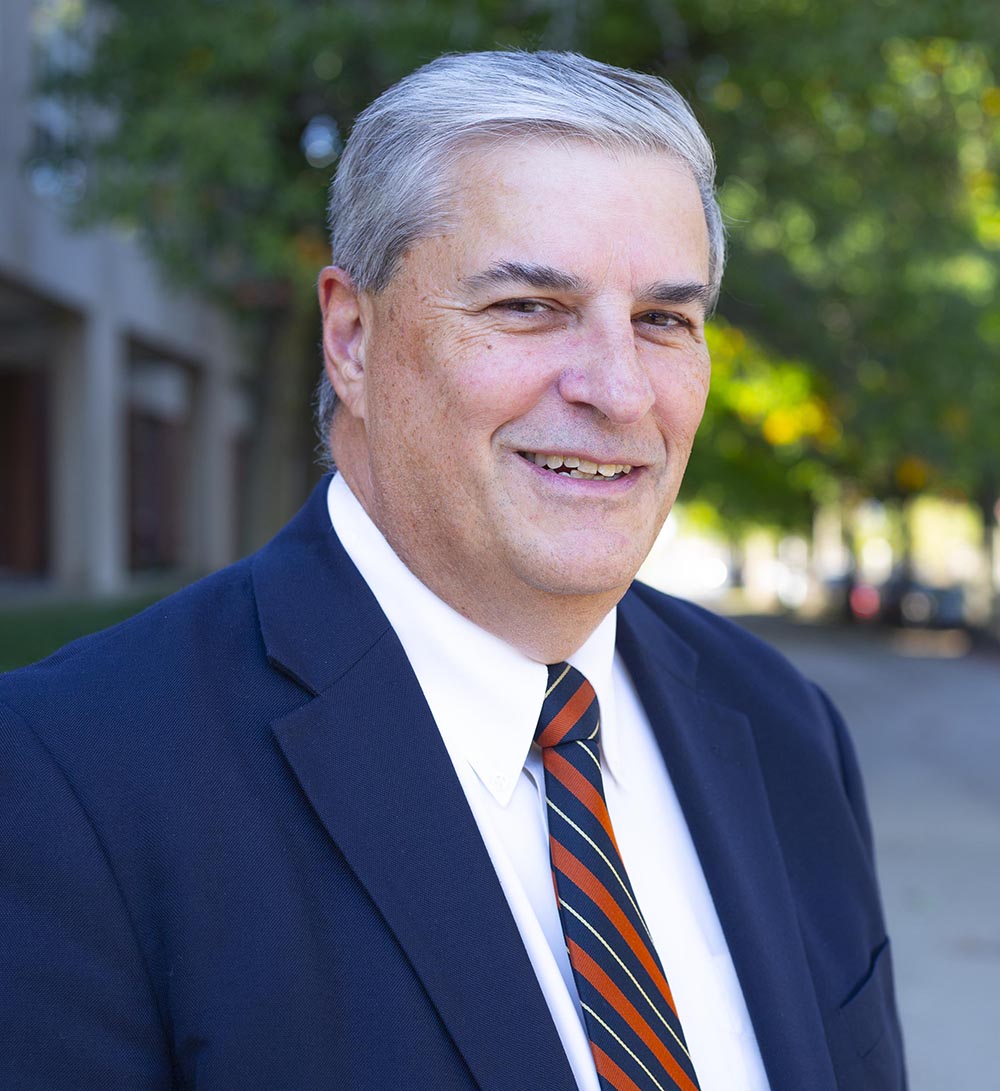
In a new opinion article published by Bloomberg, Professors Sean Anderson and Robert Lawless explain why they believe the Trump administration’s decision to allow workers to invest retirement savings in cryptocurrency and private equity is a bad decision for the workers. “There is no reason to expect that inviting plans to offer these alternative investments will lead to better outcomes overall for participants—especially considering the higher fees and expenses that typically come with them,” they write. “But there is ample reason to think these investment options will make things worse by increasing the risk of large losses for participants, most of whom can ill afford them.”

Lawless discusses new book with Illinois News Bureau

In his new book, Debt’s Grip: Risk and Consumer Bankruptcy, Professor Robert Lawless and co-authors Pamela Foohey and Deborah Thorne examine the stories and the data behind people who file for bankruptcy in the U.S., finding the human nuance in the bankruptcy system. “When we thought about writing this book, we asked ourselves, ‘What do we have from the data that we think people would want to read?’” Lawless told the Illinois News Burea. “We also wanted to write a book that had a broader reach, so we realized that we had to show both the data and the personal stories of the people who show up in bankruptcy court.”

Illinois LawCast: Discussing Debt’s Grip with Professor Robert Lawless

We kick off season two with an engrossing conversation with Professor Robert Lawless about his new book, Debt’s Grip: Risk and Consumer Bankruptcy. The book explores financial precarity in the United States and utilizes original data from the Consumer Bankruptcy Project, including the words of bankruptcy filers themselves to shed light on their situations. Professor Lawless shared insight into how he began his work on this project, how the book came about, and how the research has helped him as a teacher at Illinois Law.

For more information about Debt’s Grip, including ways to purchase the book, please visit the publisher’s website: https://www.ucpress.edu/books/debts-grip/paper

If you have comments or suggestions for the podcast, please contact podcast@law.illinois.edu.

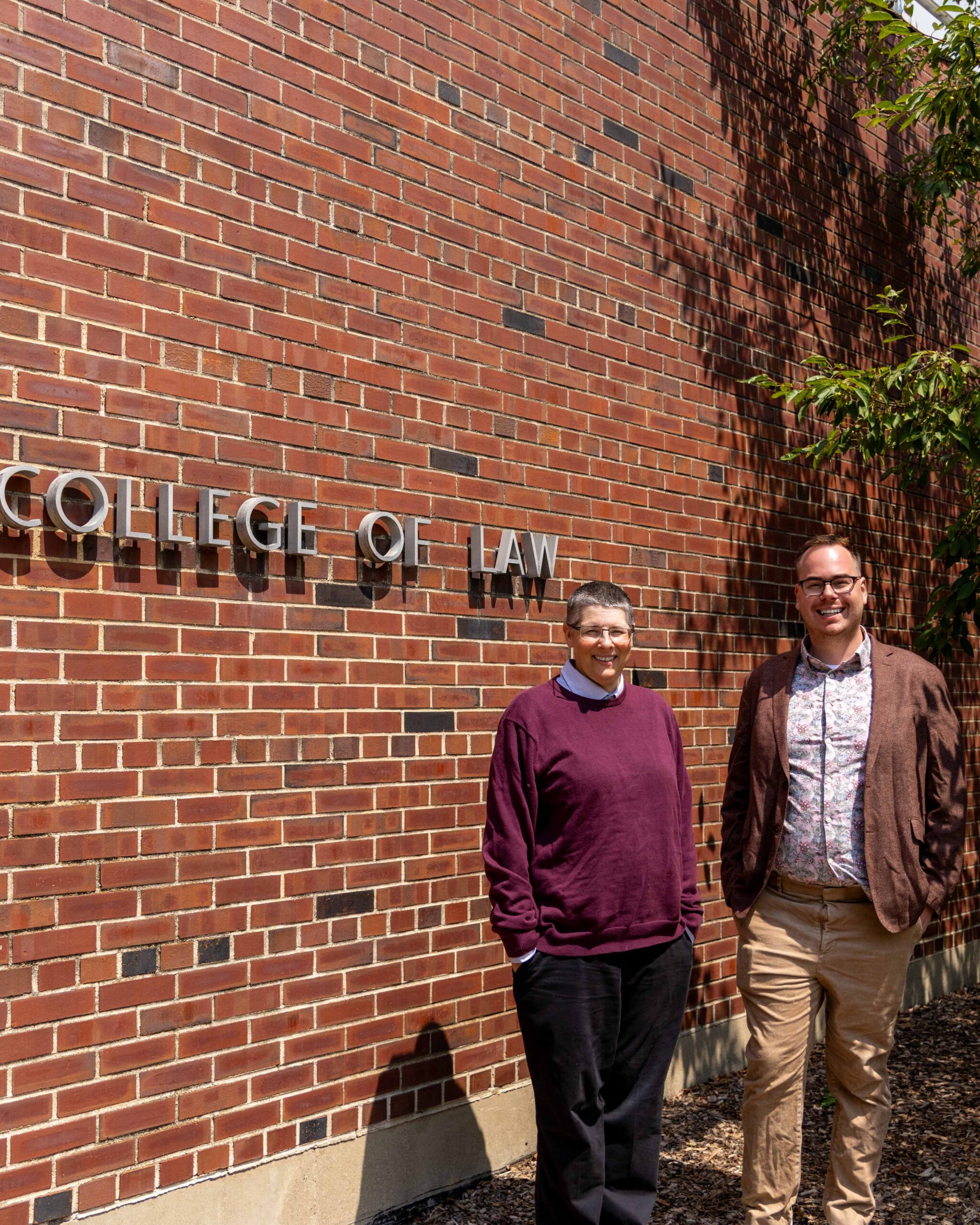
The College of Law welcomes Eric Baudry and Sarah Lawsky to faculty

The University of Illinois College of Law is proud to welcome Eric Baudry and Sarah Lawsky as new faculty members this fall. Baudry joins as an assistant professor of law with a specialty in tax law, poverty, and redistribution; Lawsky will serve as the L.B. Lall and Sumitra Devi Lall Professor of Law and the co-director of the Innovation Law and Technology Program.

“I’m really excited about joining the law school here because of the vibrant intellectual life among the faculty,” Lawsky said. “The University of Illinois is such an incredible institution, and the opportunity to do interdisciplinary work here at the law school with the other parts of this university is really exciting.”

Lawsky comes to Illinois having previously taught at George Washington University Law School, UC Irvine School of Law, and, most recently, at Northwestern Pritzker School of Law. Her work focuses on computational law, with a focus on formal methods and the formalization of tax law. As part of the Innovation Law and Technology Program, she hopes to continue her work in conjunction with experts from the Siebel School of Computing and Data Science and the School of Information Sciences as well as others. At the College of Law, Lawsky will be teaching contracts and federal income tax courses, aiming to meet the existing high standards of the law school.

“Illinois has an amazing tax professor in Dick Kaplan, who’s terrific. My goal is to try to match the very high level of quality of tax instruction that he has established,” she said.

Also an expert in tax law, Baudry comes to Illinois Law with experience as a clerk in the Eastern District of Michigan and the Ninth Circuit, a Skadden Fellow at Mid-Minnesota Legal Aid, and a faculty fellow at the University of Michigan Law School. He will teach income taxation, corporate taxation, and a seminar on the intersections of taxation and poverty.

“I’m interested in planting roots in this community, both as a person who lives in Champaign and as a tax scholar who cares about inequality in our community. Specifically, I’m interested in how residents experience impoverishment and how our local and state governments can use tax law as a vehicle to help improve the lives of their citizens” Baudry said. “My long-term goal as a professor would be to bring that work into the law school.”

Both Lawsky, who has spent the last nine years at Northwestern, and Baudry, a native Minnesotan, expressed their excitement to be a part of Illinois Law and the local community. Having a son in the state university system gave Lawsky an idea what to expect, and she says she’s eager to “learn what it means to be a part of the University of Illinois system.” Baudry shared his enthusiasm to talk to students, alumni, and faculty about his professional expertise as well as his personal passion for games.

“Getting to know the faculty and the staff and the spaces at Illinois Law, I immediately felt like this is a place that would push me to be my best, while also offering fantastic resources and supports for my journey to get there,” he said.

The College of Law is pleased to welcome Baudry and Lawsky to the faculty and looks forward to their accomplishments as part of the University of Illinois.
Lawless publishes new book on debt in the United States

Over the almost 45 years the Consumer Bankruptcy Project has been collecting data, the landscape of debt in the United States has shifted significantly. Updating that work is “Debt’s Grip,” a new book by Professor Robert Lawless and his fellow principal investigators telling the story of financial struggle in the United States in the words of bankruptcy filers themselves.

“It was time to document the many ways things have changed, but also the way things have not,” Lawless said. “One of the sad things is American households continue to struggle for many of the same reasons they did 35 years ago.”

“Debt’s Grip,” which is available everywhere now, provides an update on the Consumer Bankruptcy Project, started by Teresa Sullivan, Elizabeth Warren, and Jay Westbrook. Their work, dating back to the 1980s, provided novel insight by combining bankruptcy court records and surveys that asked individuals to tell their story in their own words.

Lawless joined the Consumer Bankruptcy Project in 2001 and later became one of its principal investigators. Along with many student research assistants from the College of Law, Lawless and co-authors Pamela Foohey (who served as a visiting assistant professor at Illinois from 2012–14) and Deborah Thorne have been doing continuous data collection for the project since 2013 and publishing in law reviews and sociology journals. This intensive effort, along with greater access to technology, has helped the group provide new insights into debt in the U.S and provided the foundation for “Debt’s Grip.”

“We lean more into the demographics of bankruptcy in this book because the last book was written with data before the internet,” Lawless said. “There’s a lot more we know now about the demographics of who files bankruptcy…. We have a nationally representative picture of who files bankruptcy.”

This book is the first Lawless has written for a broader audience. As with textbooks, the goal of “Debt’s Grip” is to share his expertise and teach the reader, but Lawless hopes this book can inform decision makers like lawyers, judges, other policy leaders in the field of bankruptcy.

“We put some context into what it means to live at the financial edge. People have stories of going without medicine, without food, or sacrifices to keep a car running so they can get to work or they can get their children to school. The book, I hope, details and lays out what that really means,” he said.

“Debt’s Grip” is published by the University of California Press and available now. For more information on Professor Lawless, visit his faculty page on our website.

New paper from Kaplan examines SECURE 2.0

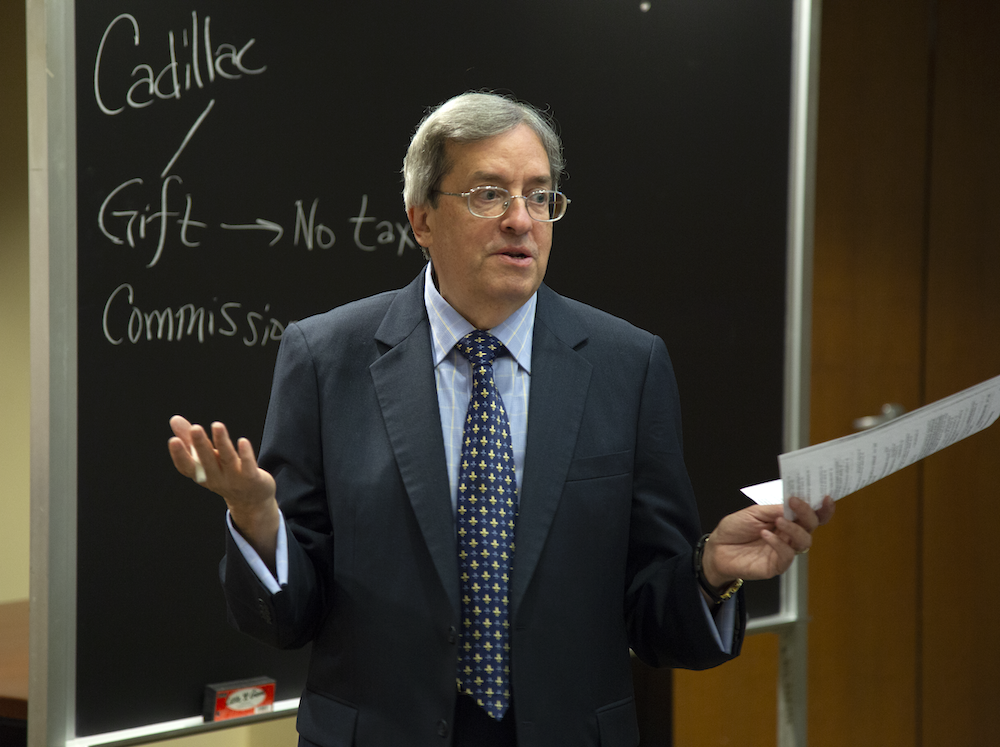
The SECURE 2.0 Act of 2022 included six major changes pertaining to current plan participants in retirement plans. In a new article published in The Elder Law Journal, Professor Richard Kaplan examines and analyzes each of those changes and how they address some of the deficiencies in the present tax-subsidized matrix of employer-provided retirement savings plans.

Kaplan presents research at Harvard Law and University of Cambridge

Professor Richard Kaplan presented Modernizing Medicare for Extended Healthspans at the Conference on Law, Healthcare, and the Aging Brain and Body, Harvard Law School’s Petrie-Flom Center on June 9, 2025. This paper considered how the Medicare program is likely to be affected by the latest developments in medical science pertaining to the aging brain and body. It then used these developments to consider what Medicare should look like if it were designed from scratch today.

Kaplan is also scheduled to present The Fundamental Fragility of Tax Reform: Lessons for Legislators After Forty Years at the Conference on Legal Perspectives on the Development and Enactment of Tax Policy, University of Cambridge (U.K.) Centre for Tax Law, on July 8, 2025. This paper examines the development of major tax reform in the United States by focusing on the monumental Tax Reform Act of 1986, addressing the economic, legal, and political forces that led to its enactment. It then analyzes what has happened to that law’s achievements since that time.

Illinois LawCast: All about NomosLearning

Bobby Mannis and Vindy Murthy, 2025 graduates, join the podcast to discuss their artificial intelligence-powered learning tool, NomosLearning. They share some background on how their education at Illinois inspired the building of this tool and how they came together to create a tool that all Illinois students can use. NomosLearning harnesses the power of AI to supplement reading for students, creating issue spotters and case briefs to guide their studies. The co-founders also share some of their vision for the future of NomosLearning and their careers.

To learn more, visit https://www.nomoslearning.com/.

Disclaimer: this podcast is for informational purposes only and does not constitute an endorsement or approval by the College of Law. Please contact Nomos Learning for answers to questions regarding its content.

If you have comments or suggestions for the podcast, please contact podcast@law.illinois.edu.

Journal of Empirical Legal Studies selects article by Robbennolt and Winship for publication

The Journal of Empirical Legal Studies has selected “Settlementality,” an article co-authored by Professors Jennifer Robbennolt, Verity Winship, and alumna Jessica Bregant, for publication. Slated to be published later this year, the article is meanwhile available at https://papers.ssrn.com/sol3/papers.cfm?abstract_id=4773926.

According to the authors, “Settlementality” breaks new ground by exploring how everyday people perceive the role of settlements in the legal system. Their novel empirical study provides the first systematic investigation into lay opinions of settlement. They surveyed a nationally representative sample of more than 1,000 U.S. adults to ask them what they think about settlement. Respondents told them, for example, the extent they agreed or disagreed with statements like these: “A settlement between two parties is nobody’s business but their own.” “Settling parties are more interested in money than justice.” “Settlementality” promises to be a foundational article in an emerging body of empirical scholarship about settlement, reporting for the first-time what respondents thought settlement should look like.

The Journal of Empirical Legal Studies is a peer-edited, peer-refereed, interdisciplinary journal that publishes high-quality, empirically-oriented articles of interest to scholars in a diverse range of law and law-related fields, including civil justice, corporate law, criminal justice, domestic relations, economic, finance, health care, political science, psychology, public policy, securities regulation, and sociology. 

College of Law
504 East Pennsylvania Avenue
Champaign, IL 61820
(217) 333-0931