Mazzone discusses constitutionality of a proposed “billionaire’s tax” in Illinois

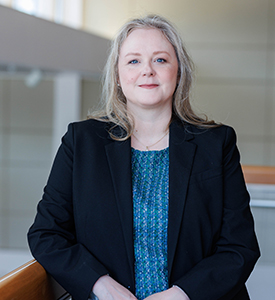
Although it was ultimately not included in the recently approved Chicago area transit bailout measure, Professor Jason Mazzone told the Cook County Record in late October that the proposed “billionaire’s tax” would face a stiff uphill battle in court.

“The sponsors of the (legislation), which would impose a tax on unrealized gains on assets owned by state residents with net assets exceeding $1 billion in value, contend that the proposed new tax is not a tax on personal property but on income,” Mazzone wrote in an email answer to questions from The Record.

“The Illinois courts will be very skeptical of this claim for the simple reason that a gain on paper, without any money ever being exchanged, does not obviously count as income within the ordinary meaning of the word or in the world of financial management or taxation,” Mazzone said.

“An increase in wealth is quite different from an increase in income. The state constitution distinguishes between the two. Courts will be inclined to keep the line between them sharp.”

R. Ross joins Life, Liberty, and the Pursuit of Happiness podcast as a guest

Professor Richard Ross was recently a featured guest on the Life, Liberty, and the Pursuit of Happiness podcast. He and fellow guest Professor Steven Wilf (UConn) discussed the creation of the legal concept of the people with the right to overthrow their government. The podcast is created by the Amerikazentrum research center in Germany, highlighting the upcoming 250th anniversary of the Declaration of Independence.

Sherkow invested as Richard W. and Marie L. Corman Professor of Law

On November 11, 2025, Jacob S. Sherkow was invested as the Richard W. and Marie L. Corman Professor of Law in a ceremony honoring his commitment to scholarship, teaching, and public engagement. In remarks shared at the ceremony, Dean Jamelle Sharpe said, “Professor Sherkow’s achievements—and the real-world impact of his work—represent the very best of what makes the University of Illinois one of the world’s finest research institutions.”

Professor Sherkow joined the University of Illinois in 2020, where he holds appointments in the College of Law, the Carle Illinois College of Medicine, the European Union Center, and the Carl R. Woese Institute for Genomic Biology. His research focuses on intellectual property, regulation, and bioethics of advanced biotechnologies. He is a leading expert on IP protection for genome-editing technologies, such as CRISPR. Jake is the author of over 75 articles published in both scientific journals and traditional law reviews, including Science, Nature, JAMA, the Yale Law Journal, and the Stanford Law Review. His scholarship has been cited by various federal courts, including the Supreme Court, and he has been extensively quoted in popular media outlets such as The Wall Street Journal, The New York Times, The Washington Post, and NPR. His full bio is available on his faculty profile page.

Professor Sherkow’s endowed position was established by Richard W. Corman (‘40) and Marie L. Corman in 1984. Mr. Corman was a special agent of the FBI for 23 years before practicing in Virginia, where he became a member of the judiciary and also served in the Virginia General Assembly. Joined by his family, Sherkow was honored with speeches from Dr. Amy Santos, associate provost for faculty development and professor in the Department of Special Education, as well as Professor Colleen Murphy, associate dean for academic affairs.

Watch the investiture ceremony on our YouTube channel.

Professor Colleen Murphy places a medallion around the neck of Professor Jake Sherkow during his investiture ceremony.
Professor Colleen Murphy gives remarks and shares a laugh with Professor Jake Sherkow.
Dr. Amy Santos speaks at a podium, with Colleen Murphy to her left and Jake Sherkow to her right.
Colleen Murphy, Jake Sherkow, and Dr. Amy Santos pose for a photo in the Pavilion.

LeRoy co-authors amicus brief in NCAA v. House

In early November, Professor Michael LeRoy was part of a group that filed an amicus brief with the United States Court of Appeals for the Ninth Circuit on behalf of women athletes in the case of NCAA v. House. LeRoy and his co-authors argue that a recent settlement in federal district court, which awards more than 90% of damages to male athletes, violates federal rules and goes against precedent. “This ruling created a structural conflict that harmed women athletes in the settlement agreement, approved on June 6, 2025, and dismissed evidence that clearly demonstrated why certification of the classes was wrong. Published studies, showing large gender disparities in NIL pay, provide data that the lack of representation for women athletes in this litigation perpetuates historical NIL disparities, and other inequities, for NCAA women athletes,” LeRoy said.

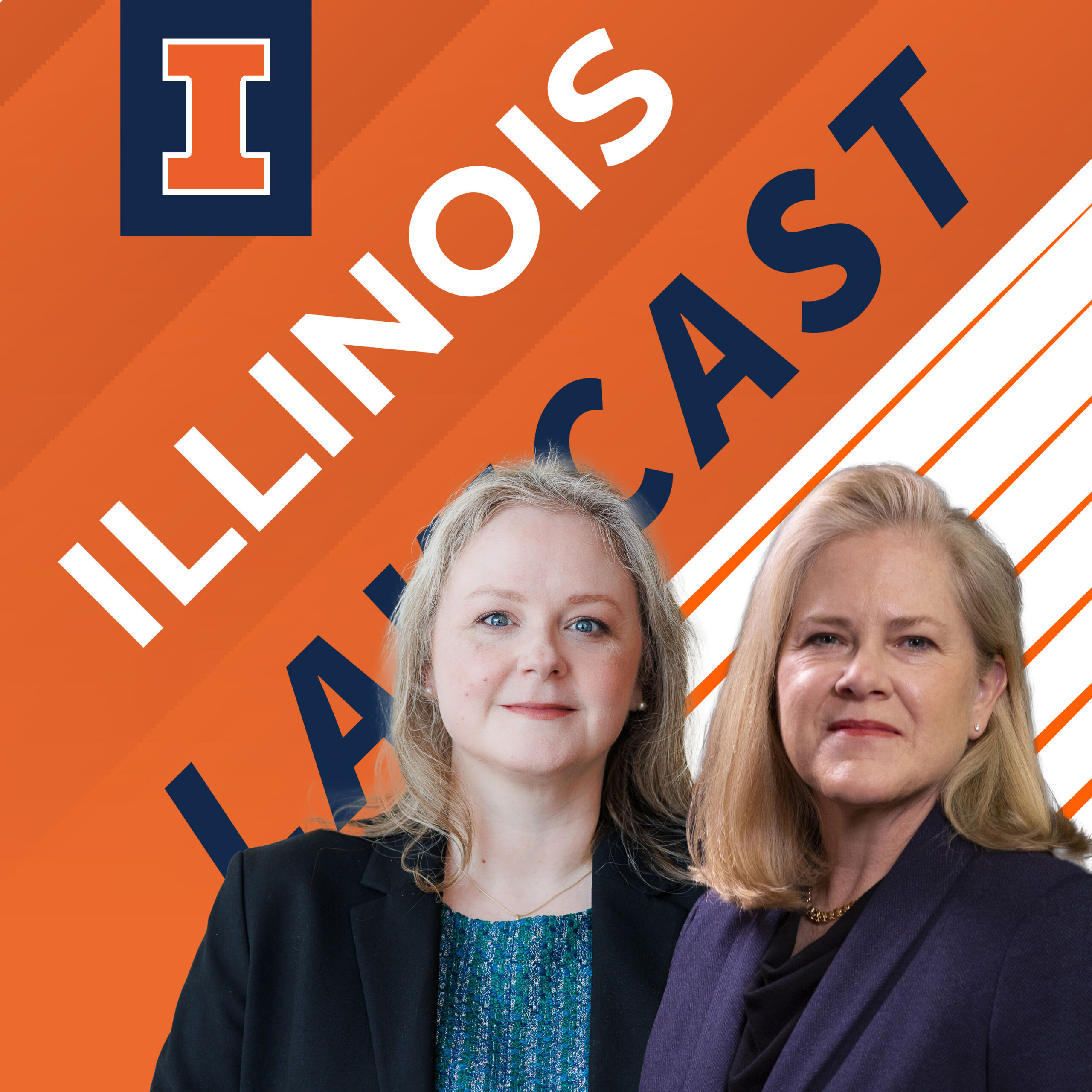
Illinois LawCast: Get to know Eric Baudry and Sarah Lawsky

In this episode we speak with our two newest full-time tenured and tenure-track faculty, Eric Baudry and Sarah Lawsky. They shared about themselves, their research, and what they are looking forward to as members of the College of Law faculty.

About Eric Baudry:

Eric Baudry is an assistant professor of law at the University of Illinois, where he teaches and writes about tax law, poverty, and redistribution. He is especially interested in the experiences of low-income taxpayers as subjects of and actors within the institution of the United States tax system. His scholarship has appeared in the Columbia Journal of Tax Law.

Following law school, Baudry clerked on the Eastern District of Michigan and the Ninth Circuit, provided wage theft and tax representation for low-wage workers as a Skadden Fellow at Mid-Minnesota Legal Aid, and spent two years as a Faculty Fellow at the University of Michigan law school.

About Sarah Lawsky:

Sarah B. Lawsky, the L.B. Lall and Sumitra Devi Lall Professor of Law, studies tax law, computational law, and the intersection of the two. Her recent work focuses on the formalization of tax law. Professor Lawsky’s research arguing for using a particular nonstandard logic to formalize tax law is the conceptual foundation for the domain-specific programming language Catala, which is the project of a team of computer scientists and lawyers.

Before joining the University of Illinois, Professor Lawsky taught at Northwestern Pritzker School of Law, UC Irvine School of Law, and George Washington University Law School. Before entering academia, she worked as a tax lawyer for large law firms.

For more information, visit the personal website of Professor Lawsky: https://www.sarahlawsky.org/

If you have comments or suggestions for the podcast, please contact podcast@law.illinois.edu.
Brubaker featured on Harvard Bankruptcy Roundtable

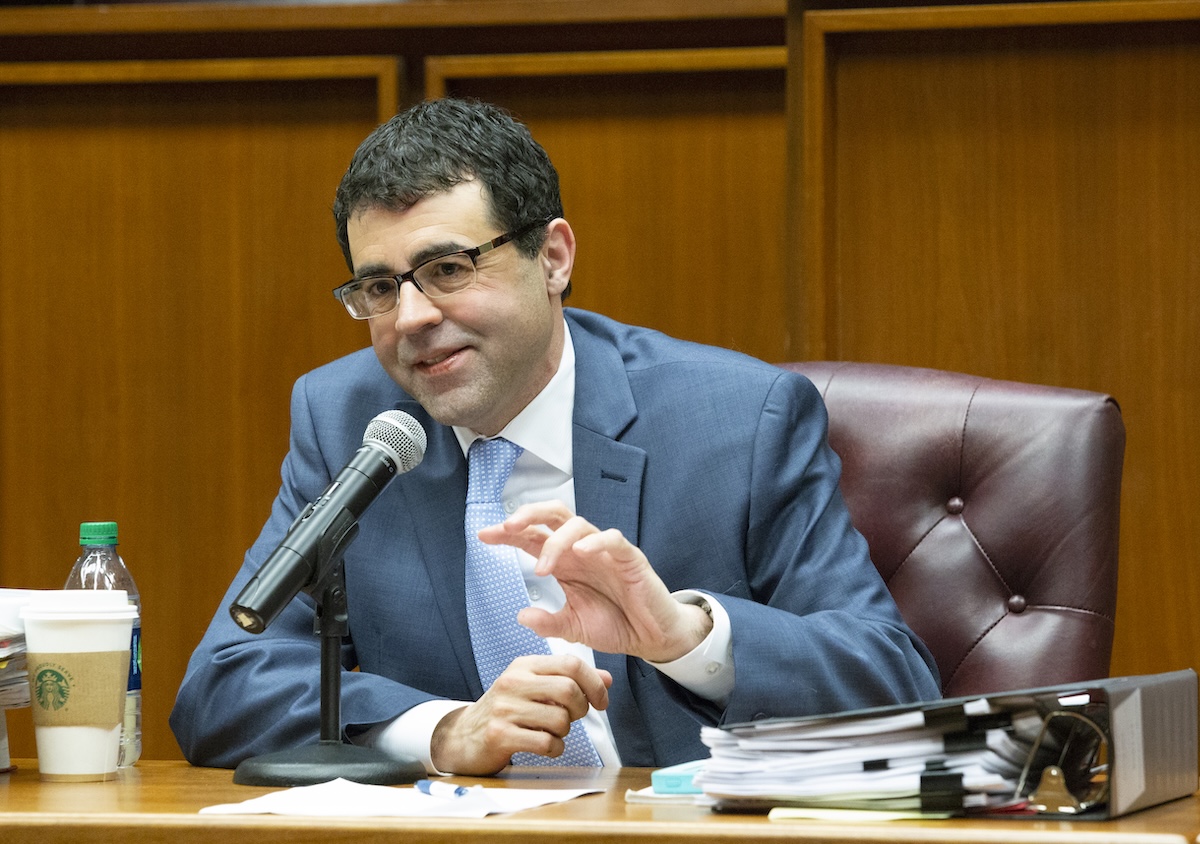
A new paper from Professor Ralph Brubaker, “Assessing the Legitimacy of the ‘Texas Two-Step’ Mass-Tort Bankruptcy,” was recently featured on the Harvard Law School Bankruptcy Roundtable. Brubaker’s article analyzes the “Texas Two-Step” maneuver as courts grapple with legal challenges to the fundamental legitimacy of it. The paper was also listed on SSRN’s Top Downloads for Bankruptcy, Reorganization & Creditors eJournal and for Law & Society: Private Law-Financial Law eJournal.

International Data Privacy Law publishes new paper from Sherkow

A new article covering the sharing of genomic data across international borders by Professor Jacob Sherkow has been published by the journal International Data Privacy Law. “A sociotechnical approach to genomic data privacy: a comparative analysis” examines new technology designed to process genomic data within a secure computing
environment that can comply with and align European Union and U.S. privacy laws that may differ in several ways.

Sherkow delivers lecture at Chicago-Kent

Professor Jacob Sherkow delivered his lecture, “What’s the Skinny? Drug Labels and Patent Infringement,” at Chicago-Kent College of Law on Tuesday, October 28. The event focused on the role of drug labeling in pharmaceutical patent litigation and included discussion of the pending Supreme Court cert petition in Hikma v. Amarin, on which the Supreme Court has called for the views of the Solicitor General.

Rolling back hazing protections is concerning, Wexler writes

The Department of Defense’s review of definitions of toxic leadership, bullying, and hazing, which were announced recently by Secretary Pete Hegseth, are cause for concern, Professor Lesley Wexler writes in a new editorial for Justia Verdict. She examines the history of these rules to understand their necessity and underline why any review that weakens protections could be dangerous. “Hazing can create significant mental health issues where none existed before. While Secretary Hegseth might accept such a toll as a necessary cost of doing business, of course, the impact to those victimized ought to count in the calculus,” Wexler writes.

Moore and Hurd give lecture as part of Australian fellowship

Michael S. Moore and Heidi M. Hurd are currently Distinguished Visiting Fellows at The Australian National University in Canberra, Australia’s capital. On October 15 they gave a joint public lecture sponsored by the ANU Philosophy Department and attended by ANU faculty, graduate students, and members of the larger federal civil service on “The Impropriety of Punishing for Negligent Wrongdoing.”

College of Law
504 East Pennsylvania Avenue
Champaign, IL 61820
(217) 333-0931