Mazzone quoted in NYT after SCOTUS hears oral arguments in birthright citizenship case

Following oral arguments in Trump v. Barbara, most legal experts agreed that although the Supreme Court will most likely decide against the government, the justices’ treatment of the Trump administration’s position lends it respectability and could ultimately allow Congress to return to the question of birthright citizenship.

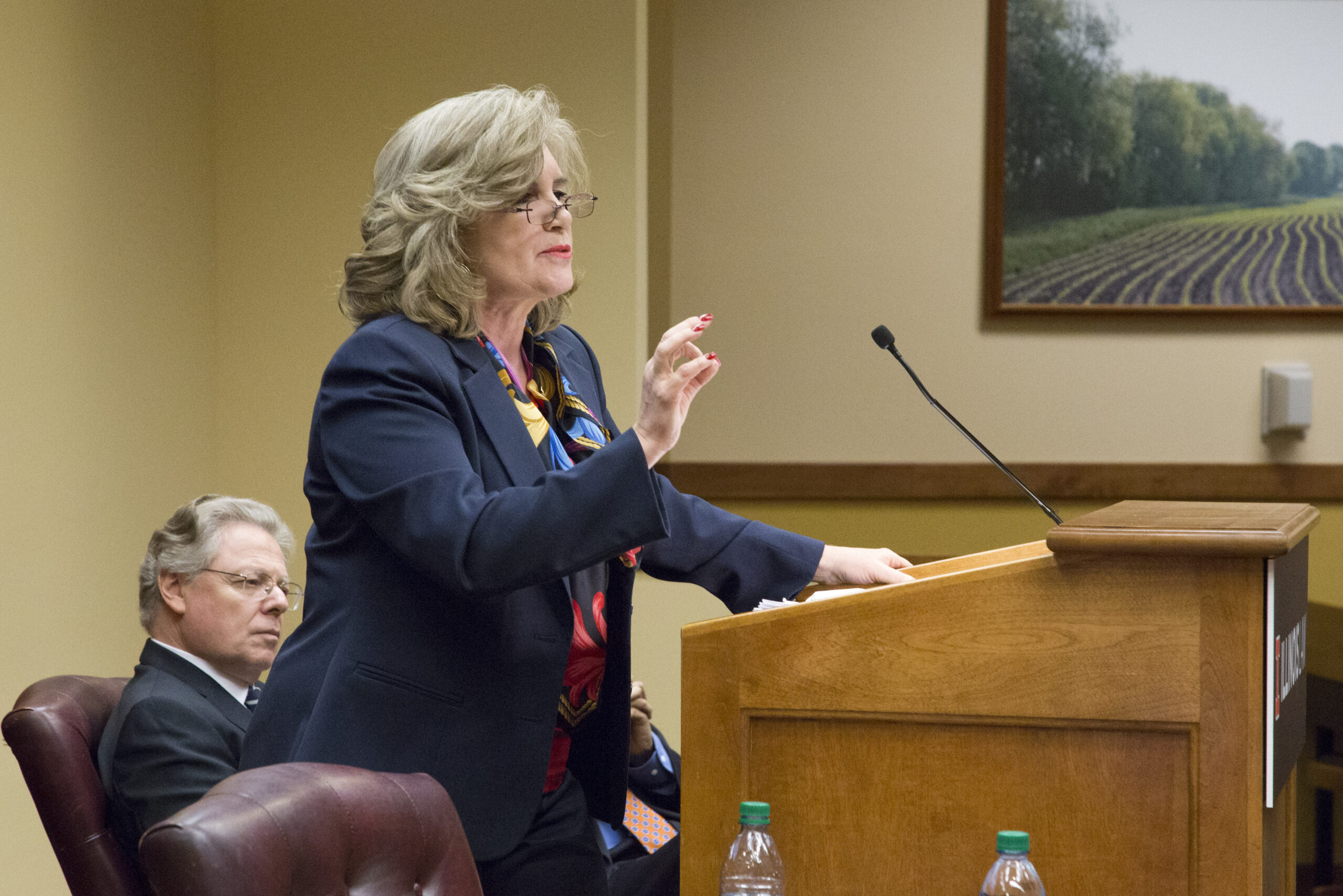
Professor Jason Mazzone, constitutional law expert, expected far more aggressive questioning of both sides. Speaking to the New York Times, he said, “I kept having to remind myself that I was listening to a Supreme Court oral argument rather than presentation of papers at an academic conference before a polite audience of scholars willing to engage with whatever eccentric idea was being presented.”

“My conclusion from the content and tone of the argument is that there is a majority — possibly even nine justices — already persuaded that the executive order violates the 1952 statute,” he said, “and so the 14th Amendment argument didn’t need the sort of probing that would be required in another case that turned solely on a constitutional issue.”

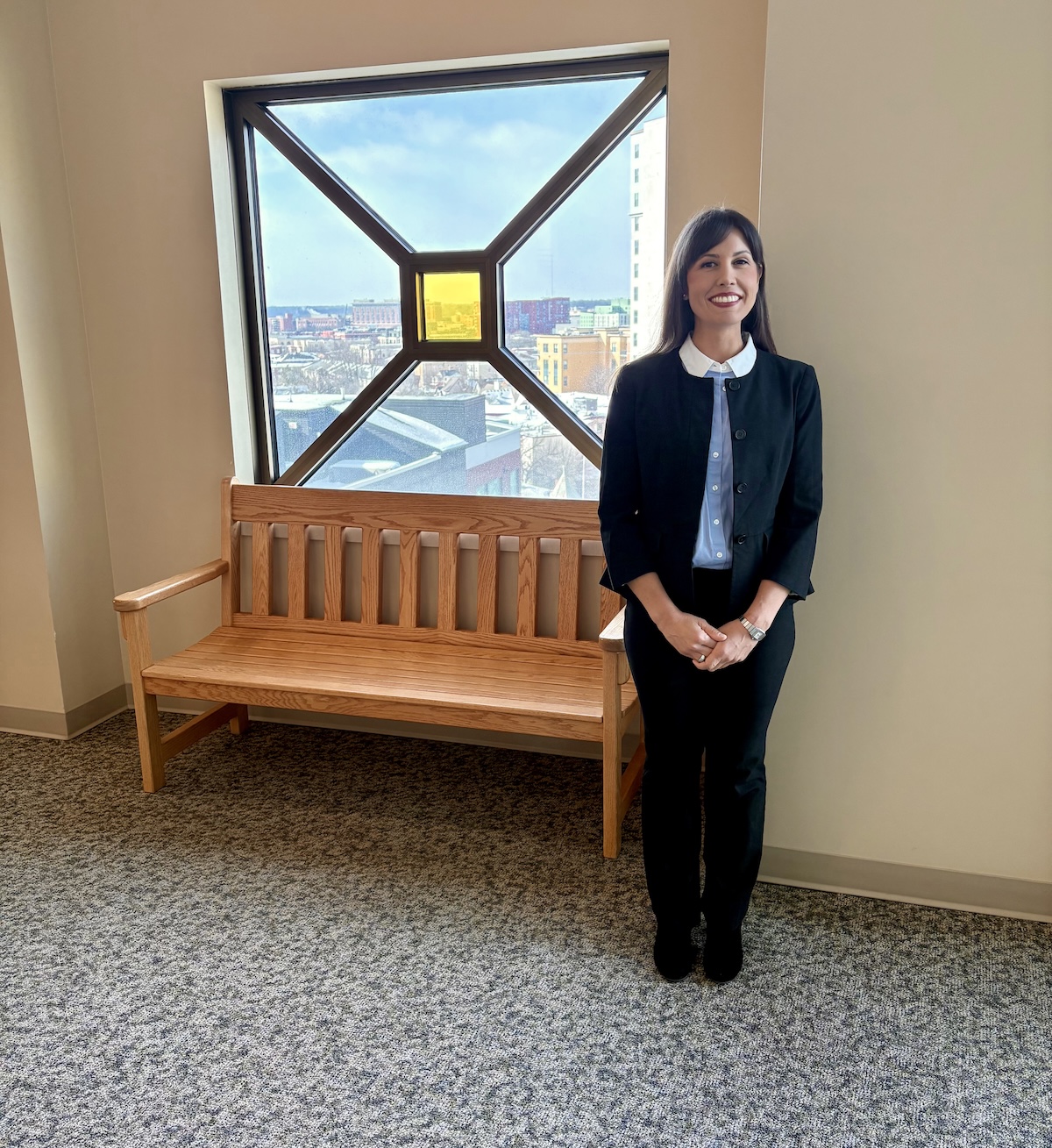
Wilson speaks to Inside Higher Ed about religious conscientious objection legislation in Utah

A new bill pending in the Utah State Legislature would allow students to opt out of coursework that conflicts with their religious beliefs. Critics of the bill are concerned about infringement on academic freedom, but Professor Robin Fretwell Wilson, who helped craft the legislation, believes the bill will function as a mechanism for faculty to more carefully consider the experience of their students when creating assignments. She argued that “a public battle—or a student quietly suffering moral discomfort
—is less likely if there’s a process in place to handle these types of student objections.”

Kar honored with 2026 Campus Award for Excellence in Faculty Leadership

The University of Illinois Urbana-Champaign presents the Campus Awards for Excellence in Faculty Leadership each year to distinguished faculty who enrich the intellectual vitality of the university and the broader community. The awards were presented in three categories — faculty mentoring, distinguished executive officer and outstanding faculty leadership — to five faculty members during a ceremony hosted by the Office of the Provost on campus in March.

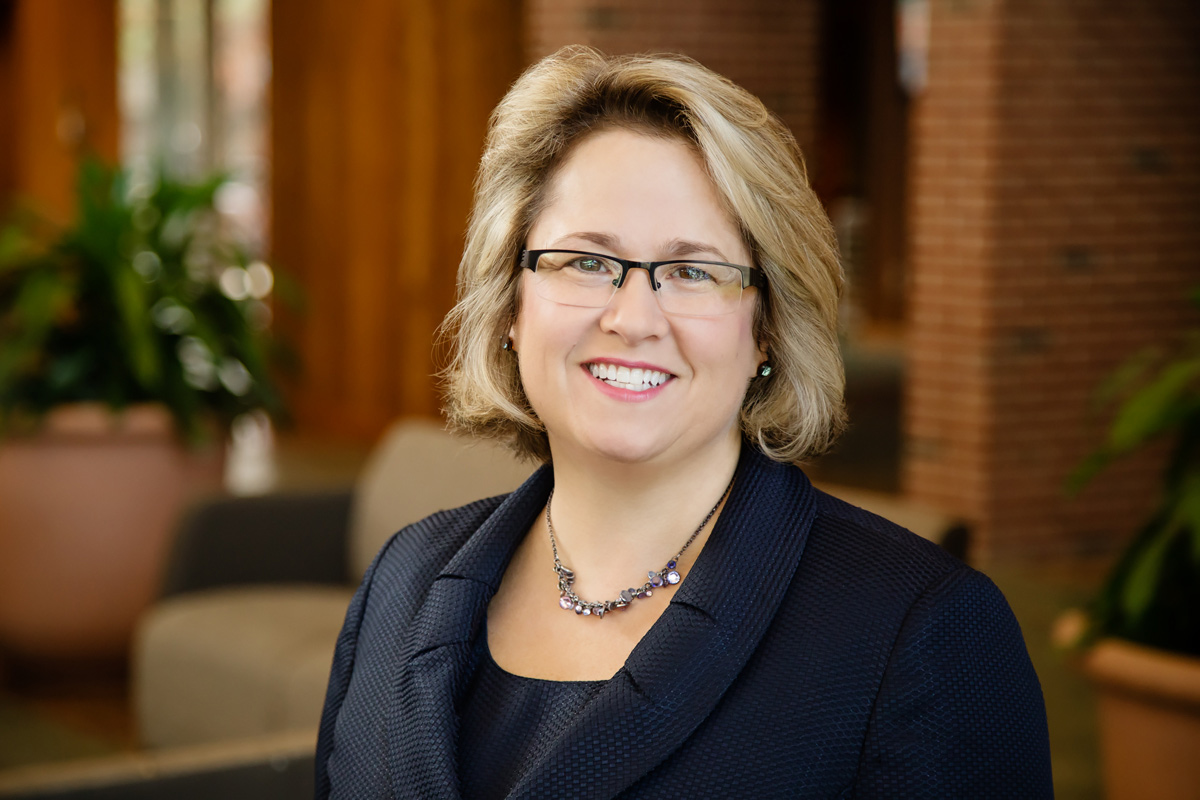
Robin Kar, a professor of law and philosophy and associate dean for curricular innovation at the College of Law, received the Outstanding Faculty Leadership Award. This award recognizes faculty members who have provided extraordinary leadership contributions across many dimensions of shared governance that advance the excellence of a unit, a college and/or the campus, and who exemplify the campus commitment to collaborative decision-making. The award is the highest accolade honoring a faculty member whose professional service has advanced progress toward the Illinois mission.

Kar has garnered several key leadership roles for the Urbana campus and the University of Illinois System, acting as a compass for the development and adoption of meaningful shared governance. These roles include serving as interim head of the Department of Philosophy for three years, chair of the Senate Executive Committee for three years, chair and vice chair of the of the University Senate for two years and chair of the Committee on Faculty Sexual Misconduct for one year. Kar established a style of leadership in the Department of Philosophy grounded in impartiality and open communication. He was credited with hiring and retaining philosophy professors that restored the department into a top 50 program globally and elevated it into the intellectually vibrant community that it is today. Kar was also cited for his initial work in 2018 in updating systemwide policies regarding sexual harassment, sexual assault and other forms of sexual misconduct and remains a trusted voice as those matters are continuously monitored. His approach to leadership — amid navigating complex problems — rests on listening to different and sometimes opposing perspectives and then “working creatively to harmonize them.” Kar’s record of shared governance is now being applied to his current leadership role as the inaugural associate dean for curricular innovation in the College of Law.

Illinois LawCast: Professor Jason Mazzone on Trump v. Barbara

In this special bonus episode, Professor Jason Mazzone joins the podcast to discuss the case of Trump v. Barbara, argued before the U.S. Supreme Court on April 1, 2026. Mazzone is the Albert E. Jenner, Jr. Professor of Law at the University of Illinois at Urbana-Champaign and Director of the Illinois Program in Constitutional Theory, History, and Law. An expert on issues of constitutional structure and institutional design, with a particular focus on relationships between structural arrangements and individual rights, his groundbreaking work on the Constitution of the United States has appeared in dozens of prominent legal journals. He regularly advises, on a pro bono basis, litigants in cases before the Supreme Court of the United States and in other courts.

The case of Trump v. Barbara centers on Executive Order No. 14,160, issued January 20, 2025, titled “Protecting the Meaning and Value of American Citizenship,” which declared that individuals born in the United States are not U.S. citizens at birth if their parents lack sufficient legal status. The order was issued on the alleged basis that the Fourteenth Amendment’s Citizenship Clause does not confer birthright citizenship on such children because they are not “subject to the jurisdiction” of the United States in the constitutional sense. In this episode, Professor Mazzone explains the background of the case, what his impressions are from the arguments, and why he believes the Executive Order will be invalidated by a large majority.

If you have comments or suggestions for the podcast, please contact podcast@law.illinois.edu.

Mazzone and Amar publish article on SCOTUSblog

Professor Jason Mazzone joined Professor Vikram Amar in his “Brothers in Law” series for SCOTUSblog, written with his brother, Professor Akhil Amar of Yale Law School, to examine the ways in which President Donald Trump’s executive order ending birthright citizenship is unconstitutional. The article goes beyond the text of the 14th Amendment, and examines the Supreme Court’s landmark 1898 decision in United States v. Wong Kim Ark as well as the 1952 Immigration and Nationality Act, both of which support the amendment and represent decades of settled case law. Their work was also quoted in a National Review editorial that predicts a supermajority will invalidate the executive order.

Chicago Tribune quotes Mazzone on birthright citizenship

“There are few cases that are more important than this one,” Professor Jason Mazzone told the Chicago Tribune about the United States Supreme Court’s case deciding the constitutionality of President Donald Trump’s attempt to restrict birthright citizenship. In an extensive article about how the end of birthright citizenship would affect those in Chicago, Mazzone told the Tribune the Court must rule the effort unconstitutional. “If you read the president’s executive order and you match it to the language of the 14th Amendment I think most people will see the flat contradiction between those two texts,” he said.

Sherkow authors amicus brief for SCOTUS

Professor Jacob Sherkow has extensive scholarship in the area of patents and has been cited as an expert many times on the issue of drug labels being used in patent cases. In the case of Hikma Pharmaceuticals USA Inc. v. Amarin Pharma Inc., currently before the United States Supreme Court, Sherkow has authored an amicus brief with Professor Paul R. Gugliuzza of the University of Texas at Austin School of Law. The brief is written in support of neither party, but urges the court to discontinue allowing this practice of “infringement by label.”

Bloomberg and STAT quote Sherkow on Moderna settlement

In a settlement deal over claims Moderna infringed upon patents owned by Roviant in its COVID-19 vaccine, Moderna has agreed to pay up to $2.25 billion. The settlement, however, has a unique structure in which Moderna will pay $950 million up front and then another $1.3 million if an appeal to have parts of its liability offloaded to the federal government fail. “This was a case that should have settled at the very beginning,” Sherkow told STAT. “There was never any real dispute that Moderna was infringing. It was just a matter of coming up with a number that was mutually acceptable.”

Read Bloomberg’s coverage and STAT’s coverage of the settlement.

Illinois team featuring Rowell flags risks in reactor proposal

Professor Arden Rowell was part of an interdisciplinary team of University of Illinois researchers raising concerns about a proposed rule that could reduce environmental oversight for advanced nuclear reactors. The group submitted a public comment to the U.S. Department of Energy about a rule that would allow certain advanced reactor activities—including siting, construction, operation, and decommissioning—to proceed without standard environmental reviews. The team concluded the U.S. Nuclear Regulatory Commission should not adopt the Department of Energy’s characterization of advanced reactors as technologies that normally have no significant environmental impacts.

Johnson invested as Edward W. Cleary Professor of Law

On February 24, 2026, Eric A. Johnson was invested as the Edward W. Cleary Professor of Law in a ceremony at the College of Law Building. The investiture ceremony honored Johnson for his commitment to and ways he has helped further advance the mission of the University of Illinois College of Law.

In remarks shared at the ceremony, Professor Heidi Hurd praised his tenure at Illinois thus far: “Professor Johnson is a profoundly impactful scholar with an enviable national reputation for doing exquisitely careful, detailed and rigorous work.” Dean Jamelle Sharpe added an example of the impact he has had, noting that the Illinois Supreme Court unanimously sided with Johnson’s opinion of how causal problems in overdetermination cases ought to be resolved over that of former United States Supreme Court Justice Antonin Scalia

Professor Johnson joined the University of Illinois in 2009 after a career as a government attorney. He spent 11 years in the Alaska Attorney General’s Office and an additional three years as assistant solicitor general in the New York State Attorney General’s Office before entering academia as the directo of the prosecution clinic at the University of Wyoming College of Law. Since coming to Illinois, Johnson has enhanced his reputation as an expert in criminal law, criminal procedure, and evidence. His work has been published in an array of peer- and student-edited journals, including Law and Philosophy, the Boston University Law Review, and the Journal of Criminal Law and Criminology. Twice Johnson has received the college’s annual Carroll P. Hurd Award for Excellence in Faculty Scholarship; he has also served as associate dean for academic affairs and students named him the 2L Professor of the Year in 2013 and have chosen him as convocation hooder eight times. His full bio is available on his faculty profile page.

Professor Johnson’s endowed position was established by an estate donation from Albert E. Jenner in honor of Professor Edward Cleary. Cleary was a distinguished graduate of the Illinois Law Class of 1932 and went on to practice law and serve in the United States Navy before joining the College of Law faculty in 1946, where he established himself as an expert on legal procedure and evidence. Johnson, who was joined by members of his family at the ceremony, was honored with speeches from Dr. Amy Santos, associate provost for faculty development and professor in the Department of Special Education, as well as Dean Jamelle Sharpe.

College of Law
504 East Pennsylvania Avenue
Champaign, IL 61820
(217) 333-0931