LeRoy publishes new article and presents findings on NIL

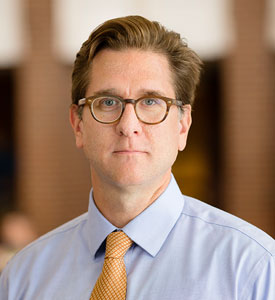
Professor Michael LeRoy’s latest research “Are Collectives Joint Employers of College Athletes? An Empirical Analysis of NIL Deals and School Policies,” will be published in a leading sports journal, Marquette Sports Law Review. His study is based on a dataset of NIL deals from an anonymized power five xonference athletic program; it shows that in 2022-23, 91% of NIL money went to football and men’s basketball players and deal signing dates were in compressed periods that are like contract signings for NFL and NBA players. He concludes that these two sports should be treated differently from other men’s and women’s sports by courts, the NLRB, and Congress, as evidence suggests  NIL collectives are joint employers with the school for these sports. LeRoy was also able to present this research recently to the Chicago Bar Association Sports Law Committee.

Column in New York Times extensively cites amicus brief from Amar

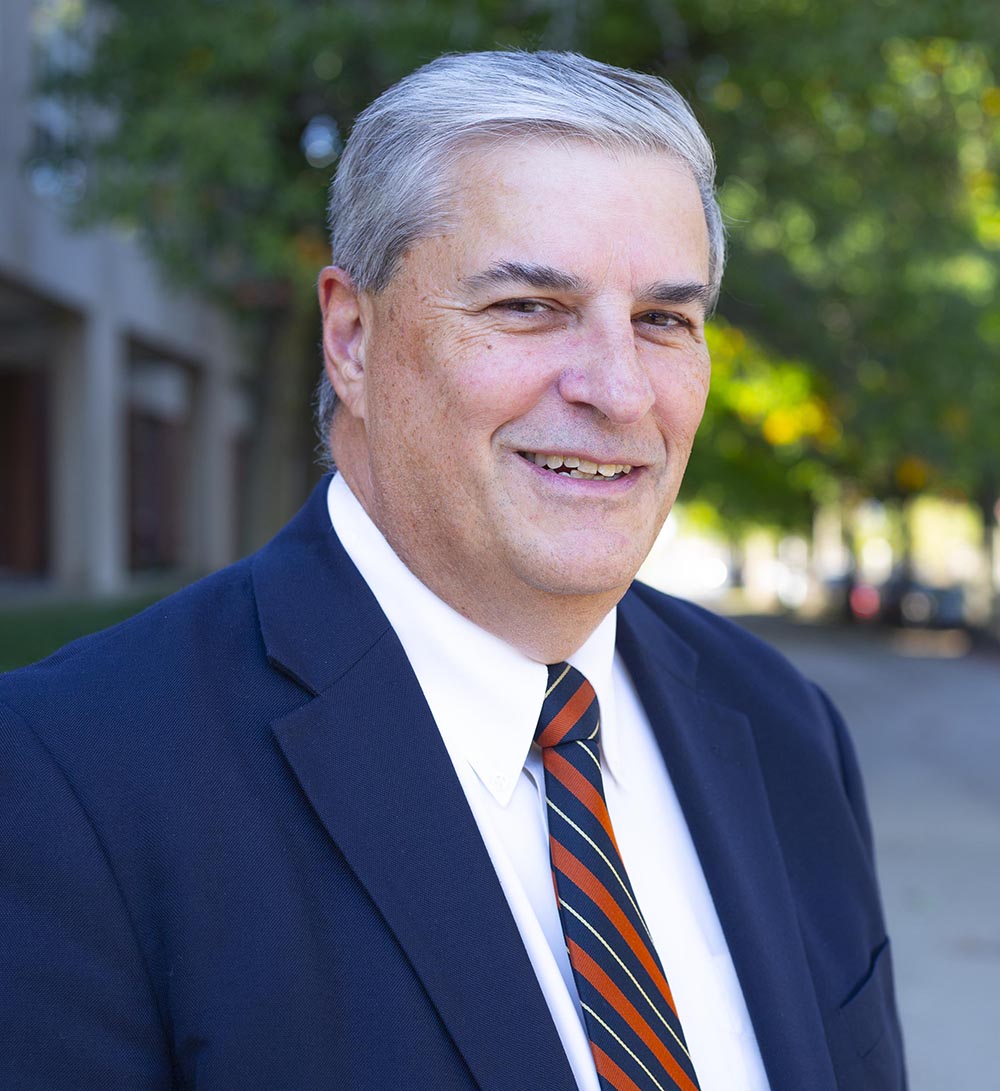
Writing in the New York Times, columnist Jamelle Bouie writes that former President Donald Trump’s actions make him an insurrectionist by any reasonable definition and that the Supreme Court should uphold Colorado’s decision to bar him from the ballot. To support his case, he cites extensively from an amicus brief submitted the Supreme Court by Professor Vikram Amar. Writing along with his brother, Akhil Reed Amar, professor at Yale Law School, the brief suggests that Trump’s actions are similar to John B. Floyd, secretary of the war during the succession crisis of 1860, who directed arms to southern states to be on hand “when treason wanted them.” The Amars conclude that “Certain inactions loom specially large when a current officer, with special obligations to affirmatively thwart other insurrectionists … instead sits on his hands, smiling, as chaos erupts around him. This is precisely the case of Donald Trump.”

Wilson takes part in MLK Jr. Day panel

As part of the observance of Martin Luther King Jr. Day this year, Professor Robin Fretwell Wilson took part in a panel discussion arranged by the Illinois Department of Corrections Kewanee Life Skills Re-Entry Center. The event was put on in partnership with Wilson’s Tolerance Means Dialogues organization, which aims to bring together students and thought leaders to find more constructive approaches to living together in a pluralistic society. The panel was moderated by Jacquelyn Frank, professor of Human Services and Aging Studies at Eastern Illinois University, and also included Shannon Minter, director of the National Center for Lesbian Rights. The event also included an essay writing competition for members of the Kewanee Life Skills Re-Entry Center.

Sports Illustrated quotes N. Sharpe on NCAA transfers

Transfer rules and the changes to those rules have played an outsized role in college athletics in recent years. The federal government joining 10 states and the District of Columbia in a lawsuit against the NCAA that seeks to make permanent a temporary restraining order prohibiting the governing body from imposing penalties on student-athletes that transfer more than one time. Specifically, the lawsuit alleges the NCAA “unlawfully restrain the ability of Division I college athletes to transfer to other Division I schools without loss of athletic eligibility.” At the Sports Illustrated Fan Nation site, Professor Nicola Sharpe explained that the Department of Justice taking a side in this battle means the issue is of national concern.

Read more of her remarks on the transfer case online.

As Leader in Residence, Strautmanis ’94 uses the power of story to inspire students

In his role as the College of Law’s first Leader in Residence, Michael Strautmanis ’94 is ready to embrace the opportunity to inspire students and spark dialogue about the role lawyers play in society. There’s one thing he’s most excited to do, though.

“It gives me a chance to tell a lot of great stories,” he said with a laugh. “I believe that storytelling is the fundamental way to share experiences and lessons learned and, because I’ve seen some exciting and interesting and fun things, I have the opportunity to bring those to life for the students.”

Exciting, interesting, and fun might undersell the experiences that Strautmanis has had in his career. One story he is most excited to share details about is how he was chosen as the lawyer supporting the nascent democracy in Kosovo at the end of the war in that country, just a short five years after graduating from Illinois Law. Strautmanis’ experience also includes campaign work and a prominent role in the Obama White House, a stint as a Vice President within the Walt Disney Company, and his current role as Executive Vice President at the Obama Foundation.

Michael Strautmanis speaks at the College of Law

Delete

Edit embedded media in the Files Tab and re-insert as needed.

“I try to use these stories to humanize myself because I want the students to see that somebody who sat in the chairs that they’re sitting in can do a range of really interesting things,” he added.

The Leader in Residence program is part of the College of Law’s Leadership Project, which is designed to promote leadership education among College of Law students through a variety of lectures, book talks, and classes focused on leadership principles. Students who complete a prescribed number of these activities, and attend a capstone half-day retreat in April, earn the title “Leadership Scholar”; 15 College of Law alumni have earned this distinction thus far.

As Leader in Residence, Strautmanis spent the week of February 19 in Champaign. During his time on campus, he hosted a lunch-and-learn event with the American Constitutional Society, led a Leadership Project book talk on Simon Sinek’s “Start With Why,” taught a session of the College’s required 1L Fundamentals of Legal Practice class, and led a week-long course, Law 792 – “Lawyers as Leaders.” The course provided students with examples of different leadership styles, and how they could develop and apply their skills to claim their own style. With guest speakers such as Eric Holder, former attorney general of the United States, and Sarada Peri, whom Strautmanis called “one of the best speechwriters in the business,” students got to hear the stories that helped shape these high-ranking leaders within their respective fields and beyond.

“I learned here at the University of Illinois that being a lawyer was a noble calling. I learned that we had a responsibility to this society, and I took an oath when I passed the bar that was dedicated to the Constitution and the values that underpin our democratic society,” Strautmanis said. “I believe that lawyers have the opportunity to choose to be intentional about how they use that information, that knowledge, that power. And in making those choices we have the opportunity to be leaders and we should explore what kind of leaders we want to be.”

As an undergraduate student at Illinois, Strautmanis always had an interest in attending law school. However, it wasn’t until he visited the College of Law Building that his interest quickly turned into a real option for him. It was a place where he felt seen by fellow Black students who helped address his questions, and he remembers being warmly welcomed by the faculty and staff. He says Illinois Law found him and, as a result, was the only school he applied to, though perhaps it didn’t hurt that his future wife was also pursuing a graduate degree on campus.

During his time here, Strautmanis says he “wasn’t that great of a student.” Though he made the dean’s list one semester, he left feeling like Illinois was not going to play a large role in his future. As he progressed through his career, however, the ways Illinois had shaped him became clearer.

“I have often found myself in rooms engaging with people who went to Harvard and other Ivy League schools and I always took that as an opportunity to show them that, you know, a kid who went to law school at the University of Illinois was also fully equipped to go toe-to-toe with them,” Strautmanis said. “I’ve come to realize just how meaningful my experience had been here. So I consider it a bit of a miracle that I’m back with the title of professor.”

Being back on campus, Strautmanis says he sees a level of enthusiasm and passion among the students and faculty that matches or even exceeds what he remembers from his time as a student. In particular, he noted the work done by Professor Suja Thomas as an example of how individual passion—in her case, regarding the right to trial by jury—can be incredibly inspiring. Likewise, he has found the students themselves to be a source of encouragement.

“These students, they know how the world works,” he said. “I’m really impressed how much they’re grappling with the same challenges that I’m faced with.”

The challenges that Strautmanis has faced in his work, in both private companies and in public service, are not exactly what he had in mind while he was studying at Illinois. However, he says the College of Law gave him the tools he needed to excel in areas such as foreign aid, legislation, community organizing, and expanding equity and inclusion. Now, as an adjunct professor, he can share what he’s learned and help shape the next generation of leaders—and they’re already making an impression.

“My time here has been pretty rich and engaging because, frankly, I thought I needed to meet the students where they were and they’re kind of meeting me where I’m at,” Strautmanis said. “I would encourage alumni to take a trip to Champaign and see what the students are doing here.”


First Amendment Clinic students sworn in to federal court

On February 1, 2024, College of Law students Cree Medley and Richard J. Sammartino were sworn in by the Honorable Eric I. Long, United States Magistrate Judge for the Central District of Illinois, at the U.S. Federal Courthouse in Urbana.

Under the supervision of the University of Illinois College of Law First Amendment Clinic Director Lena Shapiro, Medley and Sammartino will represent a previously pro se litigant in a federal civil rights trial centered on a First Amendment issue in the Central District of Illinois. Though working under the supervision of an experienced attorney, the students will be responsible for all aspects of the legal representation of their client.

Cree Medley is sworn in at the U.S. Federal Courthouse in Urbana.

Cree Medley is sworn in at the U.S. Federal Courthouse in Urbana.

Delete

Edit embedded media in the Files Tab and re-insert as needed.

Richard Sammartino is sworn in at the U.S. Federal Courthouse in Urbana.

Richard Sammartino is sworn in at the U.S. Federal Courthouse in Urbana.

Delete

Edit embedded media in the Files Tab and re-insert as needed.

American Bankruptcy Institute Journal publishes article from 3L Alban Beqiri

Congratulations to 3L Alban Beqiri on the publication of his article, “When a Nonfiling Spouse’s Support of an Adult Child Prevents Relief,” in the American Bankruptcy Institute Journal. In his article, Beqiri takes a deep look at the issue of supporting adult children while pursuing bankruptcy, writing “If these payments for adult children are not considered expenses for dependents when the debtor pays them, then they should be treated the same when it is the nonfiling spouse that is paying.” The publication of this article marks the second by a member of the Class of 2024, following Alec Klimowicz’s article earlier this academic year; it is a rare feat to have two articles published by members of the same class and we are very proud of their accomplishment.

Rochelle’s Daily Wire analyzes bankruptcy court ruling citing Brubaker

The strength of Professor Ralph Brubaker’s scholarship provided “considerable force” in the mind of Bankruptcy Judge J. Craig Whitley of Charlotte, N.C., and he cited Brubaker’s work extensively when denying a motion to dismiss a pair of “asbestos” chapter 11 cases where the family of companies could pay $250 million in current and future liability. In Rochelle’s Daily Wire from the American Bankruptcy Institute, the decision is analyzed and Brubaker added his own commentary. Though this case does not discuss the Purdue Pharma case before the Supreme Court, the author notes that it has overlap in bankruptcy courts not sanctioning nonconsensual, nondebtor, third-party releases.

U.S. Bankruptcy Court extensively cites Brubaker in denying Texas Two-Step ploy

In late December 2023, U.S. bankruptcy court in North Carolina denied motions to dismiss the Texas Two-Step mass-tort bankruptcy cases of entities created to resolve the asbestos liability of the Trane companies. This type of maneuver involves splitting a company into two, moving the liabilities to one company, and then seek bankruptcy protections to absolve that company of liability. In the opinion (pages 32-39) denying the Trane companies the ability to execute this maneuver, the bankruptcy court extensively cites to and quotes from three of Professors Brubaker’s articles on the subject: (1) “The Texas Two-Step and Mandatory Non-Opt-Out Settlement Powers,” in the Harvard Law School Bankruptcy Roundtable; (2) “Assessing the Legitimacy of the ‘Texas Two-Step’ Mass-Tort Bankruptcy,” in the Bankruptcy Law Letter; and (3) “Mandatory Aggregation of Mass Tort Litigation in Bankruptcy,” in the Yale Law Journal Forum.

End of eviction moratoria did not increase renter anxiety, new report from Mazzone and Wilson finds

When the COVID-19 pandemic disrupted life in unprecedented ways, one of the most consequential was the suspension of eviction hearings and moratorium on evictions imposed by the CARES Act. When evictions proceeded again, many predicted a housing crisis would follow, but this was not borne out in Census Bureau survey data from 2020 through 2023, Likewise, anxiety about eviction among renters never reached levels feared and has fallen as the moratoria recede into history. Professors Jason Mazzone and Robin Fretwell Wilson explore these findings in a new Policy Spotlight.

Read the full PDF on the Institute of Government and Public Affairs website.

College of Law
504 East Pennsylvania Avenue
Champaign, IL 61820
(217) 333-0931