Sherkow is quoted in Nature Biotechnology about prime editing and patents

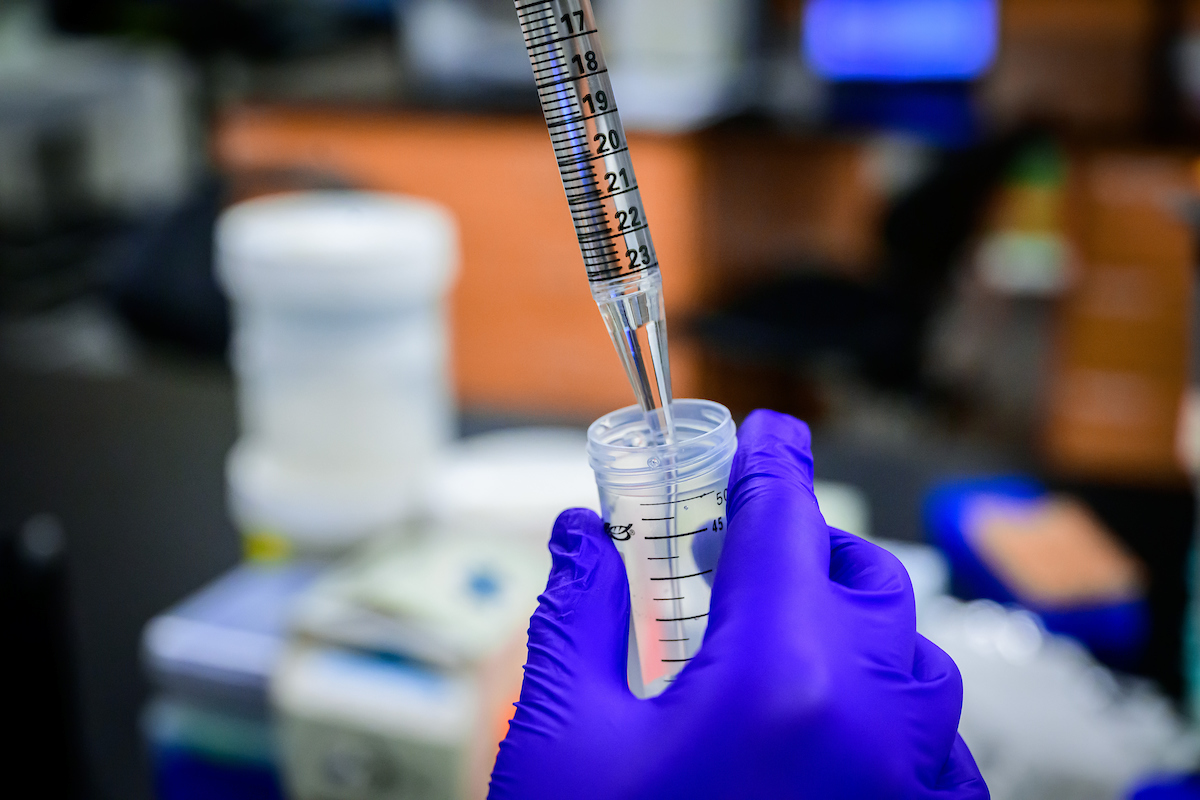
Illinois Law professor and IP expert Jacob Sherkow spoke to Nature Biotechnology about the recent Tome Biosciences acquisition of Replace Therapeutics to enhance their gene editing capabilities. The article discusses the surge of prime editing deals in biotechnology as companies seek to secure patent rights and avoid intellectual property conflicts. The industry is seeing mergers and partnerships driven by the need for access to patented technologies. Sherkow highlighted the importance of IP rights in these deals, stating, “It is an absolute gobsmacking sum of money. And that is something that is worth thinking about as to whether or not that is a lesson for others in the field.”

College of Law honors J. Ross and Sherkow with 2024 awards for scholarly excellence

Professor Jacqueline E. Ross was awarded the 2024 Wayne R. LaFave Award for Scholarly Excellence for her book “Making Sense of Youth Crime: A Comparison of Police Intelligence in the United States and France,” (Cambridge University Press, 2023) co-authored with Thierry Delpeuch of the French National Centre for Scientific Research. This award was established in 2002 by Michael Moore, the Charles R. Walgreen, Jr. Chair, and Heidi Hurd, the Ross and Helen Workman Chair in Law. The award was established in honor of Professor Wayne LaFave, whose remarkable scholarly legacy in criminal law and procedure is best honored through the recognition of work that is of matching ambition and importance.

Professor Jacob S. Sherkow was awarded the 2024 Carroll P. Hurd Award for Scholarly Excellence for his article “The Antibody Patent Paradox,” Yale Law Journal (2023), co-authored with Mark Lemley of Stanford Law School. The Carroll P. Hurd Award for Scholarly Excellence was established in 2002, also by Michael Moore and Heidi Hurd, in honor of Carroll Parsons Hurd, whose work as a political theorist and lawyer elevated theoretical curiosity and intellectual rigor above all other virtues.

New paper from Sherkow available for download

The famous system of breaking down legal analyses into ordered subparts, Issue-Rule-Analysis-Conclusion, needs an updated focus on the last part, according to Professor Jacob Sherkow. In his new paper, available for download on SSRN, he argues that lawyers need to be experts in conclusions, writing “good conclusions – clear, reasonable, workable, plausible, probable conclusions – are the product of a variety of skills one hopes law students develop during their studies, including case synthesis as tested by the IRAC method and its siblings.” 

Sherkow speaks at workshop in Tasmania

Professor Jacob Sherkow was invited to speak at the “Regulation of Innovative Health Technologies Workshop,” which took place at the leading Centre for Law and Genetics, University of Tasmania, from November 23-25, 2023. As part of the workshop, Sherkow was the organizer of a session examining patents as regulators of innovative health technologies. The international workshop was attended by leading global health regulation and intellectual property rights scholars to discuss issues at the cutting edge of how we develop, regulate and deliver access to innovative health technologies.

Approval of CRISPR therapy may soon lead to lawsuits according to Sherkow

“I would be surprised, bluntly, if [a lawsuit] does not get filed by the end of this year,” Professor Jacob Sherkow told Politico about the patent battle over CRISPR technology. When the FDA issued approval for the therapy in sickle cell cases, it granted approval to companies that do not hold licenses for CRISPR. As Sherkow explained, the Broad Institute holds the U.S. patent on editing human cells with CRISPR and can sue companies that don’t have licenses for their patents for infringement as soon as a new product comes on the market, which is certain to happen following FDA approval. 

MIT Technology Review quotes Sherkow on CRISPR sickle cell treatment

Approval for Vertex Pharmaceutical’s sickle cell treatment using CRISPR technology has brought use of the gene-editing therapy to a “collision point,” according to Professor Jacob Sherkow. Speaking to the MIT Technology Review, Sherkow explained how the patent on editing human cells using CRISPR is owned by the Broad Institute of MIT and Harvard, not Vertex, which will almost certainly result in a lawsuit. With a potential market in the tens of billions, Sherkow believes a lawsuit is inevitable.

Sherkow co-authors new article on telehealth

Professor Jacob Sherkow is a co-author on a new paper published by the National Academy of Medicine examining the rise of telehealth and the digital transformation of healthcare. The discussion paper is part of a new NAM Perspectives series explores emerging science and technology applications in order to better understand, anticipate, and develop governance for future development, with special attention to their potential societal, ethical, legal, and health-related impacts. Sherkow’s article examines the roles of state, federal, and regional regulations, as well as governance challenges in an increasingly online and interconnected living environment.

Read the full paper from the National Academy of Medicine.

Jones speaks at conference on protecting children online

Professor Faye Jones was part of a select group of individuals asked to participate the in the NOVA Law International Conference on “Protecting children online: the role of data protection.” Held in late September at NOVA University Lisbon, the “Protecting children online” conference was organized by The Observatory of Personal Data Protection, whose institutional goal is updating and modernizing the rules for protection of personal data. Jones was part of a panel discussion titled “International and European perspectives: can data protection law protect children online?”

Sherkow delivers lecture at CMMC Symposium

Professor Jacob Sherkow travelled to Cologne, Germany, in September to deliver a lecture as part of the CMMC Symposium in Molecular Medicine. The Symposium was titled “From Concepts to Clinic: a New Era of Nucleic Acid Therapeutics,” and aimed to provide attendees with an in-depth understanding of the chemical, biological and clinical challenges in the field. Sherkow presented a speech titled “Nucleic Acid Platforms: US and EU regulatory challenges,” which was part of the preclinical and clinical application portion of the proceedings.

Sherkow files amicus brief in patent case

Writing with fellow patent experts, Professors Bernard Chao and Timothy Holbrook of the University of Denver School of Law and Professor Mark A. Lemley of Stanford Law School, Professor Jacob Sherkow submitted an amicus brief to the U.S. Court of Appeals for the Federal Circuit. The brief is written in response to the decision made by the Patent Trial and Appeal Board (PTAB) in a case involving Xencor Inc. In their previous decision, PTAB rejected a patent claim from Xencor, a decision Sherkow and his co-authors describe as “wrong on the law and wrong on the science.” The amicus brief supports Xencor’s claim and encourages the Court of Appeals for the Federal Circuit to reverse the decision from PTAB. 

College of Law
504 East Pennsylvania Avenue
Champaign, IL 61820
(217) 333-0931