Bivens Act a good start, but imperfect argue Mazzone and Amar

In October, the Illinois Legislature passed the Bivens Act, which provides new state-level protections for individuals interacting with Illinois courts, hospitals, schools, and child-care centers during civil immigration enforcement activities. Writing at Justia Verdict, Professors Jason Mazzone and Vikram Amar praise the law as “an important and innovative law in keeping with the proudest tradition of federalism”; however, they note that some aspects of the Act are unlikely to survive federal constitutional challenges. In their article, they explain why the law is good and why some parts are destined to be struck down.

Mazzone discusses constitutionality of a proposed “billionaire’s tax” in Illinois

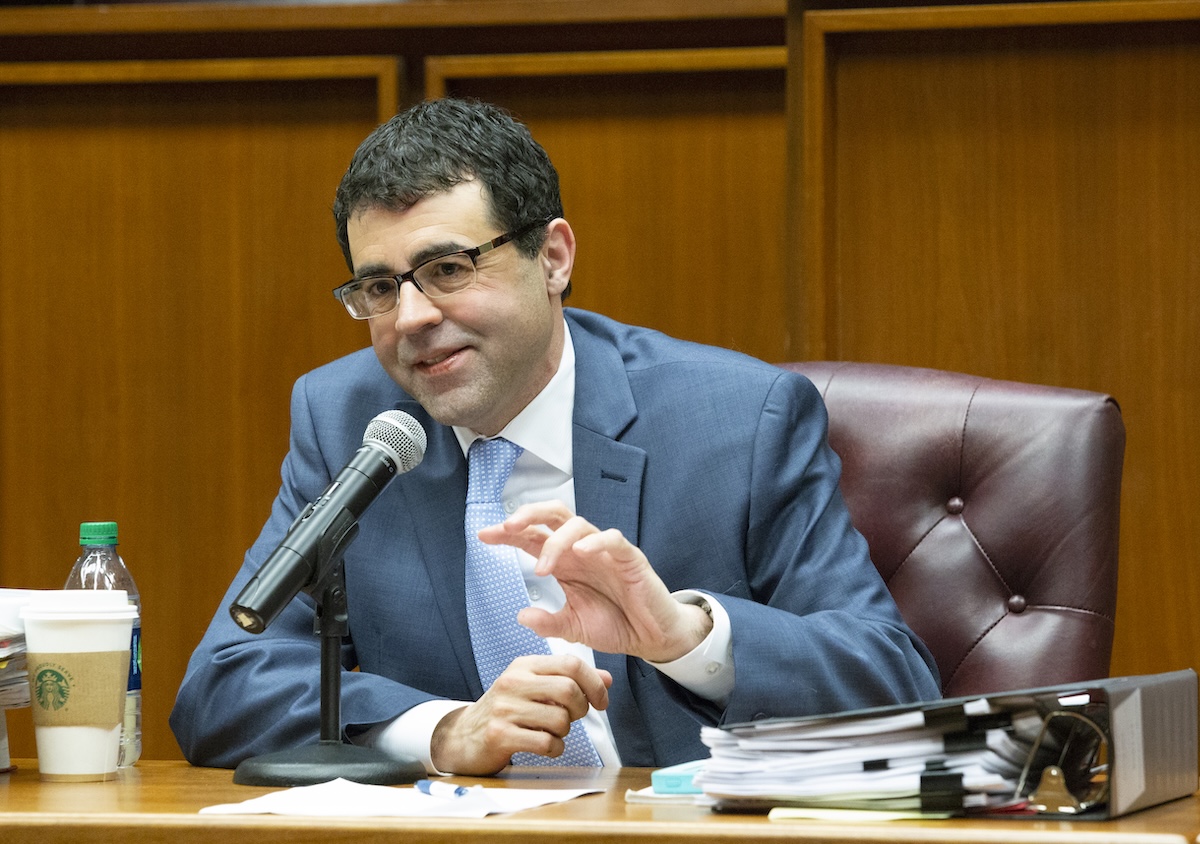
Although it was ultimately not included in the recently approved Chicago area transit bailout measure, Professor Jason Mazzone told the Cook County Record in late October that the proposed “billionaire’s tax” would face a stiff uphill battle in court.

“The sponsors of the (legislation), which would impose a tax on unrealized gains on assets owned by state residents with net assets exceeding $1 billion in value, contend that the proposed new tax is not a tax on personal property but on income,” Mazzone wrote in an email answer to questions from The Record.

“The Illinois courts will be very skeptical of this claim for the simple reason that a gain on paper, without any money ever being exchanged, does not obviously count as income within the ordinary meaning of the word or in the world of financial management or taxation,” Mazzone said.

“An increase in wealth is quite different from an increase in income. The state constitution distinguishes between the two. Courts will be inclined to keep the line between them sharp.”

Mazzone and Amar breakdown Bost v. Illinois State Board of Elections

The U.S. Supreme Court granted review in Bost v. Illinois State Board of Elections on a preliminary question of whether the parties who brought suit had standing under Article III of the Constitution to invoke the power of the federal courts in the first place. Writing at Justia Verdict, Professors Jason Mazzone and Vikram Amar offer analysis as to how the Court should approach the issues raised by Bost, and why it should rule in plaintiffs’ favor.

Fairness in sport case is already moot, Mazzone and Amar contend

One of the cases before the U.S. Supreme Court in its latest term is already moot, Professors Jason Mazzone and Vikram Amar argue in a new editorial published at Justia Verdict. Little v. Hecox present the justices with the question of whether laws to protect women’s and girls’ sports by limiting participation based on sex assigned at birth violate the Equal Protection Clause of the Fourteenth Amendment. Examining the facts in the case, they find that the justices should find the case moot and order vacatur.

Mazzone shares what to watch for in new Supreme Court term

Tariffs, voting rights, conversion therapy—these are a few of the biggest issues that will be debated before the U.S. Supreme Court in their new term, which began in October. Professor Jason Mazzone, writing at the News-Gazette, shares his take on these issues, as well as the Court’s use of the emergency docket. With this term, “the justices are plainly not interested in keeping a low profile,” he writes.

Is flag burning always protected? Amar and Mazzone consider supporting cases

In the wake of an executive order asking the Department of Justice to prioritize enforcement of criminal and civil laws against desecration of the United States flag, Professors Vikram Amar and Jason Mazzone examine some relevant cases decided by the Supreme Court and others. Writing at Justia Verdict, they conclude “singling out flag desecration would remain problematic because flag destruction reflects a particular (albeit somewhat capacious) viewpoint that is undeniably critical of government policy and the status quo.”

Amar and Mazzone weigh in on “cert. before judgment”

Should the Supreme Court extend its practice of granting “cert. (or certiorari) before judgement,” in which it may rule on the merits after a decision by the district court, but without the benefit of review and judgment by the court of appeals? In a new article at Justia Verdict, Professors Vikram Amar and Jason Mazzone weigh in on the merits of this idea, put forward by Justice Brett Kavanaugh. They consider the possible benefits, as well as drawbacks, such as cutting out appeals courts and minimizing time for scholarly debate and other commentary.

Mazzone explains how SCOTUS order in Louisiana redistricting case could have major implications for Voting Rights Act

Professor Jason Mazzone recently spoke to the Alabama Reflector regarding an order from the U.S. Supreme Court to the parties in a Louisiana redistricting case. The Court asked parties to submit briefs on whether majority-minority congressional districts violate the 14th and 15th amendments to the U.S. Constitution. Experts say the Court may be considering invalidating Section 2 of the Voting Rights Act, which forbids election laws that discriminate based on race, color or membership in language minority groups.

“The case might result in the Court invalidating entirely Section 2 of the VRA on the basis that the Constitution is color blind and it bars race-conscious districting, including when mandated by Congress to remedy historical racial discrimination in voting,” Mazzone said. “Such a result would represent a massive change in election laws and practices with seismic consequences for democratic processes at every level of government.”

Amar and Mazzone revisit core principles of Federalism

In response to protests in Los Angeles and the subsequent responses by local and federal officials, Professors Vikram Amar and Jason Mazzone put their constitutional law expertise to work to take another look at the principles of federalism and why they matter. “To conclude states must agree with the President before any kind of federalized military forces could be used would be to place the safety of federal personnel and federal property at the mercy of state government. As American history suggests, that could be a very dangerous scenario,” they write.

Read the full article on Justia Verdict.

News-Gazette quotes Aronson and Mazzone on student visa restrictions

The Trump administrations stated plans to “aggressively revoke visas for Chinese students” would have an immense impact on the University of Illinois, as the school hosted more than 6,000 individuals from China last year. In a wide-ranging examination of faculty opinions on how damaging this policy may be, the News-Gazette spoke to law professors Lauren Aronson and Jason Mazzone. “I take all threats from this administration seriously,” Aronson, director of the Immigration Law Clinic, said.

College of Law
504 East Pennsylvania Avenue
Champaign, IL 61820
(217) 333-0931